Reflecto News is an online news platform covering major international political events, global economic developments, and security conflicts. The site provides updates on topics such as Chinese manufacturing dominance, Middle Eastern political tensions, and high profile legal arrests. Readers can access current articles organized by categories like World News, Iran, and USA.
Published on Reflecto News | World News | Geopolitics & Conflict
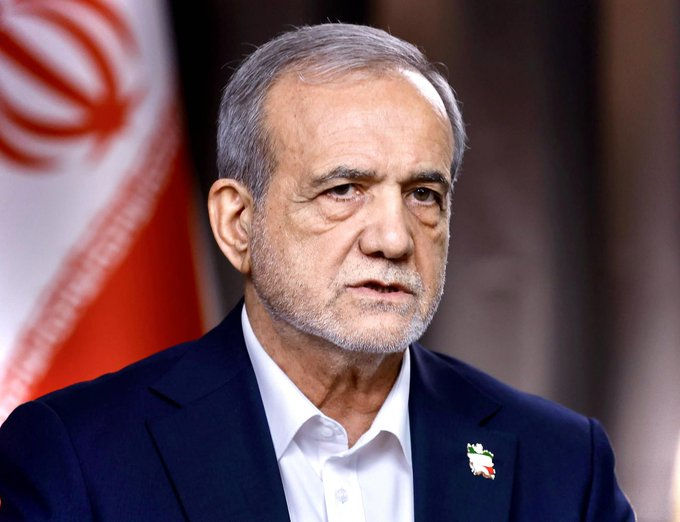
In a dramatic escalation of rhetoric, Iranian President Masoud Pezeshkian has declared that Iran’s “finger is on the trigger” while vowing that Tehran will not abandon Lebanon amid its ongoing conflict with Israel. The强硬 statement, delivered during a high-level address, signals Iran’s readiness to deepen its military involvement in the widening Middle East war and underscores the Islamic Republic’s unwavering commitment to its Lebanese ally, Hezbollah.
Pezeshkian’s remarks come as the conflict between Israeli forces and Hezbollah intensifies, with Israeli Prime Minister Benjamin Netanyahu vowing to continue strikes “wherever necessary” and the United States and Iran operating under a fragile ceasefire agreement whose terms remain fiercely disputed.
Pezeshkian’s Statement: ‘The Trigger Is in Our Hands’
President Masoud Pezeshkian delivered the stark warning during an address to a gathering of Iranian officials and military commanders. His choice of language—invoking the imagery of a loaded weapon—was deliberately provocative and unambiguous.
“Our finger is on the trigger,” Pezeshkian declared, according to state media reports. “We will not abandon Lebanon. Lebanon’s security is Iran’s security. Any threat to Lebanon is a direct threat to the Islamic Republic.”
The Iranian president did not specify what conditions would prompt Iran to “pull the trigger,” leaving the threshold for direct military intervention deliberately vague—a strategic ambiguity designed to maximize psychological pressure on Israel and its allies.
Pezeshkian further emphasized that Iran considers Lebanon to be within its “strategic depth” and that Tehran has both the capability and the will to defend Lebanese sovereignty against what he termed “Zionist aggression.”
The Context: An Intensifying Israel-Hezbollah War
Pezeshkian’s threats must be understood within the broader context of a rapidly escalating conflict. Since early March, Israeli forces and Hezbollah have engaged in near-daily cross-border exchanges, with both sides suffering significant casualties.
The situation has deteriorated dramatically in recent days:
- Israeli Strikes: The Israel Defense Forces (IDF) have conducted one of the deadliest waves of airstrikes on Lebanese territory since the conflict reignited. Lebanese authorities report at least 254 people killed and 1,165 wounded in a single 24-hour period.
- Hezbollah Retaliation: The group has responded with rocket fire targeting Israeli settlements including Manara and Kiryat Shmona, as well as guided missile and drone attacks on Israeli military positions.
- Ground Operations: IDF ground troops continue to operate inside southern Lebanon, fighting Hezbollah forces and holding strategic positions.
- Civilian Displacement: Over one million Lebanese have been displaced from the south, while tens of thousands of Israelis remain evacuated from northern border communities.
‘Not Abandon Lebanon’: Iran’s Hezbollah Calculus
Iran’s relationship with Hezbollah is not merely one of alliance but of strategic parenthood. The Islamic Revolutionary Guard Corps (IRGC) founded Hezbollah in 1982, and the group has since evolved into Iran’s most capable and important proxy force.
Hezbollah serves multiple critical functions for Tehran:
| Function | Description |
|---|---|
| Forward Defense | Hezbollah’s rocket arsenal (estimated 120,000–150,000 projectiles) serves as a deterrent against Israeli strikes on Iran’s nuclear program |
| Regional Power Projection | The group extends Iranian influence to the Mediterranean coast |
| Asymmetric Capability | Hezbollah allows Iran to confront Israel without direct conventional war |
| Axis of Resistance Anchor | Hezbollah is the most powerful member of Iran’s regional network of allied militias |
Abandoning Lebanon would mean abandoning Hezbollah—a step that would collapse Iran’s entire regional deterrence strategy. Pezeshkian’s vow is therefore not merely rhetorical but reflects core Iranian strategic doctrine.
‘Finger on the Trigger’: What Does It Mean?
Pezeshkian’s “finger on the trigger” metaphor requires careful parsing. Military analysts have identified several possible interpretations:
1. Direct Conventional Intervention
Iran could deploy its own military forces to Lebanon, including IRGC units and conventional army elements. This would represent a dramatic escalation, risking full-scale war with Israel.
2. Intensified Proxy Support
Iran could surge weapons shipments, advisors, and technical support to Hezbollah without committing Iranian troops. This is the most likely near-term response.
3. Opening Additional Fronts
Iran could activate other proxy forces in Syria, Iraq, and Yemen to attack Israeli and US targets simultaneously, overwhelming defensive systems.
4. Strategic Missile Launch
In an extreme scenario, Iran could launch a direct ballistic missile strike on Israeli territory from Iranian soil—an act of war with potentially catastrophic consequences.
5. Nuclear Ambiguity
Some analysts interpret the “trigger” reference as an indirect nuclear threat, suggesting Iran could accelerate its nuclear weapons program or declare breakout.
Iranian officials have not clarified which interpretation is correct, preserving strategic ambiguity to maximize deterrence.
Regional Reactions: Alarm and Calculated Responses
Pezeshkian’s threat has generated immediate responses from regional and global powers.
Israel: Prime Minister Benjamin Netanyahu’s office declined direct comment but reiterated that Israel “will defend itself by itself against any threat.” Israeli defense officials have reportedly placed air defense systems on higher alert.
Saudi Arabia: The Kingdom, which has been engaged in de-escalation talks with Iran, expressed “deep concern” over the rhetoric and called for “maximum restraint from all parties.”
United States: The White House National Security Council issued a statement warning Iran against “miscalculation,” stating that “any Iranian military intervention in Lebanon would be met with overwhelming force.”
United Nations: Secretary-General António Guterres called for “immediate de-escalation” and warned that “regional war would be catastrophic for all peoples of the Middle East.”
France: President Emmanuel Macron’s office announced that Macron had spoken with both Pezeshkian and Netanyahu, urging “dialogue and restraint.”
The Ceasefire Question: A Fragile Interlude
Pezeshkian’s threats occur within the window of a two-week ceasefire between Iran and the United States, brokered by Pakistan. However, the terms of that agreement remain bitterly disputed.
While Pakistani mediators and Iranian officials maintain that the ceasefire includes Lebanon, both Washington and Jerusalem have explicitly denied this interpretation. White House Press Secretary Karoline Leavitt confirmed that Lebanon is not part of the U.S.-Iran ceasefire agreement.
This dispute has profound implications. If Iran believes Lebanon is covered by the truce, it may view Israeli strikes as violations justifying retaliation. If Israel believes Lebanon is excluded, it will continue operations without regard for Iranian red lines.
Pezeshkian’s “finger on the trigger” warning may be intended to force Israel and the United States to reconsider their exclusion of Lebanon from the ceasefire framework.
Hezbollah’s Current Status: Battlefield Realities
Despite Pezeshkian’s bold rhetoric, Hezbollah has suffered significant battlefield setbacks. Israeli airstrikes have:
- Destroyed key command-and-control nodes
- Eliminated multiple senior field commanders
- Damaged or destroyed weapons storage facilities
- Disrupted supply lines from Syria to Lebanon
- Forced the group to operate under constant surveillance and strike threat
The group retains substantial capabilities, including precision-guided missiles capable of striking deep into Israeli territory. However, its communications network has been degraded, and its leadership is operating from concealed locations.
Iranian intervention—whether through direct action or intensified resupply—could help Hezbollah regain lost momentum. Pezeshkian’s statement may be intended to boost Hezbollah morale while warning Israel against further escalation.
Historical Parallels: 2006 and the Lessons Unlearned
The current crisis evokes comparisons to the 2006 Lebanon War, when Hezbollah and Israel fought a 34-day conflict that killed approximately 1,200 Lebanese (mostly civilians) and 165 Israelis (mostly soldiers).
Key differences in 2026 include:
| Factor | 2006 | 2026 |
|---|---|---|
| Hezbollah’s arsenal | 15,000 rockets | 120,000–150,000 rockets |
| Rocket range | 30–40 km | 300+ km (precision-guided) |
| Iranian involvement | Logistical support | Direct intelligence, tactical training |
| Regional context | Isolated conflict | Part of wider Iran-US/Israel war |
| Civilian displacement | 1 million Lebanese | 1 million Lebanese + Israeli evacuees |
The 2006 war ended with UN Security Council Resolution 1701, which called for Hezbollah’s disarmament and withdrawal from southern Lebanon—neither of which was fully implemented. Pezeshkian’s vow not to abandon Lebanon suggests Tehran has no intention of allowing Hezbollah’s disarmament now.
Economic Dimensions: The Cost of Escalation
Pezeshkian’s threats carry immediate economic consequences. The Strait of Hormuz—through which 20% of global oil flows—remains effectively closed, with ADNOC reporting 230 loaded tankers stranded.
An Iranian-Israeli war would likely trigger:
- Oil prices exceeding $150–$200 per barrel
- Global recession risk exceeding 40%
- Food price spikes due to fertilizer supply disruptions (50% of global sulphur transits Hormuz)
- Capital flight from emerging markets
- Defense spending surges across NATO and Gulf states
Iran’s own economy, already strained by decades of sanctions, would face catastrophic pressure in a full-scale war. Pezeshkian’s “finger on the trigger” rhetoric thus represents high-stakes brinksmanship rather than a preferred war option.
The Nuclear Shadow
No analysis of Iranian threats is complete without addressing the nuclear dimension. Iran’s nuclear program has advanced significantly in recent years, with the country now possessing sufficient near-weapons-grade uranium for multiple devices.
Pezeshkian’s “trigger” language—while likely referring to conventional military action—inevitably invokes nuclear connotations. Israeli intelligence assessments reportedly warn that Iran could weaponize within weeks of a decision.
The International Atomic Energy Agency (IAEA) has lost significant visibility into Iran’s program since Tehran expelled inspectors. Western intelligence agencies rely on satellite imagery and signals intelligence to monitor progress.
Any Iranian decision to “pull the trigger” in a nuclear sense would fundamentally transform the Middle East security landscape, potentially triggering a nuclear arms race across the region.
Diplomatic Pathways: Is De-escalation Possible?
Despite the heated rhetoric, diplomatic channels remain open. The Pakistan-brokered US-Iran ceasefire, however disputed, at least establishes a mechanism for communication.
Potential de-escalation steps include:
- Explicit Lebanon Inclusion – Extending the US-Iran ceasefire to explicitly cover Lebanon, with verification mechanisms.
- Hezbollah-Israel Indirect Talks – Resuming indirect negotiations, potentially through UNIFIL or Swiss intermediaries.
- Implementation of UNSCR 1701 – A renewed push to implement the long-ignored resolution, including Hezbollah’s withdrawal from the border.
- US-Iran Direct Talks – Expanding the ceasefire framework into broader negotiations covering Lebanon, nuclear issues, and sanctions relief.
- Gulf Mediation – Saudi Arabia, Qatar, or Oman could offer to mediate between Iran and Israel on Lebanese issues.
Pezeshkian’s vow not to abandon Lebanon does not preclude a diplomatic solution—provided such a solution respects Iranian security interests and Hezbollah’s political role. However, Israeli demands for Hezbollah’s complete disarmament remain a fundamental obstacle.
Conclusion: A Dangerous Threshold
President Masoud Pezeshkian’s declaration that Iran’s “finger is on the trigger” while vowing not to abandon Lebanon represents one of the most direct threats issued by an Iranian leader in years. Whether this rhetoric is genuine preparation for war or high-stakes psychological pressure remains unclear.
What is clear is that the Middle East stands at a dangerous threshold. With Israeli strikes intensifying, Hezbollah retaliating, the US-Iran ceasefire disputed, and now Tehran issuing explicit military threats, the region’s conflicts have never been more interconnected—or more volatile.
As one Western diplomat anonymously told Reuters: “Everyone has their finger on a trigger right now. The question is who flinches first.”
Frequently Asked Questions (FAQs)
1. What exactly did Iranian President Pezeshkian say?
Pezeshkian declared that Iran’s “finger is on the trigger” and vowed that Iran “will not abandon Lebanon.” He stated that Lebanon’s security is Iran’s security and that any threat to Lebanon is a direct threat to the Islamic Republic.
2. Is Iran threatening direct military intervention in Lebanon?
Pezeshkian did not specify the exact nature of the threatened action. The “finger on the trigger” metaphor could refer to direct intervention, intensified proxy support, activation of other fronts, missile strikes, or nuclear escalation—all of which remain possibilities.
3. Why is Iran so committed to Lebanon?
Lebanon is home to Hezbollah, Iran’s most powerful and important proxy force. Hezbollah serves as Iran’s forward defense against Israel, extends Iranian influence to the Mediterranean, and is a core component of Tehran’s “Axis of Resistance.”
4. How has Israel responded to Pezeshkian’s threat?
Prime Minister Netanyahu’s office reiterated that Israel “will defend itself by itself against any threat.” Israeli air defense systems have reportedly been placed on higher alert.
5. Does the US-Iran ceasefire apply to Lebanon?
This remains a major point of dispute. While Pakistan and Iran maintain that Lebanon is included, both the United States and Israel have explicitly denied this interpretation.
6. What is Hezbollah’s current military status?
Hezbollah has suffered significant battlefield setbacks, including the loss of senior commanders and weapons infrastructure. However, the group retains an estimated 120,000–150,000 rockets, including precision-guided munitions capable of striking deep into Israel.
7. Could this lead to a regional war?
A full-scale regional war involving Iran, Israel, Hezbollah, and potentially the United States remains a real possibility. Analysts assess the risk as elevated but not inevitable, with diplomacy still theoretically possible.
8. What is the economic impact of these threats?
The Strait of Hormuz remains effectively closed, with oil prices near $100 per barrel. A wider war could send prices above $200 per barrel, trigger a global recession, and cause food price spikes due to fertilizer supply disruptions.
9. What is the nuclear dimension of Pezeshkian’s statement?
While the “trigger” language likely refers to conventional action, it inevitably invokes nuclear connotations. Iran has sufficient near-weapons-grade uranium for multiple devices and could weaponize within weeks of a political decision.
10. Is there any diplomatic path forward?
Yes. Potential pathways include explicitly extending the US-Iran ceasefire to Lebanon, resuming indirect Hezbollah-Israel talks, renewing implementation of UN Security Council Resolution 1701, or expanding US-Iran negotiations. However, fundamental obstacles remain.
Stay informed with Reflecto News – Your trusted source for breaking geopolitical intelligence and conflict analysis. Subscribe for real-time updates on this developing story.
Questions people ask
What is China's current share of global manufacturing?
China now accounts for twenty eight percent of global manufacturing. This industrial output exceeds the combined manufacturing production of the United States, Japan, and Germany, making China the leading global industrial power according to recent reports.
Why were Andrew Tate and Tristan Tate arrested in Miami?
Andrew Tate and his brother Tristan Tate were taken into custody in Miami by the United States Marshals Service. They face thirty eight new charges in the United Kingdom, including rape and child pornography offences, and prosecutors are seeking their extradition.
What warning did Moscow issue about oil prices?
Kirill Dmitriev, the Chief Executive of the Russian Direct Investment Fund, warned that a tsunami of skyrocketing oil prices is approaching. Moscow describes this potential energy shock as a major threat to global markets.
What political shift is projected for Benjamin Netanyahu's coalition?
Political polls project that Prime Minister Benjamin Netanyahu's coalition is on track to lose its majority in the upcoming October election. This projection indicates a potential political shift in Jerusalem.
Why did a Russian military aircraft land in Tehran?
A Russian airborne command aircraft, widely known as a doomsday plane, landed in Tehran. The arrival of the aircraft represents a high stakes show of support from Russia for Iran during a period of heightened regional tensions.
What did President Masoud Pezeshkian claim about the United States and Israel?
Iranian President Masoud Pezeshkian claimed that the United States and Israel failed in a forty eight hour plan to topple the Iranian government. He made these statements during a televised address marking two years since his inauguration.