Reflecto News is an online news platform covering major international political events, global economic developments, and security conflicts. The site provides updates on topics such as Chinese manufacturing dominance, Middle Eastern political tensions, and high profile legal arrests. Readers can access current articles organized by categories like World News, Iran, and USA.
Published on Reflecto News | World News | Politics & International Relations
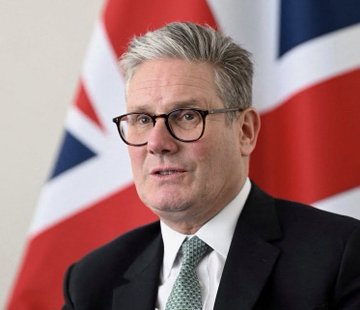
In a calculated diplomatic move aimed at preserving transatlantic unity amid rising tensions, British Prime Minister Sir Keir Starmer has declared that the North Atlantic Treaty Organization (NATO) serves the strategic interests of the United States. Speaking to broadcasters following a phone call with President Donald Trump, Starmer simultaneously vowed that the United Kingdom would remain a “strong supporter” of the military alliance and called for a “stronger European element” within it .
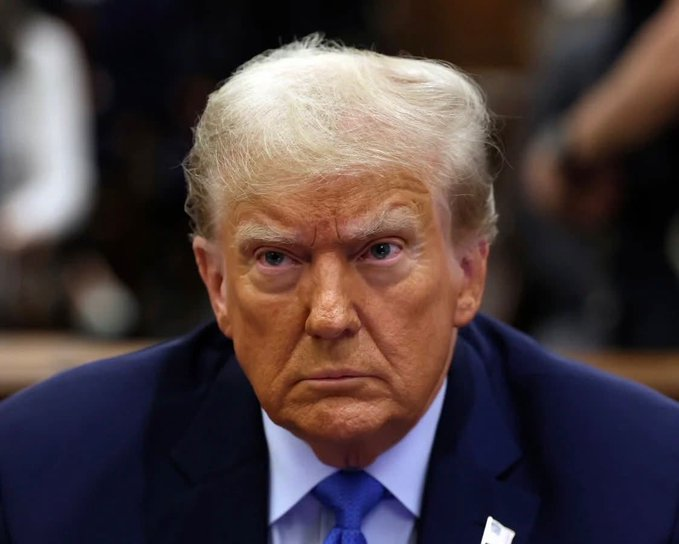
The Prime Minister’s remarks come at a critical juncture for the alliance, which has faced unprecedented strain due to the ongoing conflict in the Middle East. President Trump has repeatedly threatened to withdraw the United States from NATO, recently calling the alliance a “paper tiger” and suggesting that America’s continued membership was “beyond reconsideration” .
Starmer’s Defense of NATO: ‘The Most Effective Military Alliance’
During his comments to reporters, Starmer did not shy away from defending the alliance’s value to Washington. He framed his argument not as a plea for American charity, but as a recognition of mutual benefit.
“It is in America’s interests, it’s in European interests. NATO is a defensive alliance, which for decades has kept us much safer than we would otherwise have been.” — Prime Minister Sir Keir Starmer
The Prime Minister acknowledged that the alliance needs to adapt to a changing geopolitical landscape, explicitly endorsing a greater leadership role for European nations. His statement that NATO serves US interests is a strategic rebuttal to claims that America shoulders an unfair burden.
“Do I think there will be a stronger European element to NATO? Yes, and I think we should step into that space. We’re already doing it, which is why we’re coordinating strategically with our partners in NATO.” — Prime Minister Sir Keir Starmer
Starmer called the alliance “the single most effective military alliance the world has ever known,” emphasizing that it has kept the continent “much safer than we would otherwise have been” .
The Context: Trump’s Threats and Transatlantic Strain
Starmer’s public endorsement follows a period of intense pressure from the White House. President Trump has been vocal in his frustration with European allies for not joining the US-Israeli military campaign against Iran, which began on February 28 .
In a recent interview with The Telegraph, Trump lambasted NATO allies, calling the organization a “paper tiger” and singling out the United Kingdom for criticism. He suggested that Britain’s aircraft carriers “didn’t work” and implied that the Royal Navy was inadequate for the task of securing global shipping lanes .
The President also suggested a “re-examination” of America’s role in the alliance, with Secretary of State Marco Rubio stating that if NATO is “just about us defending Europe if they’re attacked, but them denying us basing rights when we need them, that’s not a very good arrangement” .
These comments have sent shockwaves through European capitals. A report by Parliament’s Joint Committee on the National Security Strategy (JCNSS) warned that Britain should prepare for a “worst-case scenario” in which Europe could no longer rely on US support in a crisis, suggesting the UK transition to a “more European-led NATO” .
The Hormuz Factor: A ‘Practical Plan’ for Shipping
The immediate trigger for Starmer’s latest comments was a phone call with President Trump regarding the crisis in the Strait of Hormuz. Following the announcement of a two-week ceasefire between the US and Iran, the leaders discussed “the need for a practical plan to get shipping moving again as quickly as possible” .
The effective closure of the strait has caused global energy prices to soar and has exposed Europe’s vulnerability to supply shocks. Starmer is currently visiting allies in the Gulf for talks on how to support the pause in fighting and secure a permanent reopening of the key shipping strait .
Despite the tensions, officials believe the UK had a relatively good record during the conflict. According to LBC News, the UK allowed the use of British bases for defensive airstrikes, and it was “Keir Starmer, the UK Prime Minister, who took the leadership role” in coordinating international efforts on the Strait of Hormuz .
Britain’s Balancing Act: National Interest vs. Alliance Loyalty
Throughout the crisis, Starmer has walked a careful line. He has resisted immense pressure from the Trump administration to join offensive strikes against Iran, repeatedly stating that Britain would not be dragged into “this war” .
“Whatever the pressure, whatever the noise, I am the British prime minister and I have to act in our national interests.” — Prime Minister Sir Keir Starmer
However, he has simultaneously affirmed that the UK-US relationship remains “foundational” to British defense. A written parliamentary response from the Ministry of Defence stated that while the UK will invest in sovereign capabilities, the “UK-US defence relationship remains foundational to our defence and national security” .
The Future of NATO: A European Pivot?
Starmer’s advocacy for a “stronger European element” to NATO is both a response to US pressure and a reflection of a shifting reality.
Domestically, the UK is boosting defense spending. The government has committed to “the biggest sustained investment in defence since the Cold War” . Furthermore, the UK is taking a leadership role in the “coalition of the willing” to secure the Strait of Hormuz, hosting a virtual meeting of 35 countries to coordinate efforts .
As the ceasefire in the Middle East holds and diplomatic talks are scheduled in Islamabad, the future of NATO hangs in the balance. Starmer’s message is clear: the UK will remain in the alliance and support it, but Europe must now stand on more equal footing with Washington.
Frequently Asked Questions (FAQs)
1. What did Prime Minister Starmer say about NATO serving US interests?
Starmer stated that NATO is “in America’s interests” as well as Europe’s, arguing that the defensive alliance has kept the continent safer for decades. He made the remarks following a phone call with President Trump about the Strait of Hormuz crisis .
2. Has President Trump threatened to leave NATO?
Yes. President Trump has repeatedly threatened to withdraw the United States from NATO, most recently calling the alliance a “paper tiger” and suggesting that America’s membership is “beyond reconsideration” due to European reluctance to join the Iran war effort .
3. Is the UK sending troops to fight Iran?
No. Prime Minister Starmer has repeatedly stated that “this is not our war” and that Britain will not be dragged into offensive strikes against Iran, despite pressure from the Trump administration .
4. Did the UK help the US at all during the Iran conflict?
Yes. While the UK refused to participate in offensive strikes, it allowed the use of British bases for defensive airstrikes. Starmer has also taken a leadership role in coordinating the international response to secure the Strait of Hormuz .
5. What is the “stronger European element” Starmer mentioned?
Starmer advocates for European nations to take on more responsibility within NATO for their own defense, reducing the reliance on the United States. This includes increased defense spending and strategic coordination among European allies .
6. How is the UK addressing the Strait of Hormuz crisis?
Starmer is visiting Gulf allies for talks on securing the strait. The UK is also hosting a virtual meeting of 35 countries to coordinate maritime security efforts and develop a “practical plan” to resume shipping .
Stay informed with Reflecto News – Your trusted source for breaking political and international relations intelligence. Subscribe for real-time updates on the future of NATO and global diplomatic developments.
Questions people ask
What is China's current share of global manufacturing?
China now accounts for twenty eight percent of global manufacturing. This industrial output exceeds the combined manufacturing production of the United States, Japan, and Germany, making China the leading global industrial power according to recent reports.
Why were Andrew Tate and Tristan Tate arrested in Miami?
Andrew Tate and his brother Tristan Tate were taken into custody in Miami by the United States Marshals Service. They face thirty eight new charges in the United Kingdom, including rape and child pornography offences, and prosecutors are seeking their extradition.
What warning did Moscow issue about oil prices?
Kirill Dmitriev, the Chief Executive of the Russian Direct Investment Fund, warned that a tsunami of skyrocketing oil prices is approaching. Moscow describes this potential energy shock as a major threat to global markets.
What political shift is projected for Benjamin Netanyahu's coalition?
Political polls project that Prime Minister Benjamin Netanyahu's coalition is on track to lose its majority in the upcoming October election. This projection indicates a potential political shift in Jerusalem.
Why did a Russian military aircraft land in Tehran?
A Russian airborne command aircraft, widely known as a doomsday plane, landed in Tehran. The arrival of the aircraft represents a high stakes show of support from Russia for Iran during a period of heightened regional tensions.
What did President Masoud Pezeshkian claim about the United States and Israel?
Iranian President Masoud Pezeshkian claimed that the United States and Israel failed in a forty eight hour plan to topple the Iranian government. He made these statements during a televised address marking two years since his inauguration.