Reflecto News is an online news platform covering major international political events, global economic developments, and security conflicts. The site provides updates on topics such as Chinese manufacturing dominance, Middle Eastern political tensions, and high profile legal arrests. Readers can access current articles organized by categories like World News, Iran, and USA.
Published on Reflecto News | World News | Energy & Geopolitics
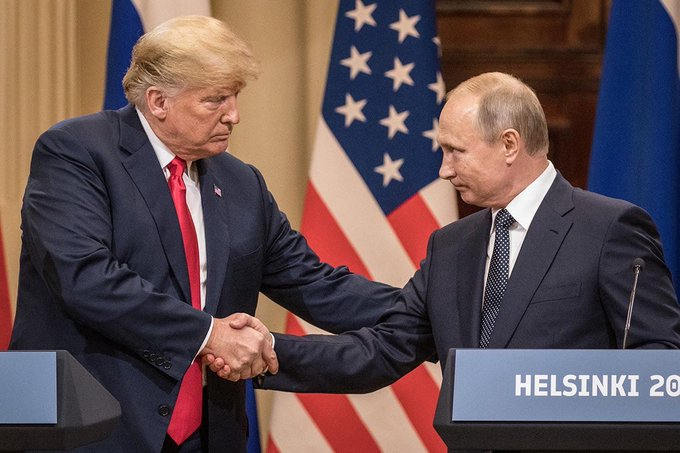
In a move that signals a significant recalibration of US sanctions policy, President Donald Trump is expected to extend the temporary waiver allowing transactions involving Russian oil and petroleum products. The current 30-day waiver, issued by the US Department of the Treasury, is set to expire on April 11, 2026 . According to multiple former Treasury and State Department officials, an extension is highly likely as the administration prioritizes domestic energy prices and strategic leverage over enforcement .
The decision comes at a time of acute volatility in global energy markets, triggered by the ongoing conflict in the Middle East and the effective closure of the Strait of Hormuz. With US gasoline prices hovering near $4 per gallon—the highest level since 2022—the White House is under immense pressure to prevent further economic fallout ahead of the midterm elections .
A ‘Narrow’ Policy with Broad Implications
The existing waiver, first issued in March and updated on March 19, applies exclusively to Russian crude and petroleum products that were loaded onto tankers before the respective deadlines . Treasury Secretary Scott Bessent has described the measure as a “narrowly tailored” intervention designed to stabilize global supply without delivering a financial windfall to the Kremlin .
“To increase the global reach of existing supply, Treasury is providing a temporary authorization to permit countries to purchase Russian oil currently stranded at sea. This is a deliberately short-term step.” — Treasury Secretary Scott Bessent
According to analysts cited by Semafor, the extension of the Russian waiver is also expected to pave the way for a similar extension of the Iranian oil waiver, which expires on April 19 . Together, these measures are intended to add liquidity to a market that has lost significant supply due to the war and shipping restrictions.
The Strategic Pivot: Sanctions as Leverage
Experts tracking the shift in US policy note a fundamental change in how the Trump administration views economic statecraft. Unlike previous administrations that used sanctions primarily as a tool of coercion, the current White House appears to treat them as a flexible instrument for market management and diplomatic negotiation .
“I have a hard time imagining the Trump administration cracking down hard on Russian oil again, at least not before the midterm elections,” Edward Fishman, a former State Department and Treasury official, told Semafor. His sentiment was echoed by other former officials who noted that the administration is prioritizing the avoidance of a domestic energy shock over punishing Moscow .
This represents a sharp departure from the policies of the Biden era and even the first Trump term. As Peter Harrell, a former State Department official now at Georgetown Law, observed: “In the past, we used to worry about what implementing sanctions would do to the oil price. Now, we are lifting sanctions because the oil price is high” .
Bipartisan Backlash: A ‘Lifeline’ for Putin
Despite the administration’s insistence that the move is temporary and narrow, it has triggered significant pushback from both Democrats and Republicans on Capitol Hill.
In March, Representatives Gregory Meeks (D-N.Y.) and Don Bacon (R-Neb.) sent a bipartisan letter to Treasury and State Departments warning that the policy risks handing the Kremlin a financial windfall . Senator Chuck Grassley (R-Iowa) called easing sanctions “the wrong move,” arguing that “every dollar” from oil sales fuels Russia’s war in Ukraine .
“This waiver constitutes an inexplicable act of material benefit to the enemy…. The Administration’s hapless approach has allowed Russia and other adversaries to profit from oil reserves previously constrained by sanctions.” — Senator Ruben Gallego (D-Ariz.) and Rep. Sam Liccardo (D-Calif.) in a letter to Secretary Bessent
The criticism has intensified amid reports that Russia is providing intelligence to Iran to help target US troops in the Middle East. Senator Ruben Gallego and Representative Sam Liccardo wrote to Bessent demanding answers, stating that by providing the waiver, the administration “signaled that the United States will reward attacks on our troops, not deter them” .
The European Dilemma
The US decision has also exposed a rift with European allies. While the US moves to ease restrictions, European leaders have criticized the move as “undermining” the collective sanctions regime . German Chancellor Friedrich Merz called the relaxation “wrong,” while European Council President Antonio Costa expressed concern over the “unilateral decision” impacting European security .
This divergence highlights the different energy realities on either side of the Atlantic. The US, as a net energy exporter, has more flexibility to use waivers to cool prices. Europe, still heavily reliant on imports, fears that any loosening of the rules could permanently fracture the transatlantic unity against Moscow.
What Comes Next
With the April 11 deadline approaching, the administration is expected to confirm the extension imminently. While the exact duration of the new waiver remains unclear, analysts anticipate it will be another short-term window, keeping the policy under the administration’s direct control and allowing for further adjustments based on market conditions and the progress of peace talks in the Middle East.
The move is also seen as a preparatory step for potential negotiations with Russia over a ceasefire in Ukraine. With Russian envoy Kirill Dmitriev currently in Washington for talks, the waiver provides the administration with a tangible chip to use in negotiations .
Frequently Asked Questions (FAQs)
1. What is the current status of the Russian oil sanctions waiver?
The existing 30-day waiver, issued in March, is set to expire on April 11, 2026. Multiple sources indicate the Trump administration is expected to extend it .
2. Why is the administration extending the waiver?
Officials cite the need to stabilize global energy markets and prevent a spike in gasoline prices amid the conflict in the Middle East and the closure of the Strait of Hormuz. The move is also seen as a way to gain leverage in negotiations with Russia .
3. Does the waiver apply to all Russian oil?
No. It applies only to oil and petroleum products that were already loaded onto tankers and “on the water” before the deadline. It is not a blanket authorization for new Russian oil production or long-term trade .
4. How has Congress reacted?
The move has faced bipartisan criticism. Lawmakers argue it provides a financial “lifeline” to the Kremlin at a time when Russia is assisting Iran against US interests. Some have introduced measures to terminate the allowance .
5. Does this affect sanctions on Iran?
Yes. Experts suggest extending the Russian waiver will likely pave the way for a similar extension of the Iranian oil waiver, which is currently set to expire on April 19 .
Stay informed with Reflecto News – Your trusted source for breaking energy and geopolitical intelligence. Subscribe for real-time updates on sanctions policy and the global energy crisis.
Questions people ask
What is China's current share of global manufacturing?
China now accounts for twenty eight percent of global manufacturing. This industrial output exceeds the combined manufacturing production of the United States, Japan, and Germany, making China the leading global industrial power according to recent reports.
Why were Andrew Tate and Tristan Tate arrested in Miami?
Andrew Tate and his brother Tristan Tate were taken into custody in Miami by the United States Marshals Service. They face thirty eight new charges in the United Kingdom, including rape and child pornography offences, and prosecutors are seeking their extradition.
What warning did Moscow issue about oil prices?
Kirill Dmitriev, the Chief Executive of the Russian Direct Investment Fund, warned that a tsunami of skyrocketing oil prices is approaching. Moscow describes this potential energy shock as a major threat to global markets.
What political shift is projected for Benjamin Netanyahu's coalition?
Political polls project that Prime Minister Benjamin Netanyahu's coalition is on track to lose its majority in the upcoming October election. This projection indicates a potential political shift in Jerusalem.
Why did a Russian military aircraft land in Tehran?
A Russian airborne command aircraft, widely known as a doomsday plane, landed in Tehran. The arrival of the aircraft represents a high stakes show of support from Russia for Iran during a period of heightened regional tensions.
What did President Masoud Pezeshkian claim about the United States and Israel?
Iranian President Masoud Pezeshkian claimed that the United States and Israel failed in a forty eight hour plan to topple the Iranian government. He made these statements during a televised address marking two years since his inauguration.