Reflecto News is an online news platform covering major international political events, global economic developments, and security conflicts. The site provides updates on topics such as Chinese manufacturing dominance, Middle Eastern political tensions, and high profile legal arrests. Readers can access current articles organized by categories like World News, Iran, and USA.
Published on Reflecto News | World News | Energy Security & Global Economy
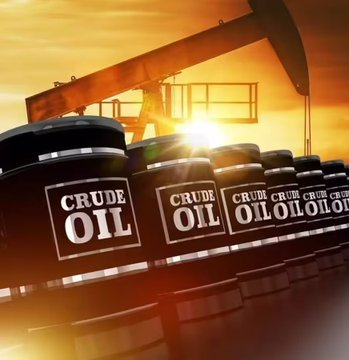
In a decisive move to shield the world’s largest oil importer from the escalating global energy crisis, the Chinese government has authorized its state-owned refining giants to tap into their commercial petroleum reserves. The decision, confirmed by people familiar with the matter, comes as a six-week war in the Middle East continues to disrupt global supply chains and send energy prices soaring .
The authorization for China National Petroleum Corporation (CNPC) and China Petrochemical Corporation (Sinopec) to draw from commercial inventories stored at processing plants and storage facilities marks a significant policy shift designed to stabilize domestic supply without breaching the country’s strategic safety net .
A Strategic Drawdown: Reserves as a Shock Absorber
As the crisis in the Strait of Hormuz—a chokepoint for approximately 20% of global oil—persists, Beijing is moving to utilize the multi-layered reserve system it has spent decades building.
According to analysts from Energy Aspects, China is expected to allow the use of roughly 1 million barrels per day (bpd) from commercial stocks during the second quarter of 2026 (April to June) . FGE NexantECA has estimated a drawdown of up to 1 million bpd just in the month of April.
To put this into perspective, China currently imports crude oil at a staggering pace of approximately 11 million bpd . This reserve tap is designed to fill the gap created by reduced imports from the conflict-ridden Middle East.
The Vast Scale of China’s Reserves
The decision to authorize the use of commercial reserves highlights the immense scale of China’s energy stockpiling efforts. Unlike the Strategic Petroleum Reserve (SPR), which remains untouched for now, these commercial volumes are part of a vast system built specifically to weather supply disruptions.
Key figures on China’s reserves include:
| Type of Reserve | Estimated Volume | Source |
|---|---|---|
| Total Overall Reserves | ~1.4 billion barrels | Government estimates |
| Above-Ground Commercial | 851 million barrels | Kayrros (March 2026) |
| Strategic Stockpiles (SPR) | 413 million barrels | Kayrros (March 2026) |
| Underground Storage Capacity | ~130 million barrels | Columbia University |
The scale of these reserves allows China to cover over 100 days of net imports, exceeding the International Energy Agency’s (IEA) recommended emergency stockpile standard of 90 days .
Preserving the Strategic Reserve
Significantly, the current authorization applies strictly to commercial inventories. China’s core Strategic Petroleum Reserve (SPR) remains untouched . This careful distinction indicates Beijing is playing a long game—utilizing immediate stockpiles to smooth over current price shocks while hoarding the strategic cache for a potential total blockade of the Strait of Hormuz.
This cautious approach contrasts with earlier reports from March 2026, which indicated that Beijing had rejected a previous request from Sinopec to tap into national commercial reserves, preferring to wait until the crisis deepened .
Global Context: A World Scrambling for Oil
China’s move mirrors actions taken by Western nations, though with different mechanisms. Members of the IEA agreed in March to release a record 400 million barrels from their reserves to calm markets . However, as the war has dragged on and the strait remains effectively closed, those releases have failed to fully stabilize prices.
In addition to tapping reserves, Beijing has curbed oil product exports and ordered refiners to keep fuel production high “at all costs” to ensure domestic energy security .
Future Stockpiling Plans
Even as it authorizes the use of current reserves, China is looking to the future. Reports indicate that Beijing has asked state firms to add an additional 8 million metric tons (nearly 60 million barrels) of crude to emergency stockpiles in a program running through July 2026 . This simultaneous “drawing down and building up” strategy reflects the uncertainty of the current geopolitical climate.
China’s ultimate goal remains energy self-reliance. While foreign imports still satisfy roughly 70% of demand, the massive “energy granary” of reserves provides the government with the unique ability to prevent the kind of pump panic seen in other nations during the crisis .
Conclusion: A Buffer Against Instability
With the Strait of Hormuz remaining largely closed and Iran imposing strict limits on shipping, China’s decision to authorize the use of commercial reserves is a critical lever to prevent an economic shockwave at home. By unlocking millions of barrels held in commercial tanks, Beijing is ensuring that factories continue running and fuel pumps keep flowing, even as the global energy landscape faces its most severe test in decades.
Frequently Asked Questions (FAQs)
1. Which companies are allowed to tap into the reserves?
The authorization applies to major state-owned oil firms, specifically China National Petroleum Corporation (CNPC) and China Petrochemical Corporation (Sinopec) .
2. How much oil will be released?
While the exact amount is not specified, analysts at Energy Aspects estimate the release could be around 1 million barrels per day from April to June 2026. FGE NexantECA suggests a similar drawdown for April alone .
3. Is China using its Strategic Petroleum Reserve (SPR)?
No. Currently, only commercial reserves are being tapped. The strategic reserve remains untouched, held in reserve for a more severe emergency .
4. Why is China doing this?
The six-week war in the Middle East, particularly the restrictions in the Strait of Hormuz, has disrupted global oil supplies. This drawdown is meant to stabilize the domestic market and offset the reduction in crude imports .
Stay informed with Reflecto News – Your trusted source for breaking economic and geopolitical intelligence. Subscribe for real-time updates on the global energy crisis.
Questions people ask
What is China's current share of global manufacturing?
China now accounts for twenty eight percent of global manufacturing. This industrial output exceeds the combined manufacturing production of the United States, Japan, and Germany, making China the leading global industrial power according to recent reports.
Why were Andrew Tate and Tristan Tate arrested in Miami?
Andrew Tate and his brother Tristan Tate were taken into custody in Miami by the United States Marshals Service. They face thirty eight new charges in the United Kingdom, including rape and child pornography offences, and prosecutors are seeking their extradition.
What warning did Moscow issue about oil prices?
Kirill Dmitriev, the Chief Executive of the Russian Direct Investment Fund, warned that a tsunami of skyrocketing oil prices is approaching. Moscow describes this potential energy shock as a major threat to global markets.
What political shift is projected for Benjamin Netanyahu's coalition?
Political polls project that Prime Minister Benjamin Netanyahu's coalition is on track to lose its majority in the upcoming October election. This projection indicates a potential political shift in Jerusalem.
Why did a Russian military aircraft land in Tehran?
A Russian airborne command aircraft, widely known as a doomsday plane, landed in Tehran. The arrival of the aircraft represents a high stakes show of support from Russia for Iran during a period of heightened regional tensions.
What did President Masoud Pezeshkian claim about the United States and Israel?
Iranian President Masoud Pezeshkian claimed that the United States and Israel failed in a forty eight hour plan to topple the Iranian government. He made these statements during a televised address marking two years since his inauguration.