Reflecto News is an online news platform covering major international political events, global economic developments, and security conflicts. The site provides updates on topics such as Chinese manufacturing dominance, Middle Eastern political tensions, and high profile legal arrests. Readers can access current articles organized by categories like World News, Iran, and USA.
US-Brokered Truce Halts Major Hostilities but Allows Israeli Self-Defense Actions, Raising Questions About True De-Escalation as Fighting Pauses and Negotiations Begin
By Reflecto News Staff
April 17, 2026
A newly announced 10-day ceasefire between Israel and Lebanon officially began at midnight Beirut time (5 p.m. ET on April 16), bringing a temporary halt to more than a month of intense fighting involving Hezbollah and Israeli forces.
The truce, brokered by the United States and announced by President Donald Trump, has triggered celebrations across Lebanon, with displaced civilians beginning to return to their homes in southern regions. However, the agreement’s terms explicitly preserve Israel’s right to take “all necessary measures in self-defense” against planned, imminent, or ongoing attacks, leading critics to question whether it represents genuine de-escalation or merely a pause that favors Israeli operational freedom.
Lebanese civilians celebrating in Beirut as the ceasefire takes effect, with reports of fireworks and relief after weeks of conflict.
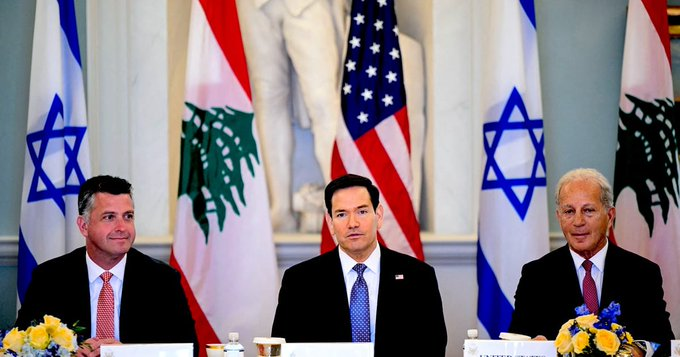
Key Terms of the Ceasefire Agreement
According to details released by the US State Department and confirmed by both sides:
- Israel will not carry out offensive military operations against Lebanese targets (civilian, military, or state) during the truce.
- However, Israel retains the right to act at any time in self-defense against threats from Hezbollah or other non-state armed groups.
- Lebanon is required to take “meaningful steps” to prevent attacks on Israel and assert its sovereignty, including limiting Hezbollah activities.
- The 10-day period can be extended by mutual agreement if negotiations show progress.
Israeli Prime Minister Benjamin Netanyahu stated that Israeli troops would remain in certain positions in southern Lebanon for security reasons and did not agree to a full withdrawal or a strict “quiet-for-quiet” model.
Hezbollah has indicated it would respect the ceasefire provided Israel stops its attacks, though the group has not issued a full formal endorsement.
Map of southern Lebanon and the Israel-Lebanon border area central to the ceasefire and ongoing security concerns.
Relief and Returns for Displaced Lebanese
The announcement has brought cautious optimism and visible relief in Lebanon, where over one million people were displaced by Israeli strikes and ground operations. Reports from Beirut, Sidon, and southern villages show families loading belongings onto vehicles and heading home, with celebratory gunfire and car horns echoing in some areas.
However, many remain wary. Lebanese officials and civilians have expressed concern that the self-defense clause could allow Israel to continue targeted strikes, potentially undermining the truce’s stability. Early reports from the Lebanese army mentioned intermittent shelling in southern villages shortly after the ceasefire began, though both sides have largely described the initial hours as calm.
Questions Over Real De-Escalation
Critics, including some Lebanese analysts and opposition figures, argue the agreement tilts in Israel’s favor by granting broad self-defense latitude while placing primary responsibility on Lebanon to restrain Hezbollah. This mirrors elements of previous ceasefires, where violations on both sides quickly escalated tensions.
The truce aims to create space for direct talks — the first meaningful Israel-Lebanon engagement in decades — with Trump inviting Lebanese President Joseph Aoun and Netanyahu to the White House. The goal is a longer-term arrangement that could include full implementation of UN Security Council Resolution 1701, which calls for Hezbollah to remain north of the Litani River and for Lebanese state forces to control the south.
Displaced Lebanese families returning to their homes in southern Lebanon following the ceasefire announcement.
What Happens Next?
The coming days will serve as a critical test. Success could lead to an extension of the truce and broader negotiations addressing Hezbollah’s role, Israeli withdrawal, and reconstruction. Failure risks rapid resumption of hostilities.
International actors, including European nations and the UN, have welcomed the pause while urging full compliance and humanitarian access for those still displaced.
Frequently Asked Questions (FAQs)
Q1: When did the 10-day ceasefire begin?
A: It took effect at midnight Beirut time on April 17, 2026 (5 p.m. ET on April 16).
Q2: Does the agreement allow Israel to strike inside Lebanon?
A: Israel retains the right to self-defense against imminent or ongoing threats. It has pledged not to conduct offensive operations, but the self-defense clause has raised concerns about potential continued strikes.
Q3: Are displaced people returning home?
A: Yes. Thousands have begun returning to southern Lebanon and other affected areas, though many express caution due to the truce’s fragility.
Q4: What is the main goal of the ceasefire?
A: To halt major fighting and create space for negotiations toward a lasting peace agreement, including steps to implement UN Resolution 1701 and strengthen Lebanese state control.
Q5: How has Hezbollah responded?
A: The group has indicated conditional support, saying it would respect the truce if Israel stops attacks, but has voiced reservations about Israeli presence in southern Lebanon.
Q6: Will the ceasefire be extended?
A: It can be extended by mutual agreement if talks progress and Lebanon demonstrates effective sovereignty over its territory.
Reflecto News Analysis
The start of Lebanon’s 10-day ceasefire brings immediate relief and hope for de-escalation after weeks of devastating violence, yet the agreement’s wording — particularly Israel’s preserved self-defense rights — leaves room for interpretation and potential violations. While displaced families celebrate the chance to return home, the truce’s success hinges on mutual restraint and genuine progress in upcoming Washington talks.
This pause offers a narrow window for diplomacy in a region already strained by the broader US-Iran conflict. True de-escalation will require addressing core issues like Hezbollah’s disarmament and Israeli security concerns without undermining Lebanese sovereignty. As the clock ticks on the initial 10 days, international monitoring and pressure will be essential to prevent a return to open conflict.
For the latest updates on the Israel-Lebanon ceasefire, regional security developments, and humanitarian efforts in Lebanon, stay tuned to Reflecto News — your trusted source for accurate, timely international coverage.
Related Coverage:
- Israel-Lebanon Ceasefire: Full Terms and Initial Reactions
- UN Resolution 1701: What It Means for Southern Lebanon
- Humanitarian Crisis in Lebanon: Displacement and Reconstruction Needs
Images used for illustrative purposes from public and news sources.
Questions people ask
What is China's current share of global manufacturing?
China now accounts for twenty eight percent of global manufacturing. This industrial output exceeds the combined manufacturing production of the United States, Japan, and Germany, making China the leading global industrial power according to recent reports.
Why were Andrew Tate and Tristan Tate arrested in Miami?
Andrew Tate and his brother Tristan Tate were taken into custody in Miami by the United States Marshals Service. They face thirty eight new charges in the United Kingdom, including rape and child pornography offences, and prosecutors are seeking their extradition.
What warning did Moscow issue about oil prices?
Kirill Dmitriev, the Chief Executive of the Russian Direct Investment Fund, warned that a tsunami of skyrocketing oil prices is approaching. Moscow describes this potential energy shock as a major threat to global markets.
What political shift is projected for Benjamin Netanyahu's coalition?
Political polls project that Prime Minister Benjamin Netanyahu's coalition is on track to lose its majority in the upcoming October election. This projection indicates a potential political shift in Jerusalem.
Why did a Russian military aircraft land in Tehran?
A Russian airborne command aircraft, widely known as a doomsday plane, landed in Tehran. The arrival of the aircraft represents a high stakes show of support from Russia for Iran during a period of heightened regional tensions.
What did President Masoud Pezeshkian claim about the United States and Israel?
Iranian President Masoud Pezeshkian claimed that the United States and Israel failed in a forty eight hour plan to topple the Iranian government. He made these statements during a televised address marking two years since his inauguration.