Reflecto News is an online news platform covering major international political events, global economic developments, and security conflicts. The site provides updates on topics such as Chinese manufacturing dominance, Middle Eastern political tensions, and high profile legal arrests. Readers can access current articles organized by categories like World News, Iran, and USA.
By Reflecto News Desk
April 7, 2026
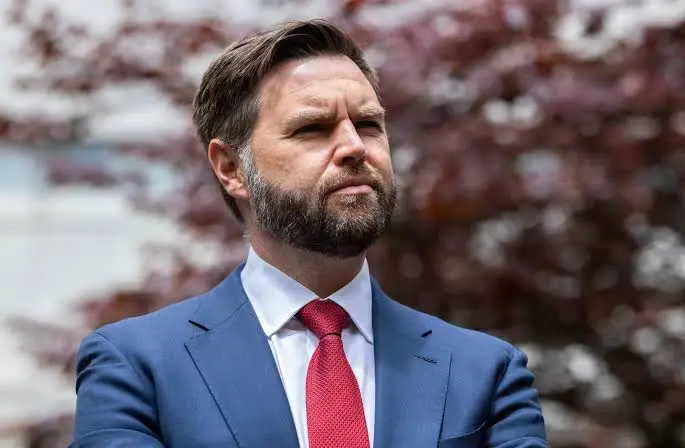
Vice President JD Vance delivered glowing praise for Hungarian Prime Minister Viktor Orbán during his visit to Budapest, declaring that Orbán “has done more than any leader in Europe to bring about a successful resolution to the war between Russia and Ukraine.”
The statement came amid strong U.S. backing for Orbán ahead of Hungary’s parliamentary elections. Vance positioned Orbán as a pragmatic statesman who prioritizes diplomacy and de-escalation over prolonged conflict, contrasting him with other European leaders whom he implied have prolonged the war through endless military aid and sanctions.
Vance’s remarks build on his earlier criticisms of EU bureaucrats in Brussels, whom he accused of enriching themselves while threatening national sovereignty across the continent. He also reiterated his defense of Western civilization against progressive ideologies that, in his view, see only injustice in Western history, exclusion in borders, oppression in Christianity, and constraint in the family.
Vance’s Full Endorsement of Orbán
Speaking alongside Orbán, Vance highlighted the Hungarian leader’s consistent calls for ceasefires, negotiations, and a realistic peace deal that accounts for security concerns on all sides. He argued that Orbán’s approach — emphasizing energy security, avoiding economic self-harm through excessive sanctions, and pushing for direct talks — offers a more effective path to ending the bloodshed than the current European consensus.
“Viktor Orbán has shown real leadership on this issue,” Vance stated, adding that Hungary’s stance has protected its citizens from the worst economic fallout of the conflict while keeping diplomatic channels open.
President Donald Trump reinforced the message during a phone call to the event, saying, “I love Hungary, and I love that Viktor. He’s a fantastic man.”
Context: Orbán’s Stance on Ukraine-Russia War
Orbán has long advocated for an immediate ceasefire and negotiations rather than what he calls “prolonging the war.” Hungary has resisted certain EU sanctions packages, blocked some military aid initiatives, and maintained relatively pragmatic relations with Moscow compared to other NATO and EU members. Critics accuse him of being too soft on Russia, while supporters credit him with preventing higher energy prices and economic damage for Hungarians.
Vance’s praise aligns with the Trump administration’s broader “America First” foreign policy, which favors ending “forever wars,” reducing U.S. involvement in distant conflicts, and prioritizing deals that serve American interests. It also reflects growing skepticism within parts of the MAGA base toward unlimited aid to Ukraine.
Broader Themes in Vance’s Budapest Visit
Vance used the platform to launch multiple lines of attack:
- Against progressive ideology that views Western traditions negatively.
- Against EU bureaucrats accused of undermining sovereignty and interfering in elections.
- In favor of strong national leaders like Orbán who defend borders, family, faith, and pragmatic diplomacy.
The visit is seen as a major boost for Orbán’s reelection campaign, with high-level U.S. endorsement potentially swaying voters concerned about economic pressures and EU overreach.
Link to Ongoing Global Crises
While Vance focused on European leadership and the Ukraine war, the timing coincides with President Trump’s 8:00 PM ET deadline for Iran to reopen the Strait of Hormuz. Iran’s Foreign Ministry spokesman Esmail Baghaei has responded defiantly, asserting that a “civilized” nation’s culture, logic, and faith will prevail over “brute force,” while indirect diplomatic channels reportedly remain open. The UN Security Council recently failed to pass a Bahrain-backed resolution after Russia and China vetoed it.
Vance’s emphasis on sovereignty and pragmatic deal-making could foreshadow the administration’s approach to the Iran crisis — favoring strong pressure combined with potential negotiations rather than open-ended commitments.
Potential Reactions and Implications
Vance’s comments are likely to draw sharp criticism from Kyiv, Brussels, and pro-Ukraine European leaders, who may view them as undermining unified Western support for Ukraine. In Hungary, however, they could galvanize Orbán’s base by framing him as a peace-seeking alternative to more hawkish EU policies.
For U.S.-Europe relations, the remarks further highlight divisions between the Trump administration and traditional European allies, potentially complicating coordination on both the Ukraine war and the escalating Iran situation.
Reflecto News will continue monitoring reactions from European capitals, updates from the Hungarian election campaign, and any developments tied to Trump’s Iran deadline.
FAQs: JD Vance’s Praise for Viktor Orbán on Ukraine-Russia War
What did JD Vance specifically say about Orbán and the Ukraine war?
Vance claimed that Viktor Orbán “has done more than any leader in Europe to bring about a successful resolution to the war between Russia and Ukraine,” crediting him with pushing for ceasefires and pragmatic negotiations.
Why is this significant?
It represents strong U.S. endorsement of Orbán’s dovish stance on Ukraine, contrasting with the more interventionist approach favored by many EU and NATO members.
How does this fit with Vance’s other remarks in Budapest?
It complements his attacks on EU bureaucrats for threatening sovereignty and his broader defense of Western civilization, family, faith, and national borders against progressive critiques.
Did President Trump comment?
Yes — Trump praised Orbán warmly, stating “I love Hungary, and I love that Viktor. He’s a fantastic man.”
What are the potential impacts on the Ukraine conflict?
The comments could encourage calls for negotiations but may strain relations with pro-Ukraine European governments and complicate unified Western policy.
How does this relate to the Iran crisis?
Vance’s emphasis on sovereignty and deal-making echoes the Trump administration’s current pressure-and-diplomacy approach toward Iran’s closure of the Strait of Hormuz.
This is a rapidly evolving story with implications for European politics, transatlantic relations, and global conflict resolution. Reflecto News will provide ongoing coverage as new developments emerge.
Questions people ask
What is China's current share of global manufacturing?
China now accounts for twenty eight percent of global manufacturing. This industrial output exceeds the combined manufacturing production of the United States, Japan, and Germany, making China the leading global industrial power according to recent reports.
Why were Andrew Tate and Tristan Tate arrested in Miami?
Andrew Tate and his brother Tristan Tate were taken into custody in Miami by the United States Marshals Service. They face thirty eight new charges in the United Kingdom, including rape and child pornography offences, and prosecutors are seeking their extradition.
What warning did Moscow issue about oil prices?
Kirill Dmitriev, the Chief Executive of the Russian Direct Investment Fund, warned that a tsunami of skyrocketing oil prices is approaching. Moscow describes this potential energy shock as a major threat to global markets.
What political shift is projected for Benjamin Netanyahu's coalition?
Political polls project that Prime Minister Benjamin Netanyahu's coalition is on track to lose its majority in the upcoming October election. This projection indicates a potential political shift in Jerusalem.
Why did a Russian military aircraft land in Tehran?
A Russian airborne command aircraft, widely known as a doomsday plane, landed in Tehran. The arrival of the aircraft represents a high stakes show of support from Russia for Iran during a period of heightened regional tensions.
What did President Masoud Pezeshkian claim about the United States and Israel?
Iranian President Masoud Pezeshkian claimed that the United States and Israel failed in a forty eight hour plan to topple the Iranian government. He made these statements during a televised address marking two years since his inauguration.