Reflecto News is an online news platform covering major international political events, global economic developments, and security conflicts. The site provides updates on topics such as Chinese manufacturing dominance, Middle Eastern political tensions, and high profile legal arrests. Readers can access current articles organized by categories like World News, Iran, and USA.
Published on Reflecto News | World News | Intelligence & Geopolitics
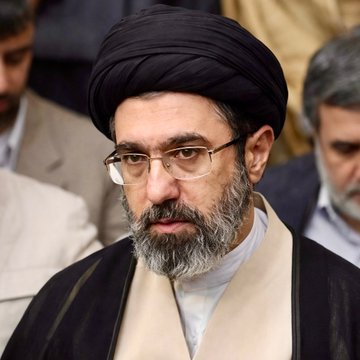
In a stark assessment delivered during a closed-door Knesset briefing, Israeli intelligence officials have warned that Iran’s new leadership under Supreme Leader Mojtaba Khamenei represents a more extreme and ideologically rigid regime than its predecessor. The assessment comes as a fragile two-week ceasefire between the United States and Iran holds, but with deep uncertainties about the future trajectory of the Islamic Republic’s domestic and foreign policy .
According to sources with knowledge of the matter, representatives of the Israel Defense Forces (IDF) told the Knesset Foreign Affairs and Defense Committee that much of Iran’s new leadership is drawn from the Islamic Revolutionary Guard Corps (IRGC), who are considered to be far more ideologically rigid than the previous political leadership . The briefing occurred less than a day after US President Donald Trump announced the two-week ceasefire with Iran.
The Intelligence Assessment: A More Extreme Leadership
The IDF’s assessment paints a picture of a leadership transition that has hardened rather than moderated Iran’s positions. The new power structure, which took shape following the death of Supreme Leader Ayatollah Ali Khamenei on February 28—the first day of the US-Israeli strikes—is dominated by IRGC figures who have little interest in compromise .
Key findings from the Israeli intelligence assessment include:
| Factor | Assessment |
|---|---|
| Leadership composition | Dominated by IRGC figures, more ideologically rigid |
| Foreign policy stance | Rejection of diplomatic engagement with US |
| Nuclear posture | Continued enrichment; rejection of Western demands |
| Regional strategy | Maintained commitment to “Axis of Resistance” |
This assessment aligns with statements from a senior Iranian official who told Reuters in March that the new Supreme Leader had rejected proposals—relayed through two intermediary countries—to de-escalate tensions with the United States or agree to a ceasefire. The official described Mojtaba Khamenei’s posture as “very tough and serious” regarding revenge against the US and Israel .
‘Khamenei 2.0’: Same Regime, New Generation
The Israeli characterization of Iran’s new leadership extends beyond the Knesset briefing. The Israeli Foreign Ministry has launched an international messaging campaign emphasizing what it calls continuity of the regime’s “repression, war, and bloodshed” under the new Supreme Leader .
A giant digital billboard in New York’s Times Square displayed the message: “Khamenei 2.0: New generation, same terror regime, still evil” . The Israeli Foreign Ministry accompanied the video with a statement: “In Times Square, the message is clear: The face may slightly change, the Iranian terror regime does not” .
Israel’s UN Ambassador Danny Danon elaborated on this position, stating: “Changing the man at the top does not change the regime. The new leader, unfortunately, is more of the same ideology, the same radical ideas” .
The IRGC’s ‘De Facto Control’
Compounding concerns about Iran’s trajectory under its new leadership are reports that the IRGC has assumed “de facto control” of key state functions amid escalating power struggles with President Masoud Pezeshkian’s administration . According to informed sources cited by Iran International, a “military council” composed of senior IRGC officers is now exercising effective control over central decision-making .
This power dynamic has reportedly left President Pezeshkian in a “complete political deadlock,” with the IRGC blocking presidential appointments and policy decisions while enforcing a strict security cordon around the new Supreme Leader . Efforts by Pezeshkian to appoint a new intelligence minister collapsed following direct intervention from IRGC commanders, who insisted that under wartime conditions, all sensitive and strategic posts must be controlled directly by the IRGC .
The uncertainty surrounding Mojtaba Khamenei’s health and whereabouts—he has not been seen in public since the strike that killed his father—has further complicated governance. Israeli and Western media have reported that he may be in critical condition or unconscious, though Iranian state media has dismissed these claims .
The Continuity of Iran’s Nuclear and Missile Programs
Despite Israel’s claims of having “destroyed” Iran’s ballistic missile production capabilities, Israeli intelligence now warns that Iran is already working to restore its arsenal. The IDF has declared that Iran’s accelerated missile production poses a “direct, existential threat” to Israel and that Israel “will never allow Iran to restore its military capabilities” .
Israel’s assessment of a more extreme regime is supported by public statements from the new Supreme Leader. In a written message read on state television, Mojtaba Khamenei declared that Iran would “not relinquish its legitimate rights under any circumstances” and that “the entire resistance front” is considered “a unified entity” .
Implications for the Ceasefire and Diplomacy
The Israeli assessment that Iran’s new regime is more extreme carries significant implications for the current diplomatic moment. As US and Iranian delegations prepare to meet in Islamabad for high-stakes peace talks, the question of who holds decision-making authority in Tehran—and what their objectives are—remains unresolved .
Committee Chair Boaz Bismuth, following the Knesset briefing, posted on X: “There is a possibility that the campaign will resume in the coming days,” adding that “we are only at an interim stage” . The Knesset panel also approved the extension of the call-up of up to 400,000 reservists until May 14—a clear signal that Israel is preparing for the possibility that the ceasefire may not lead to a permanent resolution .
Conclusion: A Harder Target for Diplomacy
Israel’s assessment that Iran’s new regime is more extreme than its predecessor presents a sobering reality for those hoping that the leadership transition might create new opportunities for diplomatic breakthrough. The elevation of IRGC figures to positions of greater authority, the reported sidelining of the civilian government, and the new Supreme Leader’s public statements rejecting compromise all point to a leadership that may be less willing to make concessions than the one it replaced.
As the ceasefire holds and the Islamabad talks approach, the question facing US and Israeli policymakers is whether any negotiated agreement can succeed with a leadership structure that Israeli intelligence describes as more extreme, more ideologically rigid, and potentially less predictable than its predecessor.
For now, Israel’s message is clear: the face may have changed, but the regime—and the threat it poses—has not.
Frequently Asked Questions (FAQs)
1. What did Israel say about Iran’s new regime?
Israeli intelligence officials told the Knesset Foreign Affairs and Defense Committee that Iran’s new leadership under Supreme Leader Mojtaba Khamenei is more extreme than its predecessor, with much of the leadership drawn from the IRGC, who are considered far more ideologically rigid .
2. Why does Israel believe the new regime is more extreme?
The assessment is based on the composition of the new leadership (dominated by IRGC figures), public statements from the new Supreme Leader rejecting diplomatic engagement, and reported IRGC consolidation of control over key state functions .
3. Has the new Supreme Leader indicated a willingness to negotiate?
According to a senior Iranian official cited by Reuters, the new Supreme Leader has rejected proposals to de-escalate tensions with the United States, stating that “now is not the time for peace” unless the US and Israel are “defeated, accept defeat, and pay compensation” .
4. Is the IRGC in control of Iran’s government?
Reports indicate the IRGC has assumed “de facto control” of key state functions amid an escalating power struggle with President Pezeshkian’s administration. A “military council” of senior IRGC officers is reportedly exercising effective control over central decision-making .
5. Has Israel called for regime change in Iran?
Yes. Israel’s UN Ambassador Danny Danon has stated that “the people of Iran should rise up to choose their next leader” and that Israel and the US “will have to create the conditions for them” .
6. What is the status of the ceasefire?
A two-week ceasefire between the United States and Iran, brokered by Pakistan, is currently in effect. However, Israeli officials have warned that fighting could resume “in the coming days” and that “we are only at an interim stage” .
7. Has Israel extended reservist call-ups?
Yes. The Knesset panel approved the extension of the call-up of up to 400,000 reservists until May 14, indicating Israel’s preparation for the possibility of resumed conflict .
Stay informed with Reflecto News – Your trusted source for breaking geopolitical intelligence. Subscribe for real-time updates on the ceasefire, the Islamabad talks, and the evolving situation in Iran.
Questions people ask
What is China's current share of global manufacturing?
China now accounts for twenty eight percent of global manufacturing. This industrial output exceeds the combined manufacturing production of the United States, Japan, and Germany, making China the leading global industrial power according to recent reports.
Why were Andrew Tate and Tristan Tate arrested in Miami?
Andrew Tate and his brother Tristan Tate were taken into custody in Miami by the United States Marshals Service. They face thirty eight new charges in the United Kingdom, including rape and child pornography offences, and prosecutors are seeking their extradition.
What warning did Moscow issue about oil prices?
Kirill Dmitriev, the Chief Executive of the Russian Direct Investment Fund, warned that a tsunami of skyrocketing oil prices is approaching. Moscow describes this potential energy shock as a major threat to global markets.
What political shift is projected for Benjamin Netanyahu's coalition?
Political polls project that Prime Minister Benjamin Netanyahu's coalition is on track to lose its majority in the upcoming October election. This projection indicates a potential political shift in Jerusalem.
Why did a Russian military aircraft land in Tehran?
A Russian airborne command aircraft, widely known as a doomsday plane, landed in Tehran. The arrival of the aircraft represents a high stakes show of support from Russia for Iran during a period of heightened regional tensions.
What did President Masoud Pezeshkian claim about the United States and Israel?
Iranian President Masoud Pezeshkian claimed that the United States and Israel failed in a forty eight hour plan to topple the Iranian government. He made these statements during a televised address marking two years since his inauguration.