Reflecto News is an online news platform covering major international political events, global economic developments, and security conflicts. The site provides updates on topics such as Chinese manufacturing dominance, Middle Eastern political tensions, and high profile legal arrests. Readers can access current articles organized by categories like World News, Iran, and USA.
Published on Reflecto News | World News | Defense & Geopolitics
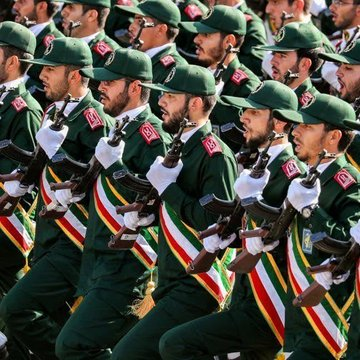
The Islamic Revolutionary Guard Corps (IRGC) has issued a dramatic new threat against naval forces in the Strait of Hormuz, warning that enemies attempting to pass through the strategic waterway will be trapped in “deadly whirlpools.” The statement, carried by Iranian state media and amplified on official IRGC channels, appears to be a veiled reference to new naval tactics or underwater weaponry designed to disrupt shipping and target military vessels .
The threat comes as the fragile two-week ceasefire between the United States and Iran holds — for now — and as President Donald Trump has escalated his rhetoric, declaring that he could “take out Iran in one day” and that the US military is “locked and loaded”
‘Deadly Whirlpools’
The IRGC’s statement was characteristically dramatic, blending traditional military warnings with more cryptic language.
“Any enemy force attempting to violate the security of the Strait of Hormuz will find themselves trapped in deadly whirlpools from which there is no escape. The IRGC Navy maintains full control over this strategic waterway.” — IRGC Navy Command
The phrase “deadly whirlpools” is ambiguous. It could refer to:
| Interpretation | Plausibility | Meaning |
|---|---|---|
| Literal whirlpools | Low | Natural whirlpools are not a significant naval threat |
| Underwater mines | High | Mines can be arranged to create “traps” |
| Torpedo nets or underwater obstacles | Medium | Could entangle vessels |
| Submarine ambushes | Medium | Submarines could attack from multiple directions |
| New underwater weaponry | Possible | Iran has developed new naval technologies |
Most likely, the “deadly whirlpools” reference is metaphorical — a colorful warning that Iran has multiple ways to trap and destroy enemy vessels in the narrow confines of the strait .
The Strait of Hormuz: A Natural Chokepoint
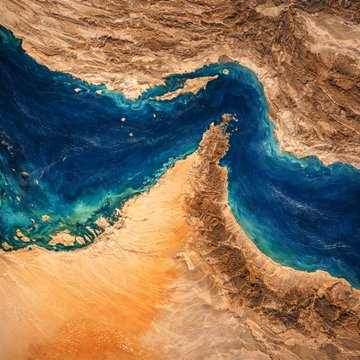
The Strait of Hormuz is uniquely vulnerable to naval warfare. At its narrowest point, the waterway is approximately 21 miles (33 km) wide, but the shipping lanes in each direction are only about 2 miles (3 km) wide .
| Characteristic | Detail |
|---|---|
| Width at narrowest point | ~21 miles (33 km) |
| Shipping lane width | ~2 miles (3 km) each direction |
| Vulnerability | High (confined waters) |
| Iranian control | IRGC claims “full control” |
| Current status | Largely restricted |
The confined waters mean that vessels have limited maneuverability, making them vulnerable to mines, small boat swarms, missiles, and — potentially — the “whirlpools” the IRGC threatens .
The Mine Threat: Iran’s Existing Capability
Iran has already demonstrated its ability to mine the strait. According to US officials cited by The New York Times, Iran conducted a “haphazard” mining operation in March, using small boats to lay mines without systematically tracking their locations .
| Mine Capability | Status |
|---|---|
| Mine stockpile | Estimated 2,000-6,000 naval mines |
| Mine-laying vessels | Small boats; some destroyed by US strikes |
| Current mine status | Some mines still present; locations uncertain |
| Removal capability | Iran lacks capacity to find/remove all mines |
The IRGC’s “deadly whirlpools” threat could be a reference to these existing mines — or to new mines that could be laid to create “traps” for enemy vessels .
The IRGC’s Naval Strategy: Asymmetric Warfare
The IRGC Navy is designed for asymmetric warfare — using small, fast vessels, mines, and coastal defenses to threaten much larger conventional navies.
IRGC naval capabilities:
- Small boat swarms: Hundreds of fast attack craft
- Anti-ship missiles: Coastal defense systems
- Naval mines: Large stockpile
- Submarines: Small, diesel-electric (some able to lay mines)
- Drones: Unmanned surface and aerial vehicles
The “deadly whirlpools” threat fits within this asymmetric doctrine — using the geography of the strait to compensate for Iran’s conventional naval inferiority .
The Context: Trump’s Threats and Failed Talks
The IRGC’s warning comes amid escalating rhetoric from both sides. President Trump has declared that he could “take out Iran in one day” and that the US military is “locked and loaded” to “finish up the little that is left of Iran” .
| Event | Outcome |
|---|---|
| Islamabad talks | No agreement (nuclear issue unresolved) |
| Trump threat | “Locked and loaded” |
| Latest Trump threat | “I could take out Iran in one day” |
| IRGC response | “Deadly whirlpools” threat |
The IRGC’s statement can be read as a direct response to Trump’s threats — warning that any US military action in the strait will be met with devastating consequences .
Could the US Clear the Strait?
The United States has begun mine-clearing operations in the strait, but the IRGC’s “whirlpools” threat suggests that mines are not the only danger.
| Challenge | US Capability |
|---|---|
| Mine clearance | Ongoing; limited by legacy minesweeper retirement |
| Small boat swarms | Defensible with air and naval assets |
| Anti-ship missiles | Defensible with electronic warfare and interceptors |
| Submarines | ASW assets available; detection challenging |
| New ‘whirlpool’ weapons | Unknown; cannot defend against unknown threats |
The IRGC’s ambiguous threat is strategically useful — it creates uncertainty and fear without revealing actual capabilities .
What Comes Next
As the ceasefire clock ticks down and both sides exchange threats, the risk of military confrontation in the Strait of Hormuz remains elevated.
| Scenario | Likelihood | Implications |
|---|---|---|
| Continued standoff | Likely | Neither side backs down |
| US naval operation | Possible | Would test IRGC threats |
| Iranian attack on US vessel | Elevated | Could trigger wider war |
| Diplomatic resolution | Possible | Pezeshkian has signaled openness |
The IRGC’s “deadly whirlpools” threat is the latest salvo in an escalating war of words. Whether it reflects actual military capabilities or psychological warfare remains unclear. What is clear is that the Strait of Hormuz remains a powder keg — and any spark could trigger a wider conflagration.
Frequently Asked Questions (FAQs)
1. What did the IRGC say about the Strait of Hormuz?
The IRGC warned that any enemy force attempting to violate the security of the strait will find themselves trapped in “deadly whirlpools from which there is no escape” .
2. What does ‘deadly whirlpools’ mean?
The phrase is ambiguous. It could refer to naval mines, torpedo nets, submarine ambushes, or new underwater weaponry. Most likely, it is metaphorical — a colorful warning that Iran has multiple ways to trap enemy vessels .
3. Does Iran have the capability to create ‘deadly whirlpools’?
Iran has demonstrated the ability to mine the strait, and it possesses small submarines, anti-ship missiles, and small boat swarms. The specific “whirlpools” reference may be psychological warfare rather than a literal description of a new weapon .
4. Why is the IRGC issuing this threat now?
The threat comes in response to President Trump’s escalating rhetoric, including his declaration that he could “take out Iran in one day” and that the US military is “locked and loaded” .
5. Is the ceasefire still in effect?
Yes, the two-week ceasefire announced on April 7 remains in effect for now .
6. Can the US clear the Strait of Hormuz?
The US has begun mine-clearing operations, but the IRGC’s ambiguous threat suggests that mines are not the only danger. The US can defend against known threats but cannot defend against unknown capabilities .
7. What happens next?
The risk of military confrontation remains elevated. The IRGC’s threat is the latest in an escalating war of words. Whether diplomacy can prevail remains to be seen .
Stay informed with Reflecto News – Your trusted source for breaking defense and geopolitical intelligence. Subscribe for real-time updates on the Strait of Hormuz crisis and US-Iran military tensions.
Questions people ask
What is China's current share of global manufacturing?
China now accounts for twenty eight percent of global manufacturing. This industrial output exceeds the combined manufacturing production of the United States, Japan, and Germany, making China the leading global industrial power according to recent reports.
Why were Andrew Tate and Tristan Tate arrested in Miami?
Andrew Tate and his brother Tristan Tate were taken into custody in Miami by the United States Marshals Service. They face thirty eight new charges in the United Kingdom, including rape and child pornography offences, and prosecutors are seeking their extradition.
What warning did Moscow issue about oil prices?
Kirill Dmitriev, the Chief Executive of the Russian Direct Investment Fund, warned that a tsunami of skyrocketing oil prices is approaching. Moscow describes this potential energy shock as a major threat to global markets.
What political shift is projected for Benjamin Netanyahu's coalition?
Political polls project that Prime Minister Benjamin Netanyahu's coalition is on track to lose its majority in the upcoming October election. This projection indicates a potential political shift in Jerusalem.
Why did a Russian military aircraft land in Tehran?
A Russian airborne command aircraft, widely known as a doomsday plane, landed in Tehran. The arrival of the aircraft represents a high stakes show of support from Russia for Iran during a period of heightened regional tensions.
What did President Masoud Pezeshkian claim about the United States and Israel?
Iranian President Masoud Pezeshkian claimed that the United States and Israel failed in a forty eight hour plan to topple the Iranian government. He made these statements during a televised address marking two years since his inauguration.