Reflecto News is an online news platform covering major international political events, global economic developments, and security conflicts. The site provides updates on topics such as Chinese manufacturing dominance, Middle Eastern political tensions, and high profile legal arrests. Readers can access current articles organized by categories like World News, Iran, and USA.
Published on Reflecto News | World News | Diplomacy & Conflict
In a significant diplomatic overture following the collapse of direct talks in Islamabad, Iranian President Masoud Pezeshkian has declared that Iran is ready for a “fair and balanced” deal with the United States to ensure lasting peace and security in the region. The statement, made during a cabinet meeting on Sunday, represents Tehran’s most conciliatory public message since the six-week war began and stands in contrast to the harder-line posture struck by Parliament Speaker Mohammad Bagher Ghalibaf after the failed negotiations .
Pezeshkian’s remarks come as the fragile two-week ceasefire holds — for now — and as President Donald Trump threatens renewed military action, declaring that he could “take out Iran in one day” .
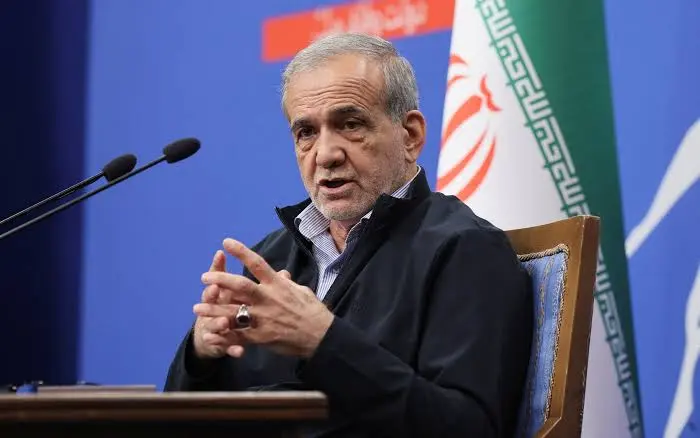
‘Ready for a Fair and Balanced Deal’
President Pezeshkian’s statement was notable for its constructive tone, emphasizing Iran’s willingness to reach an agreement rather than its red lines.
“Iran is ready for a fair and balanced deal with the United States to ensure lasting peace and security. We seek a resolution that respects our rights and addresses legitimate concerns.” — President Masoud Pezeshkian
The phrase “fair and balanced” is significant. It suggests that Iran is not categorically opposed to a deal, but that any agreement must be reciprocal — addressing both US concerns (nuclear program, regional activities) and Iranian concerns (sanctions relief, security guarantees, respect for sovereignty) .
Pezeshkian did not specify what such a deal would entail, but his framing aligns with Iran’s long-standing position that the nuclear issue can only be resolved through mutual concessions — not unilateral demands .
Contrast with Ghalibaf’s Harder Line
Pezeshkian’s conciliatory tone stands in contrast to the harder-line posture struck by Parliament Speaker Mohammad Bagher Ghalibaf after the failed Islamabad talks.
| Official | Post-Talks Statement | Tone |
|---|---|---|
| President Pezeshkian | “Ready for a fair and balanced deal” | Conciliatory |
| Parliament Speaker Ghalibaf | US “failed to gain our trust” | Harder line |
This divergence may reflect different roles and audiences. Pezeshkian, as head of government, may be positioning himself as a potential dealmaker. Ghalibaf, as parliament speaker and former IRGC commander, may be appealing to harder-line domestic constituencies .
It could also signal genuine divisions within Iran’s leadership about how to approach the diplomatic process — or a deliberate “good cop/bad cop” strategy in negotiations .
The Context: Failed Talks and Trump’s Threats
Pezeshkian’s overture comes at a critical moment. The US-Iran talks in Islamabad ended after nearly 21 hours without an agreement, with nuclear issues remaining unresolved .
| Event | Outcome |
|---|---|
| Islamabad talks | No agreement (nuclear issue unresolved) |
| US delegation | Fully departed Pakistan |
| Ceasefire | Still in effect (temporary, two weeks) |
| Trump threat | “Locked and loaded” to “finish up the little that is left” |
| Latest Trump threat | “I could take out Iran in one day” |
President Trump has escalated his rhetoric, declaring that he could “take out Iran in one day” and that the US military is “locked and loaded” . Pezeshkian’s statement can be read as an attempt to keep the diplomatic door open despite the collapse of talks and Trump’s threats .
What Would a ‘Fair and Balanced’ Deal Look Like?
Pezeshkian’s phrase “fair and balanced” suggests a reciprocal agreement — one in which both sides make concessions.
| Issue | US Demand | Iranian Position | Potential Compromise |
|---|---|---|---|
| Nuclear enrichment | Complete cessation | Right to enrich for civilian purposes | Phased reduction, stricter monitoring |
| Enriched uranium stockpile | Surrender all | Retain as sovereign property | Transfer some, store rest under IAEA supervision |
| Sanctions | Phased relief tied to compliance | Complete lifting | Phased relief matching compliance |
| Frozen assets | Conditioned on nuclear concessions | Unconditional release | Release tied to specific commitments |
| Strait of Hormuz | Immediate reopening | Only after final peace deal | Phased reopening during implementation |
| Lebanon ceasefire | Not included | “Inseparable part” | Separate track, parallel timeline |
A “fair and balanced” deal would require the United States to make concessions on sanctions relief and security guarantees in exchange for Iranian concessions on its nuclear program and regional activities .
The Nuclear Issue: Can a Compromise Be Found?
The nuclear issue remains the primary obstacle. Trump has stated that Iran is “unwilling to give up its nuclear ambitions,” while Pezeshkian’s overture suggests openness to a negotiated resolution .
Potential compromise elements:
- Iran limits enrichment to 3.67% (JCPOA level) rather than current 60%
- Iran transfers its 60% stockpile out of the country or dilutes it
- Iran accepts enhanced IAEA monitoring, including at undeclared sites
- The US provides sanctions relief and security guarantees
- Time-limited restrictions with extension options, rather than permanent
Whether such a compromise is politically possible on either side remains an open question .
Domestic Pressures on Both Sides
Both leaders face significant domestic constraints that shape their negotiating positions.
Iranian constraints:
- Hardliners oppose any concessions on nuclear program
- Public opinion supportive of nuclear rights
- Regime legitimacy tied to resistance against US pressure
US constraints:
- Congressional opposition to sanctions relief without verified denuclearization
- Israeli pressure to maintain maximum pressure
- Domestic political considerations (election year)
Pezeshkian’s “fair and balanced” framing may be designed to appeal to moderate forces within Iran while signaling to Washington that a deal is possible — if the United States is willing to make reciprocal concessions .
International Reactions
The international community has responded cautiously to Pezeshkian’s overture.
Russia: President Putin has offered to mediate, and Moscow would likely support a negotiated resolution .
China: Beijing has maintained economic ties with Tehran throughout the conflict and would welcome a deal that stabilizes the region .
European allies: France, Germany, and the UK have expressed support for diplomacy but have limited leverage .
United Nations: Secretary-General Antonio Guterres has consistently called for de-escalation and a negotiated settlement .
What Comes Next
Pezeshkian’s overture opens a potential pathway back to diplomacy, but significant obstacles remain.
| Scenario | Likelihood | Implications |
|---|---|---|
| Diplomacy revived | Possible | Russia or other third party could mediate |
| US rejects overture | Possible | Trump may view as weak |
| Ceasefire extended | Possible | Temporary pause continues |
| Military action | Elevated | Trump has threatened repeatedly |
The coming days will determine whether Pezeshkian’s “fair and balanced” offer leads to renewed negotiations — or whether Trump’s “locked and loaded” posture prevails.
Frequently Asked Questions (FAQs)
1. What did President Pezeshkian say about a deal with the US?
Pezeshkian declared that Iran is “ready for a fair and balanced deal with the United States to ensure lasting peace and security” .
2. How does this compare to Ghalibaf’s statement?
Pezeshkian’s tone is more conciliatory than Parliament Speaker Ghalibaf’s, who said the US “failed to gain our trust.” This may reflect different roles, audiences, or genuine divisions within Iran’s leadership .
3. Did the Islamabad talks produce an agreement?
No. The talks ended after nearly 21 hours without an agreement, with nuclear issues remaining unresolved .
4. What would a ‘fair and balanced’ deal look like?
It would require reciprocal concessions: Iran would limit its nuclear program in exchange for US sanctions relief and security guarantees .
5. Is the ceasefire still in effect?
Yes, the two-week ceasefire announced on April 7 remains in effect for now .
6. How has President Trump responded to Iran’s overture?
Trump has not yet directly responded to Pezeshkian’s statement. He has previously threatened renewed military action, declaring he could “take out Iran in one day” .
7. Could diplomacy be revived?
Pezeshkian’s overture opens a potential pathway, but significant obstacles remain. Third-party mediation (Russia, China) could help bridge the gap .
Stay informed with Reflecto News – Your trusted source for breaking diplomatic and geopolitical intelligence. Subscribe for real-time updates on the US-Iran crisis, ceasefire developments, and regional security.
Questions people ask
What is China's current share of global manufacturing?
China now accounts for twenty eight percent of global manufacturing. This industrial output exceeds the combined manufacturing production of the United States, Japan, and Germany, making China the leading global industrial power according to recent reports.
Why were Andrew Tate and Tristan Tate arrested in Miami?
Andrew Tate and his brother Tristan Tate were taken into custody in Miami by the United States Marshals Service. They face thirty eight new charges in the United Kingdom, including rape and child pornography offences, and prosecutors are seeking their extradition.
What warning did Moscow issue about oil prices?
Kirill Dmitriev, the Chief Executive of the Russian Direct Investment Fund, warned that a tsunami of skyrocketing oil prices is approaching. Moscow describes this potential energy shock as a major threat to global markets.
What political shift is projected for Benjamin Netanyahu's coalition?
Political polls project that Prime Minister Benjamin Netanyahu's coalition is on track to lose its majority in the upcoming October election. This projection indicates a potential political shift in Jerusalem.
Why did a Russian military aircraft land in Tehran?
A Russian airborne command aircraft, widely known as a doomsday plane, landed in Tehran. The arrival of the aircraft represents a high stakes show of support from Russia for Iran during a period of heightened regional tensions.
What did President Masoud Pezeshkian claim about the United States and Israel?
Iranian President Masoud Pezeshkian claimed that the United States and Israel failed in a forty eight hour plan to topple the Iranian government. He made these statements during a televised address marking two years since his inauguration.