Reflecto News is an online news platform covering major international political events, global economic developments, and security conflicts. The site provides updates on topics such as Chinese manufacturing dominance, Middle Eastern political tensions, and high profile legal arrests. Readers can access current articles organized by categories like World News, Iran, and USA.
Published on Reflecto News | World News | Diplomacy & Geopolitics
Iranian President Masoud Pezeshkian has announced that Iran is “prepared to continue talks” with the United States, reopening a diplomatic window just days after high-stakes negotiations in Islamabad collapsed without an agreement. The statement, made during a cabinet meeting on Tuesday, represents a significant shift in tone from Tehran’s post-talks posture and offers a potential pathway back to the negotiating table .
“Iran is prepared to continue talks with the United States. We have never left the negotiating table. Diplomacy is the only path to resolve our differences.” — President Masoud Pezeshkian
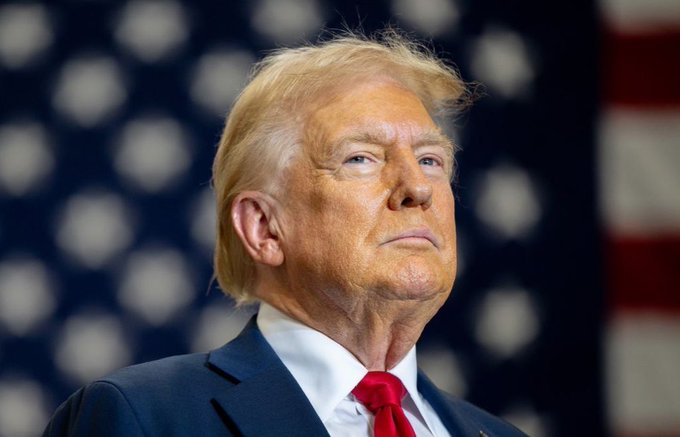
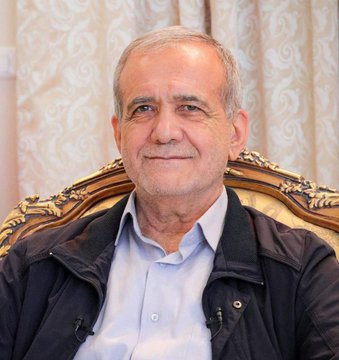
A Shift in Tone
Pezeshkian’s statement stands in contrast to the harder-line posture struck by other Iranian officials following the collapse of nearly 21 hours of direct negotiations in Islamabad .
| Official | Post-Talks Statement | Tone |
|---|---|---|
| President Pezeshkian | “Prepared to continue talks” | Conciliatory, open |
| Parliament Speaker Ghalibaf | US “failed to gain our trust” | Harder line |
| Foreign Ministry | “Ball is in America’s court” | Patient, conditional |
The Iranian president’s overture suggests that while the Islamabad talks failed to produce an agreement, Tehran is not closing the door on diplomacy entirely. Pezeshkian’s more moderate voice may be signaling to Washington that a deal is still possible — if the United States is willing to adjust its demands .
What Pezeshkian Said
In his cabinet remarks, Pezeshkian emphasized Iran’s commitment to diplomacy while reiterating the country’s core positions .
“We have always believed that dialogue, not war, is the solution. The United States must understand that Iran’s nuclear program is peaceful and that our right to enrich is non-negotiable. But we are willing to talk.” — President Masoud Pezeshkian
The president did not specify what form new talks might take — whether direct, mediated by a third party, or through back channels. However, his statement suggests that Tehran is open to exploring a diplomatic path even after the collapse of the US-mediated Pakistan talks .
Why the Talks Failed
The Islamabad negotiations, which ran from Saturday into early Sunday, were the first direct US-Iranian meeting in more than a decade and the highest-level discussions since Iran’s 1979 Islamic Revolution .
Key sticking points in the talks:
- Nuclear program: Iran refused to end uranium enrichment or surrender its stockpile
- Regional proxies: Iran refused to cut support for Hamas, Hezbollah, and the Houthis
- Strait of Hormuz: Iran insisted full reopening only after a final peace agreement
- Sanctions relief: Iran demanded complete lifting; US offered phased relief
Vice President JD Vance, who led the American delegation, confirmed after the talks that “we have not yet reached an agreement acceptable to the Iranian side” .
The Current Standoff: Blockade and Threats
Pezeshkian’s offer to continue talks comes amid a dramatic escalation in US military pressure on Iran. On Monday, the US Navy began enforcing a naval blockade of Iranian ports, aiming to cut off Tehran’s oil exports .
| Development | Status |
|---|---|
| US naval blockade | Began April 13, 10 a.m. ET |
| US-Iran peace talks | Collapsed April 12 |
| Ceasefire | Fragile; could end at any moment |
| Iran’s response | Condemned blockade as “piracy” |
| IRGC warning | Unknown weapons will be revealed if war resumes |
President Trump has also renewed threats of military action, declaring that he could “take out Iran in one day” and that the US military is “locked and loaded” to “finish up the little that is left of Iran” .
Iran’s Diplomatic Strategy: Pressure and Openness
Pezeshkian’s offer to continue talks should be understood as part of a dual-track strategy: defiance in the face of US military pressure, combined with openness to diplomacy .
Elements of Iran’s current strategy:
- Military defiance: IRGC warns of unknown weapons; blockade condemned as “piracy”
- Diplomatic openness: Pezeshkian offers to continue talks
- Nuclear intransigence: Enrichment continues; stockpile not surrendered
- Proxy support: Hamas, Hezbollah, Houthis continue operations
- Strait control: Hormuz remains largely restricted
By offering to continue talks, Pezeshkian is attempting to shift the narrative from “Iran rejected US demands” to “Iran is willing to talk, but the US is not listening.” This framing may appeal to international opinion and to European allies who are uneasy about the US blockade .
International Reactions
The international community has responded cautiously to Pezeshkian’s overture .
United Nations: Secretary-General Antonio Guterres has called for renewed diplomacy and expressed support for any talks that could end the conflict .
European Union: EU foreign policy chief Kaja Kallas has urged both sides to return to the negotiating table .
Russia: Moscow has offered to mediate and has proposed taking custody of Iran’s enriched uranium .
China: Beijing has called for restraint and offered to facilitate dialogue .
European allies: The UK, France, and Germany have expressed support for diplomacy but have limited leverage over either party .
What Comes Next: A Diplomatic Path?
Pezeshkian’s offer to continue talks opens a potential pathway back to diplomacy, but significant obstacles remain .
| Scenario | Likelihood | Implications |
|---|---|---|
| New talks via third party | Possible | Russia, China, or Oman could mediate |
| US rejects overture | Possible | Trump may view as sign of weakness |
| Talks resume in Islamabad | Possible | Pakistan has offered continued mediation |
| Ceasefire extended | Possible | Talks could continue during truce |
| Military action | Elevated | Trump has repeatedly threatened |
The coming days will determine whether Pezeshkian’s offer leads to renewed negotiations — or whether the US naval blockade and military threats push the two sides closer to war .
For now, the Iranian president has signaled that the door to diplomacy is still open. The question is whether Washington will walk through it .
Frequently Asked Questions (FAQs)
1. What did Iranian President Pezeshkian say about talks with the US?
Pezeshkian announced that Iran is “prepared to continue talks” with the United States, stating that “diplomacy is the only path to resolve our differences” .
2. Did the Islamabad talks produce an agreement?
No. After nearly 21 hours of direct negotiations, the talks collapsed without an agreement. Iran refused US demands to end uranium enrichment, cut support for regional proxies, and fully reopen the Strait of Hormuz .
3. Why is Pezeshkian offering to continue talks?
Pezeshkian’s offer reflects a dual-track strategy: defiance in the face of US military pressure combined with openness to diplomacy. It also shifts the narrative from “Iran rejected US demands” to “Iran is willing to talk” .
4. Is the ceasefire still in effect?
Yes. The two-week ceasefire announced on April 7 remains in effect, but its future is uncertain .
5. What is the status of the US naval blockade?
The US Navy began enforcing a naval blockade of Iranian ports on Monday, April 13, at 10 a.m. ET .
6. Could new talks be mediated by a third party?
Yes. Russia, China, Oman, or Pakistan could potentially mediate new talks. Moscow has already offered to facilitate and proposed taking custody of Iran’s enriched uranium .
7. What happens next?
Pezeshkian’s offer opens a potential pathway back to diplomacy, but significant obstacles remain. The US has not yet responded to the overture .
Stay informed with Reflecto News – Your trusted source for breaking diplomatic and geopolitical intelligence. Subscribe for real-time updates on US-Iran relations, Middle East diplomacy, and global security.
Questions people ask
What is China's current share of global manufacturing?
China now accounts for twenty eight percent of global manufacturing. This industrial output exceeds the combined manufacturing production of the United States, Japan, and Germany, making China the leading global industrial power according to recent reports.
Why were Andrew Tate and Tristan Tate arrested in Miami?
Andrew Tate and his brother Tristan Tate were taken into custody in Miami by the United States Marshals Service. They face thirty eight new charges in the United Kingdom, including rape and child pornography offences, and prosecutors are seeking their extradition.
What warning did Moscow issue about oil prices?
Kirill Dmitriev, the Chief Executive of the Russian Direct Investment Fund, warned that a tsunami of skyrocketing oil prices is approaching. Moscow describes this potential energy shock as a major threat to global markets.
What political shift is projected for Benjamin Netanyahu's coalition?
Political polls project that Prime Minister Benjamin Netanyahu's coalition is on track to lose its majority in the upcoming October election. This projection indicates a potential political shift in Jerusalem.
Why did a Russian military aircraft land in Tehran?
A Russian airborne command aircraft, widely known as a doomsday plane, landed in Tehran. The arrival of the aircraft represents a high stakes show of support from Russia for Iran during a period of heightened regional tensions.
What did President Masoud Pezeshkian claim about the United States and Israel?
Iranian President Masoud Pezeshkian claimed that the United States and Israel failed in a forty eight hour plan to topple the Iranian government. He made these statements during a televised address marking two years since his inauguration.