Reflecto News is an online news platform covering major international political events, global economic developments, and security conflicts. The site provides updates on topics such as Chinese manufacturing dominance, Middle Eastern political tensions, and high profile legal arrests. Readers can access current articles organized by categories like World News, Iran, and USA.
Published on Reflecto News | World News | Nuclear Diplomacy & Geopolitics
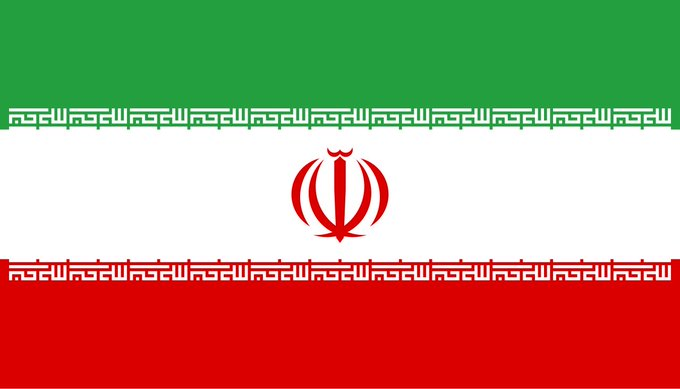
Iran has formally proposed to suspend its nuclear activities for up to five years, a significant concession aimed at breaking the deadlock in negotiations with the United States. However, the offer falls far short of Washington’s demand for a 20-year halt, leaving the two sides at a critical impasse as the fragile ceasefire hangs in the balance .
According to a report by The New York Times citing officials from both countries, the United States presented a demand for a 20-year suspension of Iran’s uranium enrichment activities during the weekend talks in Islamabad. In response, Iran delivered a formal counter-proposal on Monday, offering a pause of one-fourth of that duration — up to five years .
The Nuclear Sticking Point
The disagreement over the timeline for suspending enrichment has become the central obstacle in the negotiations. The U.S. position, shaped by Vice President JD Vance, calls for a suspension of about 20 years as necessary to permanently limit Iran’s nuclear capabilities .
President Donald Trump has backed this tougher stance, aligning with Vance’s push for longer-term restrictions. On Monday, Trump told reporters at the White House that his administration had received a call from Iran indicating they “would like to make a deal very badly,” but he reiterated that he will not accept any agreement allowing Iran to possess nuclear weapons .
“Iran will never have a nuclear weapon. If they don’t agree, then there is no deal. There will never be a deal.” — President Donald Trump
Enriched Uranium Stockpile Dispute
Beyond the timeline for suspending activity, the two sides are also at odds over what to do with Iran’s existing stockpile of enriched uranium. The United States has demanded that all highly enriched uranium be shipped out of Iran .
Iran has resisted this demand, insisting that the nuclear material remain inside the country. However, as a compromise, Tehran has offered to “significantly” dilute its existing stockpiles — a proposal that would reduce the purity of the material but keep it within Iran’s borders .
Other Outstanding Issues
The nuclear dispute is not the only issue looming over the negotiations. Other key sticking points include:
- Strait of Hormuz: Restoring free passage through the strategic waterway, which Iran has effectively closed to much international shipping since the war began.
- Regional proxies: Ending Iran’s support for proxy groups including Hamas, Hezbollah, and the Houthis.
- Sanctions relief: Iran demands the complete lifting of all sanctions, while the U.S. has offered only phased relief tied to compliance .
Diplomatic Path Remains Open
Despite the wide gap, the fact that both sides are now negotiating specific timelines — rather than debating the principle of suspension itself — suggests there may still be room for a deal. Officials told The New York Times that another round of in-person negotiations is being discussed, though no dates have been finalized .
Vice President Vance, who led the U.S. delegation in Islamabad, said there had been “some good conversations” with Iranian negotiators, adding that “the ball is now in Tehran’s court” . When asked about additional talks in the coming days, Vance said the question would be “best put to the Iranians” .
“We’re not in a complete deadlock. The door is not closed yet. Both sides are bargaining. It’s a bazaar.” — Regional source to Axios
The talks are unfolding against a backdrop of escalating military pressure. On Monday, the United States began a naval blockade of Iranian ports, a move aimed at cutting off Iran’s oil exports and forcing Tehran back to the negotiating table . Iran has responded sharply, with the Revolutionary Guards warning that any approach by military vessels toward the Strait of Hormuz will be considered a breach of the ceasefire .
What Comes Next
Trump has made clear that another U.S. priority is the physical retrieval of Iran’s enriched uranium. “We’re going to get the (uranium) dust back. We’ll get it back. Either we’ll get it back from them or we’ll take it,” Trump reiterated .
| Position | Enrichment Halt | Stockpile | Proxies | Strait of Hormuz |
|---|---|---|---|---|
| United States | 20 years | Ship out of Iran | End support | Immediate, full reopening |
| Iran | 5 years | Keep, but dilute | Non-negotiable | After final peace agreement |
The two-week ceasefire, brokered by Pakistan and announced on April 7, remains in effect but is increasingly fragile. With the U.S. naval blockade now in place and both sides hardening their positions, the window for a diplomatic breakthrough is narrowing. Yet the exchange of specific proposals — a 20-year U.S. demand versus a 5-year Iranian counter-offer — suggests that for the first time in weeks, the outlines of a potential deal are visible, even if the distance between them remains vast.
Frequently Asked Questions (FAQs)
1. What nuclear offer did Iran make to the United States?
Iran offered to suspend its uranium enrichment activities for up to five years. This was a formal counter-proposal to the U.S. demand for a 20-year suspension .
2. Why did the talks in Islamabad fail to produce an agreement?
The talks collapsed primarily because the two sides could not agree on the duration of Iran’s nuclear pause (20 years vs. 5 years). Disagreements also remain over Iran’s enriched uranium stockpile, support for regional proxies, and the reopening of the Strait of Hormuz .
3. Is Iran willing to give up its enriched uranium?
No. Iran has refused U.S. demands to ship its stockpile of highly enriched uranium out of the country. However, Tehran has offered to significantly “dilute” its existing stockpiles as a compromise .
4. Has the U.S. accepted Iran’s five-year offer?
No. President Trump has rejected the five-year proposal. He continues to insist that Iran must permanently forgo nuclear weapons and has demanded the physical retrieval of Iran’s enriched uranium stockpile .
5. Will there be another round of negotiations?
Officials from both sides have indicated that another round of in-person talks is being discussed, though no dates have been finalized .
6. What is the status of the ceasefire?
The two-week ceasefire remains in effect but is increasingly fragile. The U.S. has imposed a naval blockade on Iranian ports, and Iran has warned that any military approach toward the Strait of Hormuz will be considered a breach of the truce .
7. What is President Trump’s bottom line on Iran’s nuclear program?
Trump has stated repeatedly that “Iran will never have a nuclear weapon.” He has demanded that Iran not only suspend enrichment but also ship its existing stockpile of enriched uranium out of the country — warning that if Iran does not hand it over, the U.S. will “take it” .
Stay informed with Reflecto News – Your trusted source for breaking nuclear security and diplomatic intelligence. Subscribe for real-time updates on the US-Iran nuclear standoff, ceasefire developments, and global security.
Questions people ask
What is China's current share of global manufacturing?
China now accounts for twenty eight percent of global manufacturing. This industrial output exceeds the combined manufacturing production of the United States, Japan, and Germany, making China the leading global industrial power according to recent reports.
Why were Andrew Tate and Tristan Tate arrested in Miami?
Andrew Tate and his brother Tristan Tate were taken into custody in Miami by the United States Marshals Service. They face thirty eight new charges in the United Kingdom, including rape and child pornography offences, and prosecutors are seeking their extradition.
What warning did Moscow issue about oil prices?
Kirill Dmitriev, the Chief Executive of the Russian Direct Investment Fund, warned that a tsunami of skyrocketing oil prices is approaching. Moscow describes this potential energy shock as a major threat to global markets.
What political shift is projected for Benjamin Netanyahu's coalition?
Political polls project that Prime Minister Benjamin Netanyahu's coalition is on track to lose its majority in the upcoming October election. This projection indicates a potential political shift in Jerusalem.
Why did a Russian military aircraft land in Tehran?
A Russian airborne command aircraft, widely known as a doomsday plane, landed in Tehran. The arrival of the aircraft represents a high stakes show of support from Russia for Iran during a period of heightened regional tensions.
What did President Masoud Pezeshkian claim about the United States and Israel?
Iranian President Masoud Pezeshkian claimed that the United States and Israel failed in a forty eight hour plan to topple the Iranian government. He made these statements during a televised address marking two years since his inauguration.