Reflecto News is an online news platform covering major international political events, global economic developments, and security conflicts. The site provides updates on topics such as Chinese manufacturing dominance, Middle Eastern political tensions, and high profile legal arrests. Readers can access current articles organized by categories like World News, Iran, and USA.
Published on Reflecto News | World News | Energy Security & Military Affairs
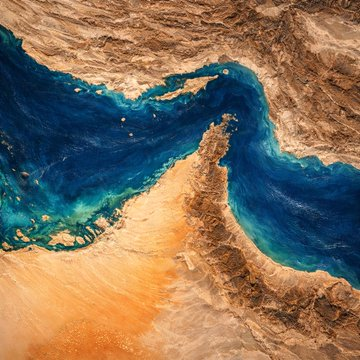
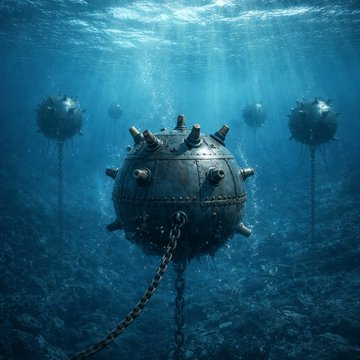
In an extraordinary development that complicates diplomatic efforts to end the 40-day war, Iran is reportedly unable to fully reopen the Strait of Hormuz because it cannot locate all the naval mines it deployed in the strategic waterway and lacks the capability to remove them, according to a New York Times report published Friday citing anonymous U.S. officials .
The revelation comes less than 24 hours before high-stakes peace talks between Iranian and American delegations are set to convene in Islamabad, Pakistan — where the issue of reopening the strait was expected to be a central point of discussion .
The ‘Haphazard’ Mining Operation
Iran used small vessels to lay mines in the strait in March, shortly after the United States and Israel launched their military campaign against the country on February 28 . The mines, combined with Iranian drone and missile attacks on vessels in the region, effectively closed the waterway — sending global energy prices soaring and providing Tehran with its most potent leverage in the war .
However, U.S. officials told the Times that the mining operation was conducted in a “haphazard” manner . According to the report, it is unclear whether Iran recorded where it placed every mine. Even when locations were documented, some mines were placed in a way that allowed them to drift or move from their original positions due to sea currents .
Iran left a narrow passage through the strait open, allowing ships willing to pay a toll to pass through . The Islamic Revolutionary Guard Corps (IRGC) has issued warnings that vessels could collide with sea mines, and semi-official Iranian news organizations have published charts showing designated “safe” routes — though these remain severely restricted .
The Mine Removal Dilemma
Removing naval mines is significantly more difficult than laying them — a problem that now confronts both Iran and the United States .
The process requires specialized equipment and trained personnel and must be carried out slowly to avoid accidental detonations . U.S. officials told the Times that the American military itself lacks robust mine-removal capabilities, relying on littoral combat ships equipped with mine-sweeping capacities that have experienced operational problems .
Iran, according to the officials, does not have the capability to quickly remove the mines — even those it planted itself . The situation has left both nations without adequate rapid mine-clearing assets in the region .
Complicating matters further, while U.S. strikes have targeted Iranian naval bases and sunk several ships, Tehran still retains hundreds of small boats capable of laying additional mines or harassing vessels . Eliminating that fleet entirely has proved out of reach for American military planners .
The ‘Technical Limitations’ Acknowledgment
Iranian Foreign Minister Abbas Araghchi has stated that the strait will remain open “with due consideration of technical limitations” — a phrase U.S. officials told the Times reflects Iran’s acknowledgment of its mine-clearing predicament .
The issue is expected to feature prominently in the Islamabad talks, where a 70-member Iranian delegation led by Araghchi and Parliament Speaker Mohammad Bagher Ghalibaf is scheduled to meet with a U.S. delegation led by Vice President JD Vance . Washington has pressed for the “complete, immediate, and safe” reopening of the strait as a condition of the two-week ceasefire announced on April 7 .
A Strategic Irony
The development represents a significant strategic irony. The mines that gave Iran its best leverage in the war — effectively closing the strait and driving up global energy prices — are now limiting Tehran’s ability to comply with U.S. demands to restore normal traffic .
President Trump announced on April 7 that he had agreed to a two-week ceasefire with Iran, explicitly conditioning the pause in military action on Iran’s agreement to the “COMPLETE, IMMEDIATE, and SAFE OPENING” of the strait . However, the mine problem suggests that even with political will, Tehran may be physically incapable of delivering on that commitment in the near term.
Iran’s proposed solution — keeping a narrow, toll-based corridor open and charging fees for passage — has been rejected by Trump, who declared Saturday that the strait will be opened “with or without” Iran’s approval . The president has also dismissed the possibility of allowing tolls, stating that “we’re not going to let that happen” and emphasizing that the strait is international water .
The Path Forward
As delegations from both nations gather in Islamabad for talks that could determine the future of the conflict, the mine issue presents an unexpected complication. Even if Iran were willing to fully reopen the strait, its ability to do so safely remains in question.
The situation also raises broader questions about the post-war status of the waterway. Even if a political agreement is reached, the physical process of clearing the strait of mines could take weeks or months — during which time global energy markets would remain under pressure and shipping would continue at reduced capacity.
For now, the world watches as diplomats and military officials grapple with an unintended consequence of Iran’s own strategy: the mines that gave Tehran its leverage may now be the biggest obstacle to the peace it seeks.
Frequently Asked Questions (FAQs)
1. Why can’t Iran fully reopen the Strait of Hormuz?
According to a New York Times report citing U.S. officials, Iran cannot locate all the naval mines it deployed in the strait and lacks the capability to remove them. The mines were laid in a “haphazard” manner, and some may have drifted from their original positions .
2. When did Iran lay the mines?
Iran used small boats to lay mines in the strait in March, shortly after the United States and Israel launched their military campaign against the country on February 28, 2026 .
3. Has Iran acknowledged the mine problem?
Yes. Iranian Foreign Minister Abbas Araghchi has stated that the strait will remain open “with due consideration of technical limitations” — a phrase U.S. officials interpret as an acknowledgment of the mine-clearing issue .
4. Is the United States able to remove the mines?
The U.S. military also lacks robust mine-removal capabilities, relying on littoral combat ships that have experienced operational problems. According to U.S. officials, neither Iran nor the United States has adequate rapid mine-clearing assets in the region .
5. How will this affect the Islamabad peace talks?
The issue is expected to be a central topic in negotiations between Iranian officials and the U.S. delegation led by Vice President JD Vance. Washington has demanded the “complete, immediate, and safe” reopening of the strait, but Iran’s technical limitations may make rapid compliance impossible .
6. What is Iran’s proposed solution?
Iran has kept a narrow, toll-based corridor open through the strait and has proposed charging fees for passage. However, President Trump has rejected this approach, stating that “we’re not going to let that happen” and emphasizing that the strait is international water .
7. Could Iran lay additional mines?
Iran still retains hundreds of small boats capable of laying additional mines or harassing vessels, despite U.S. strikes that have targeted Iranian naval bases and sunk several ships .
Stay informed with Reflecto News – Your trusted source for breaking energy security, military, and diplomatic intelligence. Subscribe for real-time updates from the Islamabad peace talks and the ongoing Strait of Hormuz crisis.
Questions people ask
What is China's current share of global manufacturing?
China now accounts for twenty eight percent of global manufacturing. This industrial output exceeds the combined manufacturing production of the United States, Japan, and Germany, making China the leading global industrial power according to recent reports.
Why were Andrew Tate and Tristan Tate arrested in Miami?
Andrew Tate and his brother Tristan Tate were taken into custody in Miami by the United States Marshals Service. They face thirty eight new charges in the United Kingdom, including rape and child pornography offences, and prosecutors are seeking their extradition.
What warning did Moscow issue about oil prices?
Kirill Dmitriev, the Chief Executive of the Russian Direct Investment Fund, warned that a tsunami of skyrocketing oil prices is approaching. Moscow describes this potential energy shock as a major threat to global markets.
What political shift is projected for Benjamin Netanyahu's coalition?
Political polls project that Prime Minister Benjamin Netanyahu's coalition is on track to lose its majority in the upcoming October election. This projection indicates a potential political shift in Jerusalem.
Why did a Russian military aircraft land in Tehran?
A Russian airborne command aircraft, widely known as a doomsday plane, landed in Tehran. The arrival of the aircraft represents a high stakes show of support from Russia for Iran during a period of heightened regional tensions.
What did President Masoud Pezeshkian claim about the United States and Israel?
Iranian President Masoud Pezeshkian claimed that the United States and Israel failed in a forty eight hour plan to topple the Iranian government. He made these statements during a televised address marking two years since his inauguration.