Reflecto News is an online news platform covering major international political events, global economic developments, and security conflicts. The site provides updates on topics such as Chinese manufacturing dominance, Middle Eastern political tensions, and high profile legal arrests. Readers can access current articles organized by categories like World News, Iran, and USA.
By Reflecto News Desk
April 11, 2026
In a major diplomatic breakthrough, China and North Korea have pledged to deepen bilateral cooperation, enhance strategic communication, and consolidate their longstanding alliance. Chinese Foreign Minister Wang Yi’s two-day visit to Pyongyang — his first in seven years — has resulted in concrete agreements to advance ties between the two neighbors, as confirmed by official state media from both countries.
The development comes amid a complex global landscape and signals a renewed push to strengthen what both nations describe as unbreakable fraternal bonds rooted in shared ideology and history.
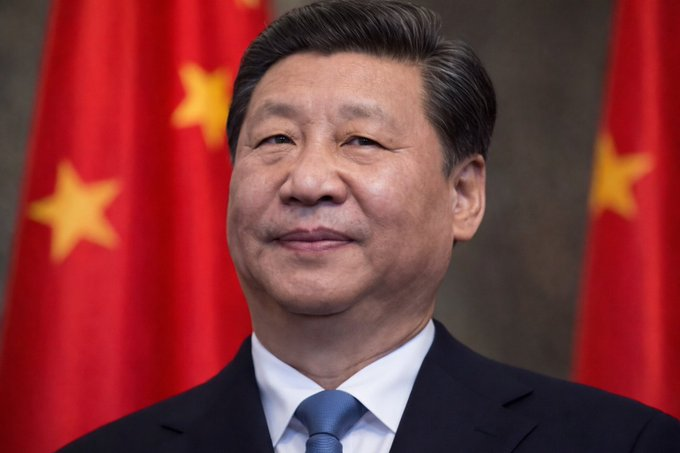
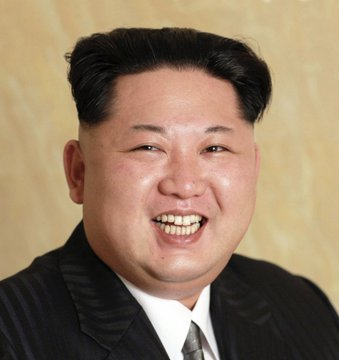
Details of the High-Level Diplomatic Meeting
Chinese Foreign Minister Wang Yi arrived in Pyongyang on April 9, 2026, for talks with his North Korean counterpart, Foreign Minister Choe Son-hui. The ministers held in-depth discussions on current international and regional issues, agreeing to further deepen cooperation and exchanges between the two countries.
According to North Korea’s Korean Central News Agency (KCNA) and China’s Xinhua News Agency, the two sides also committed to strengthening strategic communication between their foreign policy agencies. The meetings emphasized practical collaboration and mutual support on global matters.
On April 10, Wang Yi met directly with North Korean leader Kim Jong Un. During the discussions, Kim stressed that developing relations with China remains a top priority for Pyongyang. He voiced strong support for China’s vision of a “multipolar world” and called for deeper strategic ties to safeguard common interests.
Wang Yi, in turn, highlighted China’s readiness to work with North Korea to implement high-level consensus, inject fresh momentum into bilateral relations, and expand multi-faceted exchanges and practical cooperation.
Historical Context: The Enduring “Lips and Teeth” Alliance
China and North Korea share one of the world’s most historically significant partnerships. Often described as being “as close as lips and teeth,” their relationship dates back to the Korean War era. The cornerstone of this alliance is the 1961 Treaty of Friendship, Cooperation and Mutual Assistance, which this year marks its 65th anniversary.
The treaty includes mutual defense obligations and has been renewed multiple times, most recently in 2021 for another 20 years. Over decades, Beijing has served as Pyongyang’s primary economic lifeline and diplomatic backer, while North Korea has provided strategic depth along China’s northeastern border.
Despite periodic strains — including during North Korea’s nuclear tests and periods of international isolation — the two nations have consistently reaffirmed their commitment to one another.
Recent Developments Leading to the Current Thaw
Relations between Beijing and Pyongyang cooled somewhat in recent years as North Korea expanded military and economic ties with Russia, including troop deployments to support Moscow’s operations in Ukraine. However, both capitals have actively worked to rebuild momentum.
Key milestones include:
- A landmark summit in September 2025 between Kim Jong Un and Chinese President Xi Jinping — their first face-to-face meeting in over six years — where they pledged mutual support and enhanced cooperation.
- The resumption of direct flights and passenger train services between the two countries in March 2026, ending a six-year COVID-19 hiatus.
- High-level exchanges and increased economic engagement, including infrastructure and trade initiatives.
Wang Yi’s visit builds directly on these steps, demonstrating both nations’ determination to elevate ties to a new level despite external pressures.
Geopolitical Implications of the Strengthened Partnership
The agreement carries significant weight for regional stability and global geopolitics. Analysts note that closer China-North Korea coordination could influence dynamics on the Korean Peninsula, including responses to U.S.-South Korea military exercises and broader Indo-Pacific security issues.
By reinforcing their strategic partnership, the two countries aim to counter perceived unilateralism and safeguard shared interests in a multipolar international order. The timing — just weeks before a rescheduled U.S.-China summit in May — adds another layer of strategic signaling.
For North Korea, deeper ties with China provide economic breathing room and diplomatic cover. For China, a stable and aligned Pyongyang helps maintain influence along its border and prevents over-reliance on any single partner in the region.
Reactions from the International Community
South Korea and the United States have closely monitored the developments, with Seoul expressing hope that improved China-North Korea relations could contribute to peninsula stability. However, concerns remain about potential impacts on denuclearization efforts and trilateral U.S.-Japan-South Korea cooperation.
No immediate official comments from Washington or Seoul were available at the time of reporting, but the developments are expected to feature prominently in upcoming diplomatic discussions.
What Lies Ahead for China-North Korea Relations
As both nations prepare to celebrate the 65th anniversary of their mutual defense treaty later this year, expectations are high for expanded high-level visits, economic cooperation, and cultural exchanges. The latest agreement underscores a clear message: despite shifting global alliances, the China-North Korea relationship remains a strategic constant.
Reflecto News will continue to monitor developments and provide in-depth analysis as more details emerge from Pyongyang and Beijing.
Frequently Asked Questions (FAQs)
Q1: What exactly did China and North Korea agree to in the latest talks?
They agreed to deepen cooperation and exchanges, strengthen strategic communication between foreign policy agencies, and coordinate more closely on international and regional issues. The commitments were made during Foreign Minister Wang Yi’s meetings with Choe Son-hui and Kim Jong Un.
Q2: Why is Wang Yi’s visit significant?
It marks the first trip by China’s top diplomat to North Korea in seven years and signals a deliberate effort to revitalize bilateral ties after a period of limited high-level contact due to the COVID-19 pandemic.
Q3: How does this affect the 1961 Treaty of Friendship?
The talks explicitly reference the upcoming 65th anniversary of the treaty, with both sides pledging to increase exchanges and cooperation to mark the milestone.
Q4: Will this agreement impact North Korea’s relations with Russia?
While North Korea continues to maintain strong ties with Russia, the renewed focus on China demonstrates Pyongyang’s strategy of balanced diplomacy rather than exclusive alignment with any single partner.
Q5: What does this mean for the Korean Peninsula?
Closer China-North Korea coordination could influence peace and stability efforts, though both nations emphasize that their partnership is defensive and aimed at regional prosperity rather than confrontation.
Q6: Are there economic dimensions to the strengthened relations?
Yes. Beyond politics, the agreement opens doors for expanded trade, infrastructure projects, and people-to-people exchanges, building on the recent resumption of direct transport links.
Q7: How reliable are the reports from KCNA and Xinhua?
Both are official state media outlets that provide the primary (and often only) accounts of such high-level diplomatic engagements in their respective countries.
For the latest updates on China-North Korea relations, strategic developments in East Asia, and breaking international news, bookmark Reflecto News — your trusted source for accurate, timely, and comprehensive reporting.
Questions people ask
What is China's current share of global manufacturing?
China now accounts for twenty eight percent of global manufacturing. This industrial output exceeds the combined manufacturing production of the United States, Japan, and Germany, making China the leading global industrial power according to recent reports.
Why were Andrew Tate and Tristan Tate arrested in Miami?
Andrew Tate and his brother Tristan Tate were taken into custody in Miami by the United States Marshals Service. They face thirty eight new charges in the United Kingdom, including rape and child pornography offences, and prosecutors are seeking their extradition.
What warning did Moscow issue about oil prices?
Kirill Dmitriev, the Chief Executive of the Russian Direct Investment Fund, warned that a tsunami of skyrocketing oil prices is approaching. Moscow describes this potential energy shock as a major threat to global markets.
What political shift is projected for Benjamin Netanyahu's coalition?
Political polls project that Prime Minister Benjamin Netanyahu's coalition is on track to lose its majority in the upcoming October election. This projection indicates a potential political shift in Jerusalem.
Why did a Russian military aircraft land in Tehran?
A Russian airborne command aircraft, widely known as a doomsday plane, landed in Tehran. The arrival of the aircraft represents a high stakes show of support from Russia for Iran during a period of heightened regional tensions.
What did President Masoud Pezeshkian claim about the United States and Israel?
Iranian President Masoud Pezeshkian claimed that the United States and Israel failed in a forty eight hour plan to topple the Iranian government. He made these statements during a televised address marking two years since his inauguration.