Reflecto News is an online news platform covering major international political events, global economic developments, and security conflicts. The site provides updates on topics such as Chinese manufacturing dominance, Middle Eastern political tensions, and high profile legal arrests. Readers can access current articles organized by categories like World News, Iran, and USA.
Published on Reflecto News | World News | Energy Security & Geopolitics
In a development that fundamentally alters the calculus of global energy shipping, Iran has announced that under the current ceasefire agreement with the United States, it will permit no more than 15 vessels per day to transit the Strait of Hormuz. The restriction, confirmed by a senior Iranian source to Russian news agency TASS, represents a dramatic reduction from the pre-war average of approximately 130-140 ships that passed through the strategic waterway daily .
The announcement makes clear that the “ceasefire reopening” of the strait is not a return to normalcy but rather the establishment of a new, tightly controlled transit regime. “There will be no return to the pre-war status quo,” the Iranian source declared, signaling that Tehran intends to maintain significant leverage over the world’s most critical energy chokepoint even as hostilities pause .
The 15-Ship Limit: A New Regulatory Framework
The Iranian source, speaking to TASS ahead of high-level negotiations scheduled in Islamabad, outlined the strict parameters of the new transit regime. “Under the current ceasefire, fewer than 15 ships per day are permitted to transit the Strait of Hormuz,” the source stated. “This movement is strictly contingent upon Iran’s approval and the enforcement of a specific protocol” .
Key elements of the new framework include:
| Element | Details |
|---|---|
| Daily limit | No more than 15 vessels per day |
| Approval authority | Islamic Revolutionary Guard Corps (IRGC) supervision |
| Approval requirement | Prior Iranian approval mandatory for each vessel |
| Status quo | “No return to pre-war status quo” |
| Communication | Framework officially communicated to regional parties |
“This new regulatory framework, operating under the supervision of the IRGC, has been officially communicated to regional parties,” the source confirmed .
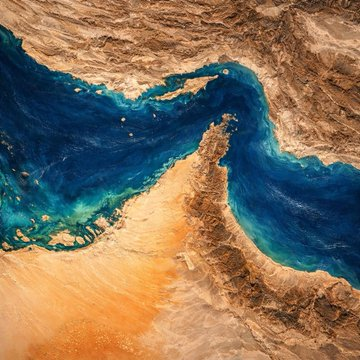
The 34-kilometer-wide strait between Iran and Oman serves as the passage from the Persian Gulf to the Indian Ocean and handles approximately one-fifth of the world’s seaborne crude oil trade. The new restrictions therefore carry profound implications for global energy markets .
From 140 Ships to 15: The Scale of Reduction
To understand the magnitude of this change, pre-war traffic levels provide essential context. Before the conflict erupted on February 28, an average of 130-140 vessels transited the strait daily, carrying everything from crude oil and liquefied natural gas to critical industrial commodities .
Since the ceasefire was announced, traffic has remained near standstill levels. In the 24 hours following the agreement, only six vessels—one oil tanker and five bulk carriers—were recorded transiting the strait . Maritime monitor Marine Traffic confirmed that two ships passed through on Wednesday: the Greek-owned bulk carrier NJ Earth and the Liberia-flagged Daytona Beach .
Ana Subasic, an analyst at Marine Traffic owner Kpler, offered a cautious assessment of the limited transits. “NJ Earth’s transit may be an early sign of movement, but it is still too soon to tell whether this reflects a broader ceasefire-driven reopening or a previously approved exception,” she told AFP .
IRGC Supervision: The Military’s Role
Perhaps the most significant aspect of the new framework is the explicit role given to the Islamic Revolutionary Guard Corps (IRGC) in supervising all transits. The IRGC, designated as a terrorist organization by the United States, will now have operational authority over the world’s most important energy chokepoint .
Under the new regime, vessels seeking passage must:
- Obtain prior clearance from Iranian authorities
- Coordinate movements with Iranian forces
- Use designated “safe corridors” , primarily along the northern channel near Larak Island
- Demonstrate “non-hostile” status (i.e., not linked to the US, Israel, or allies)
- Pay transit tolls reportedly reaching $1-2 million per vessel
The payment mechanism itself represents a significant shift. Iran is reportedly accepting transit fees in alternative currencies such as Chinese yuan or even cryptocurrencies, reflecting Tehran’s attempt to bypass sanctions and formal financial systems .
The Asset Freeze Condition: A Two-Week Deadline
The shipping restrictions are not the only condition Iran has attached to the ceasefire. The Iranian source made clear that the unfreezing of Iranian assets abroad is a “critical executive guarantee that must be realized within this two-week timeframe” .
This demand ties the continuation of even limited shipping access directly to financial concessions from the United States. The assets in question—estimated to be billions of dollars held in foreign banks under American sanctions pressure—have been a longstanding point of contention between the two nations .
Additional Iranian conditions include:
| Condition | Details |
|---|---|
| Asset unfreezing | Must occur within two-week ceasefire window |
| UN resolution | War termination must be codified in UN Security Council resolution |
| No US troop increase | US cannot increase military presence during ceasefire |
| Nuclear commitment | Iran committed to agreed enrichment terms |
“If the termination of the war is not codified into a UN Security Council resolution based on our stipulated terms, we are fully prepared to resume combat against the US and the Zionist regime—just as we have over the past 40 days, and with even greater intensity,” the source warned .
The Ceasefare: A Fragile Foundation
The 15-ship limit is part of a two-week mutual ceasefire announced by US President Donald Trump on April 7. According to Trump, the sides have resolved nearly all disputed issues, and Washington considers Tehran’s 10-point proposals as a “working basis” for further negotiations .
However, significant discrepancies exist between US and Iranian interpretations of the agreement’s scope. While Pakistan’s Prime Minister Shehbaz Sharif—who brokered the agreement—has stated that the ceasefire extends to Lebanon, Israel has explicitly rejected this interpretation .
The Iranian source made clear that the limited shipping access is contingent upon the broader diplomatic framework holding. “Regarding uranium enrichment—we remain committed strictly to the text of the exchanged agreement and are actively holding to it,” the source stated .
The Lebanon Factor: A Separate Conflict
The ceasefire’s fragility has been immediately tested by continued Israeli military operations in Lebanon. Israel has made clear that its campaign against Hezbollah will continue regardless of the US-Iran ceasefire, with Prime Minister Benjamin Netanyahu declaring that the “ceasefire does not include Lebanon” .
This position has drawn sharp condemnation from Tehran. Iranian officials have warned that if Israel does not stop attacking Lebanon, Iran could walk away from the two-week ceasefire arrangement entirely. Some Iranian parliamentary representatives have even called for the strait to be closed again in response to Israeli actions .
The tension exposes a fundamental contradiction at the heart of the current diplomatic framework: the United States and Iran may have paused direct hostilities, but their respective allies and proxies continue to fight, threatening to pull both powers back into full-scale conflict.
Global Shipping Industry Response
The global shipping industry has responded to the limited reopening with extreme caution. Major tanker operators, container lines, and oil majors have largely avoided the strait, citing unresolved safety risks, lack of insurance coverage, and unclear ceasefire terms .
Current traffic is dominated by smaller, risk-tolerant operators and vessels linked to countries maintaining working relations with Iran. Insurance premiums remain elevated, and many underwriters are unwilling to cover voyages without explicit security guarantees .
As one industry analyst noted, even companies willing to comply with Iran’s terms face significant financial and legal uncertainty. The requirement to pay transit fees in cryptocurrencies or yuan, for example, creates compliance challenges for Western shipping firms subject to sanctions regulations.
The Backlog Crisis: Over 1,000 Vessels Stranded
The limited reopening comes as a massive backlog of vessels remains trapped in and around the Gulf. According to shipping data, more than 1,000 ocean-going vessels are currently stranded, including approximately 187 laden tankers carrying 172 million barrels of crude oil and refined products .
Even under the new 15-ship-per-day limit, clearing this backlog would take more than two months—assuming no new vessels arrive and the ceasefire holds. However, the situation is complicated by the fact that not all 15 daily slots may be available to commercial shipping, as Iran reserves the right to prioritize vessels based on political considerations.
Daejin Lee, global head of research at Fertmax FZCO, previously warned that with more than 1,000 vessels trapped, “it would likely take more than two weeks to clear the backlog even under normal conditions.” The 15-ship limit extends that timeline dramatically .
The Precedent: Tolls and Control
Perhaps the most significant long-term implication of Iran’s announcement is the precedent it sets for control over international waterways. By imposing a daily limit, requiring prior approval, and demanding transit fees, Iran is effectively transforming passage through one of the world’s most critical maritime chokepoints from a guaranteed right under international law into a negotiated and monetized privilege .
The United Nations Convention on the Law of the Sea (UNCLOS) guarantees transit passage through straits used for international navigation. Iran’s new framework directly challenges this principle, potentially setting a dangerous precedent for other strategic waterways around the world.
The International Maritime Organisation (IMO) has already signaled its concern. IMO chief Arsenio Dominguez stated that the agency is working to ensure “security of transit” through the strait and implementing “an appropriate mechanism to ensure the safe transit of ships” . However, the IMO’s ability to challenge Iran’s de facto control remains limited.
The Islamabad Talks: A Diplomatic Crossroads
The 15-ship limit and associated conditions will be central topics when US and Iranian delegations meet in Islamabad for high-level negotiations. The talks, scheduled for April 10, represent the first direct diplomatic engagement between the two nations since the ceasefire was announced .
The Iranian delegation is expected to be led by Parliament Speaker Mohammad Bagher Ghalibaf and Foreign Minister Abbas Araghchi, while the US delegation will be headed by Vice President JD Vance, along with Special Envoy Steve Witkoff .
According to Iranian state television, the negotiations are expected to be direct—a significant development given the usual practice of indirect communications through intermediaries .
Conclusion: A Managed Crisis, Not a Resolution
Iran’s announcement that it will allow no more than 15 ships per day through the Strait of Hormuz under the ceasefire deal makes clear that the crisis is far from resolved. While direct military hostilities may have paused, the economic warfare—manifested in controlled access to the world’s most important energy chokepoint—continues.
The 15-ship limit represents a managed crisis rather than a resolution. It allows Iran to claim it has fulfilled its commitment to “reopen” the strait while maintaining the leverage that comes from controlling global energy flows. For the United States and its allies, the framework falls far short of the “complete, immediate, and safe opening” initially described.
As the two-week ceasefire window begins, the world watches to see whether the Islamabad talks can transform this fragile pause into a more durable arrangement—or whether the 15-ship limit will become just another chapter in the long and contentious history of the Strait of Hormuz.
Frequently Asked Questions (FAQs)
1. How many ships per day will Iran allow through the Strait of Hormuz?
Iran will allow no more than 15 vessels per day to transit the strait under the current ceasefire agreement. This is a dramatic reduction from the pre-war average of 130-140 ships per day .
2. Who supervises the transits?
The new regulatory framework operates under the supervision of the Islamic Revolutionary Guard Corps (IRGC). All vessels must obtain prior Iranian approval and comply with a specific protocol .
3. What happened to the pre-war traffic levels?
Before the conflict began on February 28, an average of 130-140 vessels transited the strait daily. The new 15-ship limit represents more than a 90% reduction from normal levels .
4. Are there any other conditions for passage?
Yes. Vessels must coordinate movements with Iranian forces, use designated safe corridors, demonstrate they are “non-hostile,” and reportedly pay transit fees of $1-2 million per vessel, sometimes calculated per barrel for oil cargo .
5. Has any ship transited since the ceasefire was announced?
Yes. Two ships passed through on Wednesday: the Greek-owned NJ Earth and the Liberia-flagged Daytona Beach. However, analysts caution that these may be exceptions rather than signs of broader reopening .
6. How many vessels are currently stranded?
More than 1,000 ocean-going vessels remain trapped in and around the Gulf, including approximately 187 laden tankers carrying 172 million barrels of crude and refined products .
7. Does the ceasefire include Lebanon?
This is a major point of dispute. Iran and Pakistan maintain that the ceasefire includes Lebanon, but the United States and Israel have explicitly denied this. Israel continues to strike Hezbollah targets in Lebanon .
8. What happens if Iran’s conditions are not met?
An Iranian source has warned that if the termination of the war is not codified into a UN Security Council resolution based on Iran’s terms, Tehran is “fully prepared to resume combat” with even greater intensity .
9. What is Iran demanding in addition to shipping restrictions?
Iran demands the unfreezing of its blocked assets within two weeks, a UN Security Council resolution formalizing the end of the war, no increase in US troop presence, and adherence to agreed nuclear terms .
10. When are the next US-Iran talks scheduled?
High-level negotiations between US and Iranian delegations are scheduled for April 10 in Islamabad, Pakistan. The talks are expected to be direct rather than through intermediaries .
Stay informed with Reflecto News – Your trusted source for breaking energy security and geopolitical intelligence. Subscribe for real-time updates on the Islamabad negotiations and the future of global shipping through the Strait of Hormuz.
Questions people ask
What is China's current share of global manufacturing?
China now accounts for twenty eight percent of global manufacturing. This industrial output exceeds the combined manufacturing production of the United States, Japan, and Germany, making China the leading global industrial power according to recent reports.
Why were Andrew Tate and Tristan Tate arrested in Miami?
Andrew Tate and his brother Tristan Tate were taken into custody in Miami by the United States Marshals Service. They face thirty eight new charges in the United Kingdom, including rape and child pornography offences, and prosecutors are seeking their extradition.
What warning did Moscow issue about oil prices?
Kirill Dmitriev, the Chief Executive of the Russian Direct Investment Fund, warned that a tsunami of skyrocketing oil prices is approaching. Moscow describes this potential energy shock as a major threat to global markets.
What political shift is projected for Benjamin Netanyahu's coalition?
Political polls project that Prime Minister Benjamin Netanyahu's coalition is on track to lose its majority in the upcoming October election. This projection indicates a potential political shift in Jerusalem.
Why did a Russian military aircraft land in Tehran?
A Russian airborne command aircraft, widely known as a doomsday plane, landed in Tehran. The arrival of the aircraft represents a high stakes show of support from Russia for Iran during a period of heightened regional tensions.
What did President Masoud Pezeshkian claim about the United States and Israel?
Iranian President Masoud Pezeshkian claimed that the United States and Israel failed in a forty eight hour plan to topple the Iranian government. He made these statements during a televised address marking two years since his inauguration.