Reflecto News is an online news platform covering major international political events, global economic developments, and security conflicts. The site provides updates on topics such as Chinese manufacturing dominance, Middle Eastern political tensions, and high profile legal arrests. Readers can access current articles organized by categories like World News, Iran, and USA.
Published on Reflecto News | World News | Diplomacy & Conflict
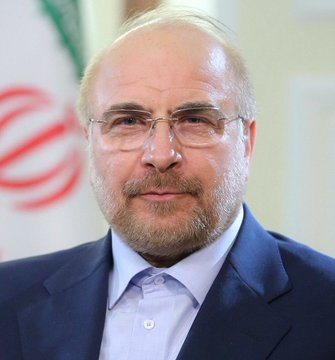
In a blunt assessment following the collapse of high-stakes negotiations in Islamabad, Iranian Parliament Speaker Mohammad Bagher Ghalibaf has declared that the United States “failed to gain our trust” during the talks. The statement, carried by Iranian state media, underscores the deep-seated skepticism that has long characterized Tehran’s approach to diplomatic engagement with Washington .
Ghalibaf, who led the Iranian delegation during nearly 21 hours of direct negotiations with US officials, offered a pointed critique of the American approach. His comments align with Iran’s broader post-negotiation posture, which has emphasized strategic patience and placed the onus on the United States to change course .
‘Failed to Gain Our Trust’
Speaking to reporters following the conclusion of the talks, Ghalibaf was unequivocal in his assessment of the American negotiating posture.
“The United States failed to gain our trust during these negotiations. Their demands were excessive and their approach lacked the seriousness needed for a breakthrough.” — Mohammad Bagher Ghalibaf, Iranian Parliament Speaker
Ghalibaf’s characterization of the US approach as lacking “seriousness” reflects Tehran’s view that Washington came to the table seeking to extract concessions that it could not achieve on the battlefield. A source close to the Iranian delegation previously told Fars News Agency that the United States sought “through negotiation everything they couldn’t obtain during war” .
The parliament speaker’s comments align with statements from other Iranian officials who have emphasized the “atmosphere of mistrust” following weeks of war .
The Context: 21 Hours of Talks, No Breakthrough
Ghalibaf’s assessment came after nearly 21 hours of direct, face-to-face negotiations between the United States and Iran — the highest-level talks between the two nations since the 1979 Islamic Revolution .
| Talks Detail | Information |
|---|---|
| Duration | Nearly 21 hours |
| Location | Islamabad, Pakistan |
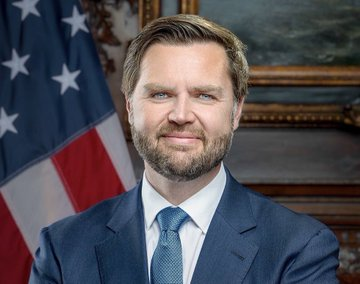
| US lead | Vice President JD Vance |
| Iran lead | Parliament Speaker Mohammad Bagher Ghalibaf |
| Outcome | No agreement reached |
| Iranian assessment | US “failed to gain our trust” |
Sources: Multiple news reports
The negotiations foundered on several key issues, including the Strait of Hormuz, Iran’s nuclear program, and the scope of any ceasefire regarding Lebanon . Despite marathon sessions that stretched into the early morning hours, the two sides were unable to bridge fundamental disagreements .
‘Excessive Demands’: The Core of Iran’s Complaint
Ghalibaf’s reference to “excessive demands” echoes a consistent theme in Iranian official statements following the talks.
| US Demand | Iranian Response |
|---|---|
| Immediate reopening of Strait of Hormuz | Rejected; full reopening only after final peace deal |
| Surrender of enriched uranium stockpile | Rejected; right to enrich for civilian purposes |
| End to enrichment program | Rejected; violation of NPT rights |
| Permanent nuclear restrictions | Rejected; JCPOA sunset clauses precedent |
Sources: Iranian officials, state media
Iranian officials have consistently framed these demands as infringements on national sovereignty and violations of the Nuclear Non-Proliferation Treaty (NPT), under which Iran claims the right to enrich uranium for civilian purposes .
The Trust Deficit: A Longstanding Obstacle
Ghalibaf’s emphasis on trust — or the lack thereof — reflects a fundamental obstacle that has complicated US-Iran relations for decades.
Key historical grievances cited by Iran:
- 1953 coup: US-backed overthrow of democratically elected Prime Minister Mohammad Mossadegh
- 1980s Iran-Iraq war: US support for Saddam Hussein
- 2018 JCPOA withdrawal: US exit from nuclear deal despite Iranian compliance
- 2020 Soleimani assassination: US drone strike killing top Iranian general
- 2026 war: US-Israeli military campaign against Iran
Iranian Foreign Ministry spokesperson Esmaeil Baghaei previously cited an “atmosphere of mistrust” after weeks of war and noted that Iran has not forgotten the “US record of broken promises,” including the 2018 withdrawal from the JCPOA .
‘Trust Is Built Through Actions, Not Words’
Ghalibaf’s statement that the US “failed to gain our trust” carries an implicit message about what would be required for future engagement.
“Trust is built through actions, not words. The United States must demonstrate seriousness and good faith if there is to be any prospect of progress.” — Mohammad Bagher Ghalibaf
The parliament speaker’s formulation suggests that Iran would require concrete US actions — potentially including sanctions relief, the release of frozen assets, or a halt to Israeli strikes on Lebanon — before returning to the negotiating table .
The Iran Negotiating Team: Unified Rejection
Ghalibaf’s comments came after the full Iranian delegation, which included Foreign Minister Abbas Araghchi and four senior Islamic Revolutionary Guard Corps (IRGC) commanders, returned to Tehran. The presence of IRGC commanders at the negotiating table signaled that any agreement would have required the buy-in of Iran’s military establishment — and that the military leadership was unified in rejecting the US terms .
| Delegation Member | Position | Role |
|---|---|---|
| Mohammad Bagher Ghalibaf | Parliament Speaker | Lead negotiator |
| Abbas Araghchi | Foreign Minister | Chief diplomat |
| Four senior commanders | Islamic Revolutionary Guard Corps | Military advisors |
The unified rejection of US terms suggests that there was no internal division in Tehran about the outcome of the talks — at least not at the leadership level .
Iran’s Post-Negotiation Posture: ‘No Hurry’
Ghalibaf’s statement aligns with Iran’s broader post-negotiation posture, which has emphasized strategic patience and placed the onus on the United States to make the next move.
Following the collapse of the talks, Iran’s Foreign Ministry declared that the Islamic Republic is in “no hurry” to return to the negotiating table. “The ball is now in America’s court,” the ministry stated. “We are in no hurry. The Americans are the ones who need a deal” .
Iran has also announced that it has no plans for another round of negotiations with the United States, though Ghalibaf’s comments suggest that Tehran remains open to future engagement under the right conditions — including a change in US approach .
What Comes Next: No Immediate Talks
With Ghalibaf declaring that the US “failed to gain our trust” and Iran announcing no plans for another round of negotiations, the diplomatic path appears blocked for the foreseeable future.
| Scenario | Likelihood | Implications |
|---|---|---|
| No new talks | High | Iran has announced no plans |
| US changes approach | Uncertain | Would require significant shift |
| Third-party mediation | Possible | Pakistan, China, or Russia could attempt |
| Return to conflict | Elevated | Ceasefire remains fragile |
The two-week ceasefire announced on April 7 remains in effect, but its future is uncertain. With no further negotiations scheduled and both sides hardening their positions, the risk of a return to full-scale hostilities increases with each passing day .
Conclusion
Iranian Parliament Speaker Mohammad Bagher Ghalibaf’s declaration that the United States “failed to gain our trust” during negotiations in Islamabad captures the essence of the diplomatic impasse. For Tehran, the issue is not merely the specific US demands — which Iran views as excessive — but the broader question of whether Washington can be relied upon to keep its word.
Decades of mutual hostility, broken agreements, and military confrontation have created a chasm of distrust that could not be bridged in 21 hours of talks — no matter how high-level the delegations.
Whether that chasm can ever be crossed remains an open question. For now, Ghalibaf’s message is clear: the United States did not earn Iran’s trust in Islamabad, and without trust, there can be no deal.
Frequently Asked Questions (FAQs)
1. What did Iranian Parliament Speaker Ghalibaf say about the US?
Ghalibaf declared that the United States “failed to gain our trust” during negotiations in Islamabad. He characterized US demands as “excessive” and said the American approach lacked the “seriousness needed for a breakthrough” .
2. What specific US demands did Iran reject?
Iran rejected US demands for the immediate reopening of the Strait of Hormuz, the surrender of Iran’s enriched uranium stockpile, an end to Iran’s enrichment program, and permanent nuclear restrictions .
3. Why does Iran distrust the United States?
Iran cites a long history of US actions, including the 1953 coup, support for Saddam Hussein during the Iran-Iraq war, the 2018 withdrawal from the JCPOA nuclear deal, the 2020 assassination of General Qasem Soleimani, and the recent US-Israeli military campaign .
4. Who led the Iranian delegation in Islamabad?
Parliament Speaker Mohammad Bagher Ghalibaf led the Iranian delegation, accompanied by Foreign Minister Abbas Araghchi and four senior IRGC commanders .
5. Is Iran open to future negotiations?
Iran has announced no plans for another round of negotiations but has indicated it remains open to future engagement under the right conditions — including a change in US approach .
6. What is the status of the ceasefire?
The two-week ceasefire announced on April 7 remains in effect, but its future is uncertain with no further negotiations scheduled .
7. What did Ghalibaf say about building trust?
Ghalibaf stated that “trust is built through actions, not words,” suggesting that Iran would require concrete US actions — potentially including sanctions relief, asset release, or a halt to Israeli strikes on Lebanon — before returning to the negotiating table .
Stay informed with Reflecto News – Your trusted source for breaking diplomatic and geopolitical intelligence. Subscribe for real-time updates on the US-Iran crisis and regional security developments.
Questions people ask
What is China's current share of global manufacturing?
China now accounts for twenty eight percent of global manufacturing. This industrial output exceeds the combined manufacturing production of the United States, Japan, and Germany, making China the leading global industrial power according to recent reports.
Why were Andrew Tate and Tristan Tate arrested in Miami?
Andrew Tate and his brother Tristan Tate were taken into custody in Miami by the United States Marshals Service. They face thirty eight new charges in the United Kingdom, including rape and child pornography offences, and prosecutors are seeking their extradition.
What warning did Moscow issue about oil prices?
Kirill Dmitriev, the Chief Executive of the Russian Direct Investment Fund, warned that a tsunami of skyrocketing oil prices is approaching. Moscow describes this potential energy shock as a major threat to global markets.
What political shift is projected for Benjamin Netanyahu's coalition?
Political polls project that Prime Minister Benjamin Netanyahu's coalition is on track to lose its majority in the upcoming October election. This projection indicates a potential political shift in Jerusalem.
Why did a Russian military aircraft land in Tehran?
A Russian airborne command aircraft, widely known as a doomsday plane, landed in Tehran. The arrival of the aircraft represents a high stakes show of support from Russia for Iran during a period of heightened regional tensions.
What did President Masoud Pezeshkian claim about the United States and Israel?
Iranian President Masoud Pezeshkian claimed that the United States and Israel failed in a forty eight hour plan to topple the Iranian government. He made these statements during a televised address marking two years since his inauguration.