Reflecto News is an online news platform covering major international political events, global economic developments, and security conflicts. The site provides updates on topics such as Chinese manufacturing dominance, Middle Eastern political tensions, and high profile legal arrests. Readers can access current articles organized by categories like World News, Iran, and USA.
Published on Reflecto News | World News | Diplomacy & Geopolitics
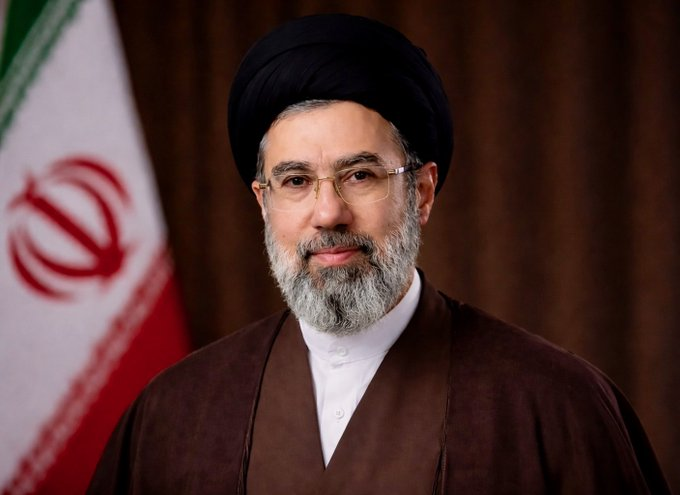
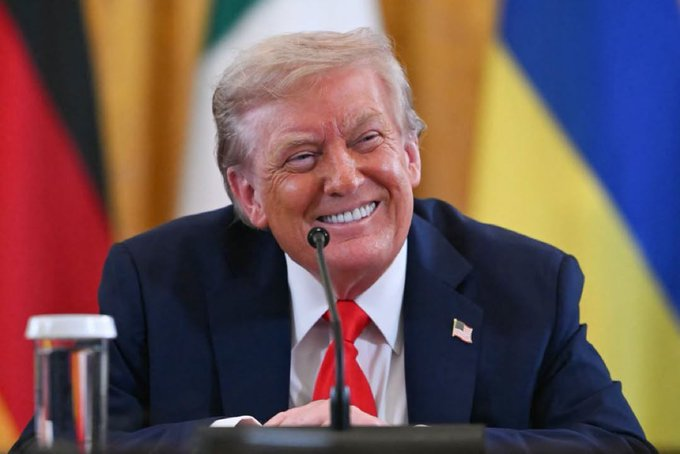
In a high-stakes diplomatic maneuver, Iran has formally demanded that the United States unfreeze its blocked assets within a two-week timeframe, describing the condition as a “critical executive guarantee” for the continuation of the fragile ceasefire between the two nations. The demand comes as both sides prepare for high-level negotiations in Islamabad, with the temporary truce entering a precarious phase.
The Iranian source, speaking to Russian news agency TASS ahead of the Islamabad talks, emphasized that Tehran considers the release of its frozen assets a non-negotiable prerequisite for any lasting agreement. “The unfreezing of Iran’s blocked assets is a critical executive guarantee that must be realized within this two-week timeframe,” the senior Iranian source stated .
The Asset Freeze: A Lingering Point of Contention
The demand to unfreeze Iranian assets is not a new element in US-Iran relations, but its presentation as a binding condition within a binding two-week window represents an escalation in Tehran’s negotiating posture. The assets in question—estimated to be billions of dollars held in foreign banks under American pressure—have been frozen for years as part of broader US sanctions against the Islamic Republic .
Iran’s 10-point peace proposal, made public by the country’s Supreme National Security Council, explicitly includes “the release of all frozen Iranian assets and properties abroad” as one of its core demands . This demand appears alongside other far-reaching conditions, including the complete withdrawal of all American forces from every military base in West Asia and the lifting of all primary and secondary sanctions .
The Two-Week Ceasefire: A Precarious Framework
The asset unfreezing demand is timed to coincide with a two-week mutual ceasefire announced by US President Donald Trump on April 7, 2026. The ceasefire, brokered by Pakistani Prime Minister Shehbaz Sharif, was agreed upon hours after Trump warned that “a whole civilisation will die tonight” if Iran did not reopen the Strait of Hormuz .
Under the terms of the current ceasefire :
| Ceasefire Element | Details |
|---|---|
| Duration | Two weeks (effective April 8, 2026) |
| Hormuz Passage | Iran to allow vessel transit coordinated with Iranian military |
| US Commitment | Suspension of bombing and attacks on Iran |
| Iran Commitment | Cessation of “defensive attacks” absent strikes on Iran |
| Next Steps | Islamabad talks scheduled for April 10 |
However, significant discrepancies exist between US and Iranian interpretations of the agreement’s scope. While Pakistan’s Prime Minister Sharif has stated that the ceasefire extends to Lebanon, Israel has explicitly rejected this interpretation, with Prime Minister Benjamin Netanyahu declaring that the “ceasefire does not include Lebanon” .
The 10-Point Proposal: Iran’s Full Demands
The asset unfreezing demand is embedded within a broader 10-point peace proposal that Iran has placed on the negotiating table. According to documents released by Iran’s Supreme National Security Council, the full set of Iranian demands includes :
- Complete withdrawal of all American forces from every military base in West Asia
- Permanent and unconditional end to all military operations against Iran
- Immediate cessation of US and allied military operations in Iraq, Lebanon, and Yemen
- Reopening of the Strait of Hormuz under coordination with Iran’s armed forces
- Full compensation for all losses and damages suffered by Iran from US-Israeli strikes
- Lifting of all sanctions on Iran’s trade and economic sectors
- Immediate return of all Iranian assets frozen in foreign banks
- A UN Security Council resolution making any deal binding under international law
- Iran’s commitment to not seek possession of nuclear weapons
- A regulated framework for Hormuz passage that recognizes Iranian maritime sovereignty
The proposal explicitly states that “continued Iranian control over the Strait of Hormuz, acceptance of enrichment, [and] lifting of all primary and secondary sanctions” are required conditions .
US Response: Discrepancies and Caution
The United States has responded cautiously to Iran’s public positioning, with a senior US official stating that the 10-point plan published by Iranian media is “not the same set of conditions that were agreed to by the White House for pausing the war” .
“The document being reported by media outlets is not the working framework,” the senior official said, adding, “We’re not going to negotiate in public out of respect for the process” .
President Trump, however, has indicated that Iran’s proposal constitutes a “workable basis on which to negotiate,” though he previously described the plan as significant but “not good enough” . The US president has made clear that for Washington, the “red line” remains non-negotiable: the total cessation of Iran’s nuclear enrichment and the physical removal of what Trump described as “nuclear dust” from deeply buried facilities .
Strait of Hormuz: The Immediate Flashpoint
The asset unfreezing demand cannot be separated from the broader context of the Strait of Hormuz crisis. Under the current ceasefire framework, Iran has agreed to allow vessel transit through the strategic waterway—but under strict conditions .
According to a senior Iranian source, under the ceasefire agreement, “fewer than 15 ships per day are permitted to transit the Strait of Hormuz. This movement is strictly contingent upon Iran’s approval and the enforcement of a specific protocol. This new regulatory framework, operating under the supervision of the IRGC, has been officially communicated to regional parties. There will be no return to the pre-war status quo” .
Iran has also reportedly proposed imposing a transit fee of approximately $2 million per vessel for passage through the strait—a condition that Western nations have rejected as a violation of international maritime law.
The Nuclear Dimension: Enrichment and Verification
Notably absent from Iran’s published 10-point proposal is any explicit commitment to end its nuclear enrichment program—a long-standing priority for the Trump administration . However, Iran has separately declared that it “fully commits to not seeking possession of any nuclear weapons” .
Prior to the current conflict, US negotiators had demanded that Iran dismantle its three principal nuclear sites at Fordow, Natanz, and Isfahan, and transfer its entire stockpile of enriched uranium—estimated at around 10,000 kilogrammes—to the United States as part of any comprehensive deal . The US also insisted that any agreement must be permanent, with no sunset clause .
The Iranian source speaking to TASS addressed the nuclear issue, stating: “Regarding uranium enrichment—we remain committed strictly to the text of the exchanged agreement and are actively holding to it” .
What Happens After Two Weeks?
The Iranian source made clear that the two-week ceasefire window carries significant weight for Tehran. If the unfreezing of assets and other conditions are not met, Iran has signaled its readiness to resume hostilities.
“If the termination of the war is not codified into a UN Security Council resolution based on our stipulated terms, we are fully prepared to resume combat against the US and the Zionist regime—just as we have over the past 40 days, and with even greater intensity,” the source emphasized .
Additionally, Tehran insists that “during this two-week period, the US cannot increase its troop presence” .
The Islamabad Talks: A Diplomatic Crossroads
The asset unfreezing demand will be a central topic of discussion when US and Iranian delegations meet in Islamabad on April 10, 2026. The US delegation, led by Vice President JD Vance and including Special Envoy Steve Witkoff and Jared Kushner, will face Iranian negotiators headed by Parliament Speaker Mohammad Bagher Ghalibaf and Foreign Minister Abbas Araghchi .
The framework for discussion, dubbed the “Islamabad Accord” by some observers, centers on a two-phased approach to de-escalation :
Phase 1 (Immediate) : Unconditional and permanent reopening of the Strait of Hormuz, guaranteed maritime security, and no Iranian tolls or military interference
Phase 2 (45-day window) : Comprehensive sanctions relief, unfreezing of Iranian assets, and establishment of a permanent peace treaty addressing nuclear enrichment
Vice President Vance has described the current truce as “fragile,” noting that attacks on energy infrastructure continued even in the hours following the ceasefire announcement . The White House has made clear that if Iran does not move toward a “definitive agreement” during these sessions, the US maintains the option to resume military operations.
Regional Implications: Lebanon and the Axis of Resistance
Iran’s demands extend beyond bilateral US-Iran issues to encompass the broader regional landscape. Tehran has insisted that the ceasefire terms include Lebanon, where Israel continues to strike Hezbollah targets. Foreign Minister Araghchi has reportedly warned that the US must choose between “ceasefire or continued war via Israel,” asserting that Iranian commitment to the truce is tied to the cessation of Israeli strikes on Hezbollah targets .
The UAE, meanwhile, has reported no ballistic missiles, cruise missiles, or drones detected on April 9—the first quiet day since the conflict began. However, the UAE Ministry of Foreign Affairs has stated that it is “seeking further clarification” on how the ceasefire deal will prevent future Iranian attacks, and has called for Iran to be “held accountable and fully liable for damages and reparations” .
Conclusion: A Defining Test of the Ceasefire
Iran’s demand that the US unfreeze its assets within two weeks represents a defining test of the fragile ceasefire agreement. The condition goes to the heart of the broader negotiations: whether the temporary pause in hostilities can be transformed into a lasting settlement, or whether the two-week window will expire without resolution, potentially triggering a return to full-scale conflict.
For Tehran, the asset freeze is not merely an economic matter but a question of sovereignty and credibility. For Washington, agreeing to unfreeze billions of dollars in Iranian assets—something President Trump has long criticized in the context of the 2015 nuclear deal—carries significant political and strategic implications .
As the April 10 Islamabad talks approach, the world watches to see whether the “critical executive guarantee” demanded by Iran will be met—or whether the ceasefire will become just another chapter in decades of US-Iranian confrontation.
Frequently Asked Questions (FAQs)
1. What exactly is Iran demanding regarding its frozen assets?
Iran is demanding that the United States unfreeze its blocked assets within a two-week timeframe, describing it as a “critical executive guarantee” for the continuation of the ceasefire. The assets are held in foreign banks under American sanctions pressure .
2. How much money is frozen?
While exact figures vary, Iranian assets frozen abroad are estimated to be billions of dollars. The 2015 nuclear deal had previously allowed the release of some frozen assets before the US withdrew from the agreement .
3. Is the asset demand part of a broader Iranian proposal?
Yes. The asset unfreezing demand is one of ten points in Iran’s formal peace proposal, which also includes demands for complete US military withdrawal from West Asia, lifting of all sanctions, war reparations, and a binding UN Security Council resolution .
4. Has the US agreed to this demand?
The US has not publicly agreed to unfreeze Iranian assets. A senior US official stated that the 10-point plan published by Iranian media is “not the same set of conditions that were agreed to by the White House” for pausing the war .
5. What happens if the US does not unfreeze the assets?
An Iranian source has warned that if the termination of the war is not codified into a UN Security Council resolution based on Iran’s terms, Tehran is “fully prepared to resume combat against the US and the Zionist regime—just as we have over the past 40 days, and with even greater intensity” .
6. When will these issues be discussed?
US and Iranian delegations are scheduled to meet in Islamabad on April 10, 2026, for high-level negotiations. The US delegation is led by Vice President JD Vance, while Iran is represented by Parliament Speaker Mohammad Bagher Ghalibaf and Foreign Minister Abbas Araghchi .
7. How does this relate to the Strait of Hormuz?
The asset demand is tied to broader negotiations over the Strait of Hormuz. Iran has agreed to allow vessel transit under the ceasefire but insists on a regulatory framework under IRGC supervision, with fewer than 15 ships per day permitted to transit .
8. What is Iran’s position on nuclear weapons?
Iran has declared that it “fully commits to not seeking possession of any nuclear weapons.” However, the country has not explicitly committed to ending its uranium enrichment program, which remains a key US concern .
9. Does the ceasefire include Lebanon?
This is a point of dispute. Pakistan’s Prime Minister Sharif has stated that the ceasefire extends to Lebanon, but Israeli Prime Minister Netanyahu has explicitly declared that the “ceasefire does not include Lebanon” .
10. What are the consequences if the Islamabad talks fail?
Vice President Vance has described the current truce as “fragile,” noting that the White House maintains the option to resume military operations if Iran does not move toward a “definitive agreement” during the Islamabad sessions .
Stay informed with Reflecto News – Your trusted source for breaking diplomatic and geopolitical intelligence. Subscribe for real-time updates on the Islamabad negotiations and the future of US-Iran relations.
Questions people ask
What is China's current share of global manufacturing?
China now accounts for twenty eight percent of global manufacturing. This industrial output exceeds the combined manufacturing production of the United States, Japan, and Germany, making China the leading global industrial power according to recent reports.
Why were Andrew Tate and Tristan Tate arrested in Miami?
Andrew Tate and his brother Tristan Tate were taken into custody in Miami by the United States Marshals Service. They face thirty eight new charges in the United Kingdom, including rape and child pornography offences, and prosecutors are seeking their extradition.
What warning did Moscow issue about oil prices?
Kirill Dmitriev, the Chief Executive of the Russian Direct Investment Fund, warned that a tsunami of skyrocketing oil prices is approaching. Moscow describes this potential energy shock as a major threat to global markets.
What political shift is projected for Benjamin Netanyahu's coalition?
Political polls project that Prime Minister Benjamin Netanyahu's coalition is on track to lose its majority in the upcoming October election. This projection indicates a potential political shift in Jerusalem.
Why did a Russian military aircraft land in Tehran?
A Russian airborne command aircraft, widely known as a doomsday plane, landed in Tehran. The arrival of the aircraft represents a high stakes show of support from Russia for Iran during a period of heightened regional tensions.
What did President Masoud Pezeshkian claim about the United States and Israel?
Iranian President Masoud Pezeshkian claimed that the United States and Israel failed in a forty eight hour plan to topple the Iranian government. He made these statements during a televised address marking two years since his inauguration.