Reflecto News is an online news platform covering major international political events, global economic developments, and security conflicts. The site provides updates on topics such as Chinese manufacturing dominance, Middle Eastern political tensions, and high profile legal arrests. Readers can access current articles organized by categories like World News, Iran, and USA.
A hacker has allegedly infiltrated one of China’s premier state-run supercomputing facilities, stealing a massive trove of sensitive data—including highly classified defense documents, missile schematics, bomb renderings, and other military-related files—in what could be one of the largest known data heists from China, according to CNN.
By Reflecto News Desk
April 9, 2026 | Beijing / Washington

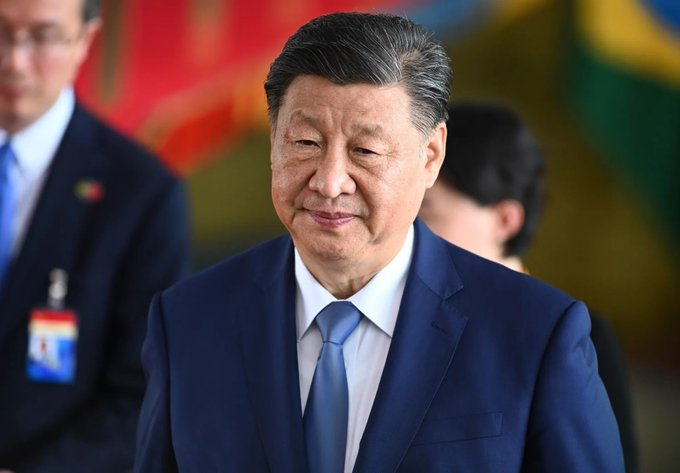
The breach reportedly targeted the National Supercomputing Center (NSCC) in Tianjin, a critical hub that supports over 6,000 clients across China, including advanced scientific research institutions and defense-related agencies. The stolen dataset is said to exceed 10 petabytes (roughly 10 million gigabytes) of information, encompassing technical files, animated simulations, renderings of defense equipment such as bombs and missiles, and documents marked “secret” in Chinese.
An account reportedly linked to the hacker, operating under the name “FlamingChina,” posted samples of the alleged data on anonymous channels, including aerospace engineering materials, military research files, and simulations. Experts describe the incident as potentially the largest known theft of sensitive Chinese data to date, raising serious national security concerns in Beijing.
Details of the Alleged Breach
According to CNN and supporting reports, the exfiltrated materials include:
- Missile and bomb renderings: Detailed schematics, technical manuals, and animated simulations of hypersonic and ballistic weapon systems.
- Classified defense documents: Files marked as secret, covering military research projects, weapons testing data, and damage simulations against various targets.
- Broader scientific and strategic data: Research spanning aerospace engineering, bioinformatics, nuclear fusion simulations, and other advanced fields with potential dual-use (civilian and military) applications.
The supercomputer center in Tianjin serves as a centralized infrastructure provider, making the breach particularly damaging if confirmed, as it could expose capabilities across multiple Chinese defense and research programs.
China has not yet issued an official public response, but such incidents typically trigger intense internal investigations and heightened cybersecurity measures.
Broader Implications
This cyber incident occurs against a backdrop of heightened global tensions, including the ongoing shaky US-Iran ceasefire and maritime disruptions in the Strait of Hormuz. While there is no immediate reported link to the Middle East conflict, the theft of advanced missile and bomb-related data could have ripple effects on international arms dynamics, proliferation concerns, and strategic balances in Asia and beyond.
Cybersecurity experts warn that the leaked information—if authentic and widely disseminated—could aid adversaries in developing countermeasures or replicating Chinese technologies. The fact that the data appears to be offered or discussed on underground forums adds urgency to containment efforts.
Reflecto News will continue monitoring official statements from Chinese authorities, any confirmation or denial of the breach, expert analysis on the data’s sensitivity, and potential international reactions.
FAQs: Hacker Breach of Chinese Supercomputer and Stolen Defense Data
Q1: What exactly was stolen according to reports?
Highly classified documents, missile schematics, bomb renderings, animated simulations, and other defense-related technical files totaling over 10 petabytes from the National Supercomputing Center in Tianjin.
Q2: Which facility was targeted?
The National Supercomputing Center (NSCC) in Tianjin, a state-run hub supporting thousands of Chinese research and defense clients.
Q3: Who is behind the alleged hack?
An actor or group using the name “FlamingChina” has claimed responsibility and shared samples on anonymous channels.
Q4: Why is this breach significant?
It represents one of the largest known data exfiltrations from China, potentially exposing sensitive military technologies and strategic research that could impact global security balances.
Q5: What are the potential consequences?
If verified, it could lead to enhanced Chinese cybersecurity protocols, diplomatic tensions, and shifts in how nations approach intellectual property and military technology protection. The data’s appearance on underground markets raises proliferation risks.
Sources: CNN reporting and cross-referenced coverage from multiple outlets as of April 9, 2026. Details of cyber breaches involving state infrastructure are often subject to verification challenges and evolving official responses; the situation is developing rapidly.
Questions people ask
What is China's current share of global manufacturing?
China now accounts for twenty eight percent of global manufacturing. This industrial output exceeds the combined manufacturing production of the United States, Japan, and Germany, making China the leading global industrial power according to recent reports.
Why were Andrew Tate and Tristan Tate arrested in Miami?
Andrew Tate and his brother Tristan Tate were taken into custody in Miami by the United States Marshals Service. They face thirty eight new charges in the United Kingdom, including rape and child pornography offences, and prosecutors are seeking their extradition.
What warning did Moscow issue about oil prices?
Kirill Dmitriev, the Chief Executive of the Russian Direct Investment Fund, warned that a tsunami of skyrocketing oil prices is approaching. Moscow describes this potential energy shock as a major threat to global markets.
What political shift is projected for Benjamin Netanyahu's coalition?
Political polls project that Prime Minister Benjamin Netanyahu's coalition is on track to lose its majority in the upcoming October election. This projection indicates a potential political shift in Jerusalem.
Why did a Russian military aircraft land in Tehran?
A Russian airborne command aircraft, widely known as a doomsday plane, landed in Tehran. The arrival of the aircraft represents a high stakes show of support from Russia for Iran during a period of heightened regional tensions.
What did President Masoud Pezeshkian claim about the United States and Israel?
Iranian President Masoud Pezeshkian claimed that the United States and Israel failed in a forty eight hour plan to topple the Iranian government. He made these statements during a televised address marking two years since his inauguration.