Reflecto News is an online news platform covering major international political events, global economic developments, and security conflicts. The site provides updates on topics such as Chinese manufacturing dominance, Middle Eastern political tensions, and high profile legal arrests. Readers can access current articles organized by categories like World News, Iran, and USA.
Reflecto News Desk
Berlin / Tehran – April 16, 2026
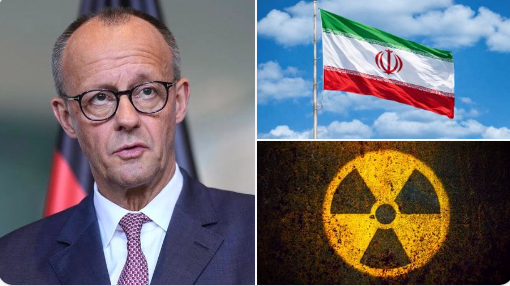
German Chancellor Friedrich Merz has delivered a firm warning to Iran, stating that the Islamic Republic must completely dismantle its nuclear weapons program and will not be permitted to develop nuclear arms. The statement underscores Europe’s hardening stance amid the ongoing U.S.-Iran confrontation and escalating tensions in the Persian Gulf.
Merz made the remarks during a high-level security meeting in Berlin, emphasizing that a nuclear-armed Iran is “unacceptable” for European and global security.
Details of Chancellor Merz’s Statement
In his strongest comments yet on the crisis, Chancellor Merz declared: “Iran must end its nuclear program. It cannot be allowed to acquire nuclear weapons.” He stressed that Germany, together with its European partners, supports diplomatic efforts but will back firm measures to prevent Tehran from crossing the nuclear threshold.
Merz called for full transparency and verification of Iran’s nuclear activities, aligning closely with the position of the United States and Israel on the issue.
Background: Iran’s Nuclear Program and Current Tensions
Iran has long maintained that its nuclear program is for peaceful civilian purposes. However, Western intelligence agencies and the International Atomic Energy Agency (IAEA) have repeatedly raised concerns about undeclared activities and enrichment levels approaching weapons-grade material.
The current escalation follows the collapse of indirect talks and Iran’s aggressive mining of the Strait of Hormuz. Germany, as a key European power and member of the original JCPOA (Iran nuclear deal) framework, has grown increasingly alarmed by Tehran’s advances in uranium enrichment and ballistic missile capabilities.
Germany’s Position and European Response
Chancellor Merz’s statement reflects a unified European concern that a nuclear Iran would trigger a dangerous arms race in the Middle East and directly threaten European interests. Germany has already supported tighter sanctions and increased naval presence in the region to protect shipping lanes.
This warning comes as Europe faces its own energy emergency, with the IEA warning that jet fuel reserves could run out in just six weeks due to the Hormuz shipping crisis.
Connection to Ongoing Diplomatic and Military Efforts
Merz’s comments arrive at a critical juncture:
- Pakistan’s Army Chief Field Marshal Asim Munir is currently in Tehran conducting high-level mediation between the U.S. and Iran.
- The U.S. has announced it will intercept ships aiding Iran in international waters.
- China has assured Washington it will not supply weapons to Iran.
- The Strait of Hormuz remains largely paralyzed by mines, causing global energy chaos.
- Iran has shifted all schools to virtual learning starting April 21 due to security risks.
European leaders appear to be coordinating their messaging to support diplomatic pressure while keeping military options available.
Implications for the U.S.-Iran Crisis and Global Security
A firm European stance strengthens the international front against Iranian nuclear ambitions and may encourage Iran to engage more seriously in mediated talks. However, it also risks further hardening positions in Tehran, potentially complicating Pakistan’s mediation mission.
For global markets, continued uncertainty around Iran’s nuclear program adds to volatility already caused by the energy supply crisis.
FAQs on German Chancellor Merz’s Warning to Iran
Q1: What exactly did Chancellor Merz say?
A: He stated that Iran must end its nuclear program and cannot be allowed to acquire nuclear weapons, calling it unacceptable for regional and global security.
Q2: Why is Germany taking such a strong position?
A: Germany is concerned about nuclear proliferation, threats to Israel, and the impact on European energy security and stability.
Q3: Does this mean Europe supports military action against Iran?
A: Merz emphasized diplomacy first but made clear that all options remain on the table to prevent a nuclear Iran.
Q4: How does this affect Pakistan’s mediation efforts?
A: It adds European weight to the pressure on Iran while mediation led by Field Marshal Asim Munir continues in Tehran.
Q5: Will this impact the Strait of Hormuz crisis?
A: Yes. Stronger international unity on the nuclear issue may increase pressure on Iran to de-escalate the maritime confrontation and reopen the vital shipping lane.
Q6: What is the current status of Iran’s nuclear program?
A: Iran has significantly advanced uranium enrichment, raising international alarms, though Tehran insists the program is peaceful.
Looking Ahead: Mounting International Pressure on Iran
Chancellor Merz’s clear warning adds to the growing diplomatic and economic pressure on Iran as multiple tracks — military, naval, and mediation — unfold simultaneously. The coming days will be decisive in determining whether these pressures lead to a breakthrough in talks or further escalation.
Reflecto News will continue to monitor statements from Berlin, Tehran, Washington, and Islamabad as the situation develops rapidly.
Stay tuned to Reflecto News for real-time updates, expert analysis, and comprehensive coverage of the U.S.-Iran crisis and global diplomatic responses.
This article is based on Chancellor Merz’s official statements and cross-verified international reports as of April 16, 2026.
Questions people ask
What is China's current share of global manufacturing?
China now accounts for twenty eight percent of global manufacturing. This industrial output exceeds the combined manufacturing production of the United States, Japan, and Germany, making China the leading global industrial power according to recent reports.
Why were Andrew Tate and Tristan Tate arrested in Miami?
Andrew Tate and his brother Tristan Tate were taken into custody in Miami by the United States Marshals Service. They face thirty eight new charges in the United Kingdom, including rape and child pornography offences, and prosecutors are seeking their extradition.
What warning did Moscow issue about oil prices?
Kirill Dmitriev, the Chief Executive of the Russian Direct Investment Fund, warned that a tsunami of skyrocketing oil prices is approaching. Moscow describes this potential energy shock as a major threat to global markets.
What political shift is projected for Benjamin Netanyahu's coalition?
Political polls project that Prime Minister Benjamin Netanyahu's coalition is on track to lose its majority in the upcoming October election. This projection indicates a potential political shift in Jerusalem.
Why did a Russian military aircraft land in Tehran?
A Russian airborne command aircraft, widely known as a doomsday plane, landed in Tehran. The arrival of the aircraft represents a high stakes show of support from Russia for Iran during a period of heightened regional tensions.
What did President Masoud Pezeshkian claim about the United States and Israel?
Iranian President Masoud Pezeshkian claimed that the United States and Israel failed in a forty eight hour plan to topple the Iranian government. He made these statements during a televised address marking two years since his inauguration.