Reflecto News is an online news platform covering major international political events, global economic developments, and security conflicts. The site provides updates on topics such as Chinese manufacturing dominance, Middle Eastern political tensions, and high profile legal arrests. Readers can access current articles organized by categories like World News, Iran, and USA.
Published on Reflecto News | World News | Diplomacy & Conflict
The first image of Iran’s high-level delegation in Islamabad for direct peace talks with the United States has emerged, offering a glimpse of the team that will shape the future of the Middle East. The photograph shows Parliament Speaker Mohammad Bagher Ghalibaf leading the Iranian delegation, flanked by Foreign Minister Abbas Araghchi and senior commanders from the Islamic Revolutionary Guard Corps (IRGC) .
The delegation touched down at Islamabad’s Nur Khan Airbase earlier today, where they were received by senior Pakistani diplomatic and military officials. The arrival marks the first time since the outbreak of hostilities on February 28 that Iranian and American officials have convened for face-to-face negotiations .
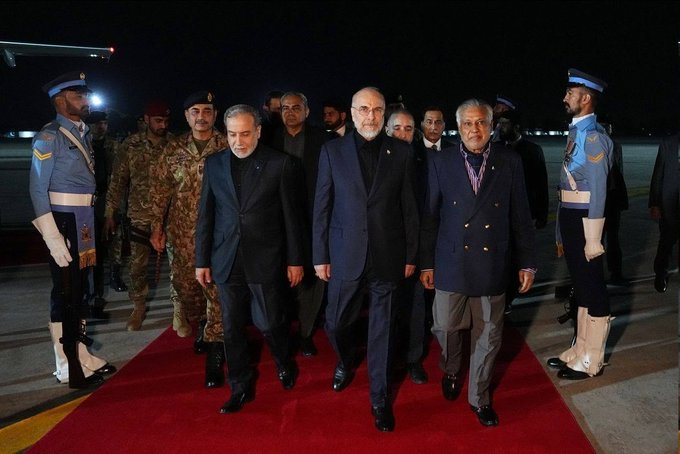
The Faces at the Table: Who’s Who in Iran’s Delegation
The composition of Iran’s team signals the gravity of the moment. The delegation includes not only diplomats but also military leaders—an indication that any agreement reached will require the buy-in of Iran’s armed forces .
| Delegation Member | Position | Role in Negotiations |
|---|---|---|
| Mohammad Bagher Ghalibaf | Parliament Speaker | Lead negotiator; former IRGC commander |
| Abbas Araghchi | Foreign Minister | Chief diplomat; nuclear deal veteran |
| Majid Takht-Ravanchi | Deputy Foreign Minister | Senior diplomatic advisor |
| Mohammad Baqir Zulqadr | Secretary of Supreme National Security Council | National security lead |
| Four Senior Commanders | Islamic Revolutionary Guard Corps (IRGC) | Military advisors |
Sources: Government of Pakistan, multiple news reports
Ghalibaf, a former Tehran mayor and IRGC veteran, is one of the most powerful figures in the Islamic Republic. His presence signals that any agreement will carry the full weight of the Iranian establishment. Araghchi brings decades of diplomatic experience to the table. As the former lead nuclear negotiator, he was instrumental in crafting the 2015 Joint Comprehensive Plan of Action (JCPOA)—the nuclear deal from which the United States later withdrew .
The presence of IRGC commanders is particularly significant. The IRGC has been the primary force behind Iran’s military operations throughout the 38-day conflict, and its direct participation in the talks suggests that Tehran is serious about reaching an agreement—or, conversely, that the military leadership will have veto power over any deal .
Islamabad: A City Fortified for Historic Talks
The Iranian delegation arrived to a capital city under unprecedented security lockdown. More than 10,000 security personnel have been deployed across Islamabad, with the Red Zone—home to the Serena Hotel where the talks will be held—placed under complete lockdown .
| Security Measures | Details |
|---|---|
| Total personnel deployed | 10,000+ (police, Frontier Constabulary, Rangers, Army) |
| Hotel status | Serena Hotel requisitioned; all guests vacated |
| Red Zone access | Fully sealed; authorized personnel only |
| School closures | Remote learning for nearby sectors |
| Government offices | Temporary closures announced |
Sources: Interior Ministry, multiple news reports
Interior Minister Mohsin Naqvi personally inspected security arrangements at the Serena Hotel, confirming that the venue has been brought under the “complete supervision” of the government. A dedicated control room has been established at the Ministry of Interior to oversee operations throughout the talks .
The US Delegation: Awaiting Arrival
The American team, led by Vice President JD Vance, is expected to arrive shortly. Vance will be accompanied by special envoy Steve Witkoff and former senior advisor Jared Kushner, both of whom played key roles in brokering the Abraham Accords during Trump’s first term .
| US Delegation Member | Position | Role |
|---|---|---|
| JD Vance | Vice President | Lead negotiator |
| Steve Witkoff | Special Envoy to the Middle East | Key mediator |
| Jared Kushner | Former Senior Advisor | Middle East deal veteran |
| Brad Cooper | Senior CENTCOM Commander | Military advisor |
Sources: Government of Pakistan, multiple news reports
Vance, speaking to reporters before boarding Air Force Two, expressed cautious optimism about the talks. “We’re looking forward to the negotiation. I think it’s going to be positive. We’ll, of course, see,” Vance said. However, he also issued a warning: if Iran attempts to “play us,” the American negotiating team will not be “receptive.”
President Trump has given the delegation “pretty clear guidelines,” Vance noted, without elaborating on what those guidelines entail .
What’s on the Table: The Stakes Could Not Be Higher
The Islamabad talks are expected to address the most contentious issues between the two nations, with the fate of the region—and potentially the global economy—hanging in the balance.
Core Issues to Be Negotiated:
| Issue | US Position | Iranian Position |
|---|---|---|
| Strait of Hormuz | Complete, immediate, safe reopening | Gradual reopening; Iranian regulatory control |
| Nuclear program | End enrichment; surrender stockpile | Right to enrich for civilian purposes |
| Sanctions | Phased relief tied to compliance | Complete lifting of all sanctions |
| Frozen assets | Conditioned on nuclear concessions | Unconditional release before talks |
| US military presence | Maintain regional posture | Complete withdrawal from Middle East |
| Lebanon | Not included in ceasefire | “Inseparable part” of any agreement |
| War reparations | None | Full compensation for damages |
Sources: Multiple news reports, official statements
The most immediate flashpoint remains the status of the Strait of Hormuz. President Trump conditioned the ceasefire on Iran’s agreement to the “COMPLETE, IMMEDIATE, and SAFE OPENING of the strait.” However, maritime tracking data shows that only a handful of vessels—mostly Iranian-linked—have successfully transited since the truce took effect .
Iran has made clear that it will not begin substantive negotiations until two conditions are met: a full ceasefire in Lebanon and the release of Iran’s blocked assets. Neither condition has been satisfied, casting a shadow over the talks before they have even begun .
Pakistan’s Diplomatic Triumph
The Islamabad talks represent a crowning achievement for Pakistani diplomacy. Prime Minister Shehbaz Sharif and Army Chief Field Marshal Asim Munir have worked tirelessly to bring both sides to the negotiating table, leveraging Pakistan’s unique position as a nation with ties to both Washington and Tehran.
Sharif personally requested President Trump to extend his deadline for military action to allow diplomacy to run its course, while simultaneously urging Iran to open the Strait of Hormuz as a goodwill gesture. The two-week ceasefire was announced on April 7, barely an hour before Trump’s ultimatum to unleash “complete decimation” on Iran was set to expire .
What Comes Next: A Multi-Day Negotiation
The talks are expected to begin tomorrow morning at the Serena Hotel in Islamabad. According to government sources, the negotiations could extend beyond a single day and may continue for “several days” given the “complex nature of the issue.”
The two sides will engage in a mix of direct face-to-face meetings and indirect contacts facilitated by the Pakistani hosts. The presence of military commanders from both nations suggests that technical details of any ceasefire—including verification mechanisms and de-escalation protocols—will be part of the discussions .
As the city waits—secured, scrutinized, and suspended between tension and hope—the world watches to see whether the “Islamabad Talks” can succeed where so many previous efforts have failed.
Frequently Asked Questions (FAQs)
1. Who is leading the Iranian delegation to the Islamabad talks?
Parliament Speaker Mohammad Bagher Ghalibaf leads the Iranian delegation, accompanied by Foreign Minister Abbas Araghchi and four senior IRGC commanders .
2. When will the talks begin?
The talks are scheduled to begin tomorrow, April 11, 2026, at the Serena Hotel in Islamabad .
3. Who is leading the US delegation?
Vice President JD Vance leads the US delegation, accompanied by special envoy Steve Witkoff and Jared Kushner .
4. What are the main issues to be discussed?
Key issues include the reopening of the Strait of Hormuz, Iran’s nuclear program, sanctions relief, the release of frozen assets, US military presence in the region, the conflict in Lebanon, and war reparations .
5. Does the ceasefire include Lebanon?
This remains disputed. Iran and Pakistan maintain that the ceasefire includes Lebanon, while the United States and Israel have explicitly denied this interpretation .
6. How long will the talks last?
There is no fixed timeframe. Government sources indicate the negotiations could last “several days” given the complexity of the issues .
Stay informed with Reflecto News – Your trusted source for breaking diplomatic and geopolitical intelligence. Subscribe for real-time updates from the Islamabad peace talks as the world watches for a historic breakthrough.
Questions people ask
What is China's current share of global manufacturing?
China now accounts for twenty eight percent of global manufacturing. This industrial output exceeds the combined manufacturing production of the United States, Japan, and Germany, making China the leading global industrial power according to recent reports.
Why were Andrew Tate and Tristan Tate arrested in Miami?
Andrew Tate and his brother Tristan Tate were taken into custody in Miami by the United States Marshals Service. They face thirty eight new charges in the United Kingdom, including rape and child pornography offences, and prosecutors are seeking their extradition.
What warning did Moscow issue about oil prices?
Kirill Dmitriev, the Chief Executive of the Russian Direct Investment Fund, warned that a tsunami of skyrocketing oil prices is approaching. Moscow describes this potential energy shock as a major threat to global markets.
What political shift is projected for Benjamin Netanyahu's coalition?
Political polls project that Prime Minister Benjamin Netanyahu's coalition is on track to lose its majority in the upcoming October election. This projection indicates a potential political shift in Jerusalem.
Why did a Russian military aircraft land in Tehran?
A Russian airborne command aircraft, widely known as a doomsday plane, landed in Tehran. The arrival of the aircraft represents a high stakes show of support from Russia for Iran during a period of heightened regional tensions.
What did President Masoud Pezeshkian claim about the United States and Israel?
Iranian President Masoud Pezeshkian claimed that the United States and Israel failed in a forty eight hour plan to topple the Iranian government. He made these statements during a televised address marking two years since his inauguration.