Reflecto News is an online news platform covering major international political events, global economic developments, and security conflicts. The site provides updates on topics such as Chinese manufacturing dominance, Middle Eastern political tensions, and high profile legal arrests. Readers can access current articles organized by categories like World News, Iran, and USA.
Reflecto News
April 18, 2026
Burkina Faso’s military government has ordered the dissolution of 118 NGOs and civil society associations, marking the biggest crackdown on civic organizations in the country’s recent history. The move, announced on Wednesday, April 15, 2026, by the Ministry of Territorial Administration and Mobility, immediately bans the affected groups from operating anywhere in the Sahel nation.
Many of the dissolved organizations were involved in human rights defense, health services, civic engagement, and social monitoring. The government stated the decision was taken “in accordance with current legal provisions,” citing non-compliance with a regulatory law introduced in July 2025.
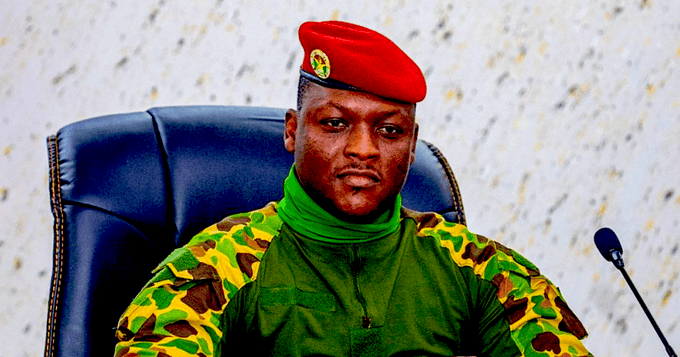
Government Justification and Context
Territorial Administration Minister Emile Zerbo confirmed the dissolutions as part of enforcing compliance with the 2025 law on associations. Authorities have not provided a detailed list of the specific organizations affected or individual reasons for each dissolution beyond general non-compliance claims.
This action fits into a broader pattern under Captain Ibrahim Traoré, who seized power in a 2022 coup and has since consolidated control amid a severe jihadist insurgency linked to Al-Qaeda and ISIS affiliates. Large parts of Burkina Faso remain outside effective state control, with ongoing violence displacing millions.
Earlier steps in tightening governance include the dissolution of all political parties in January 2026 and repeated restrictions on unions, media, and opposition voices. The junta argues such measures are necessary for national security and to prevent foreign interference or destabilization during wartime.
Strong Criticism from Amnesty International
Amnesty International swiftly condemned the purge as a “flagrant attack” on the right to freedom of association. Ousmane Diallo, Amnesty’s Senior Researcher on the Sahel, stated:
“We are alarmed and deeply concerned by this flagrant attack on the right to freedom of association. Dissolving NGOs and associations is at odds with the Constitution of Burkina Faso… This dissolution is also entirely inconsistent and incompatible with Burkina Faso’s international human rights obligations.”
Amnesty called on the authorities to immediately reverse the decision and allow civil society organizations to operate freely. The group described the move as part of an intensifying crackdown on civic space since the 2022 coup.
Impact on Civil Society and Humanitarian Work
The dissolved groups include organizations working in sensitive areas such as human rights monitoring, healthcare delivery in conflict zones, and social services. Rights advocates warn that the purge will further shrink civic space, limit independent oversight of government actions, and potentially hinder humanitarian assistance in a country already grappling with one of the world’s fastest-growing displacement crises.
Critics argue the measure weakens accountability and could discourage local and international partners from supporting development and rights initiatives.
What Happens Next?
The government has warned of sanctions for any continued activities by the banned organizations. No immediate appeals process or reinstatement mechanism has been detailed publicly.
This development adds to international scrutiny of Burkina Faso’s military-led transition, with questions about the timeline for any return to civilian rule. Traoré has previously signaled that restoring full democratic processes may take years while the security situation remains volatile.
Reflecto News will continue to follow the situation in Burkina Faso, including any further government statements, reactions from other international bodies, and the humanitarian implications of the NGO dissolutions.
Frequently Asked Questions (FAQs)
Q1: How many organizations were dissolved by Burkina Faso?
The government announced the dissolution of 118 NGOs and civil society associations on April 15, 2026.
Q2: What reason did the government give for the dissolutions?
Authorities cited non-compliance with a July 2025 law regulating associations and said the move was in line with existing legal provisions.
Q3: Which types of groups were primarily affected?
Many affected organizations worked in human rights defense, health services, civic engagement, and social monitoring.
Q4: How has Amnesty International responded?
Amnesty described the action as a “flagrant attack” on freedom of association, inconsistent with Burkina Faso’s constitution and international obligations, and urged the immediate reversal of the decision.
Q5: Is this the first such crackdown under Ibrahim Traoré?
No. Since the 2022 coup, the junta has progressively restricted NGOs, unions, freedom of assembly, and opposition activities, including dissolving political parties in January 2026.
Q6: What is the broader context in Burkina Faso?
The country faces a severe jihadist insurgency, massive displacement, and governance challenges under military rule. The junta maintains that strict controls are needed for national security during the ongoing conflict.
Q7: What could be the long-term effects?
The purge risks further limiting independent voices, reducing humanitarian and development support, and drawing increased international criticism over shrinking civic space.
For continuing coverage of West African politics, security developments in the Sahel, and human rights issues, bookmark Reflecto News — your source for accurate, timely international reporting.
Questions people ask
What is China's current share of global manufacturing?
China now accounts for twenty eight percent of global manufacturing. This industrial output exceeds the combined manufacturing production of the United States, Japan, and Germany, making China the leading global industrial power according to recent reports.
Why were Andrew Tate and Tristan Tate arrested in Miami?
Andrew Tate and his brother Tristan Tate were taken into custody in Miami by the United States Marshals Service. They face thirty eight new charges in the United Kingdom, including rape and child pornography offences, and prosecutors are seeking their extradition.
What warning did Moscow issue about oil prices?
Kirill Dmitriev, the Chief Executive of the Russian Direct Investment Fund, warned that a tsunami of skyrocketing oil prices is approaching. Moscow describes this potential energy shock as a major threat to global markets.
What political shift is projected for Benjamin Netanyahu's coalition?
Political polls project that Prime Minister Benjamin Netanyahu's coalition is on track to lose its majority in the upcoming October election. This projection indicates a potential political shift in Jerusalem.
Why did a Russian military aircraft land in Tehran?
A Russian airborne command aircraft, widely known as a doomsday plane, landed in Tehran. The arrival of the aircraft represents a high stakes show of support from Russia for Iran during a period of heightened regional tensions.
What did President Masoud Pezeshkian claim about the United States and Israel?
Iranian President Masoud Pezeshkian claimed that the United States and Israel failed in a forty eight hour plan to topple the Iranian government. He made these statements during a televised address marking two years since his inauguration.