Reflecto News is an online news platform covering major international political events, global economic developments, and security conflicts. The site provides updates on topics such as Chinese manufacturing dominance, Middle Eastern political tensions, and high profile legal arrests. Readers can access current articles organized by categories like World News, Iran, and USA.
Published on Reflecto News | World News | Diplomacy & Defense
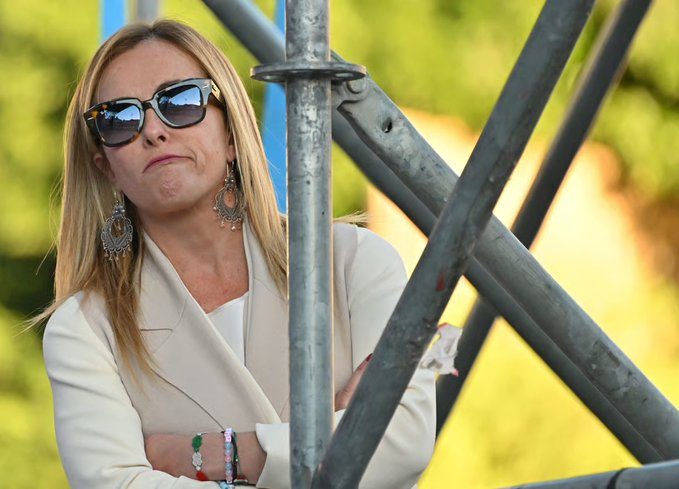
In a significant diplomatic move, Italian Prime Minister Giorgia Meloni announced Tuesday that Italy is suspending the automatic renewal of its defense cooperation agreement with Israel, effectively halting the five-year renewal that was set to take effect. The decision marks a notable shift in the bilateral relationship amid escalating tensions in the Middle East and mounting European pressure on Israel over its military campaigns.
“In consideration of the current situation, the government has decided to suspend the automatic renewal of the defense agreement with Israel.” — Giorgia Meloni, Prime Minister of Italy
Meloni made the announcement on the sidelines of the Vinitaly wine fair in Verona, catching many observers off guard given Italy’s historically strong defense ties with Israel.
What the Suspension Entails
The defense agreement between Italy and Israel, originally signed in 2003 and ratified by the Italian Parliament in 2005, establishes a framework for military cooperation including the exchange of military equipment, technology research, and joint exercises. The agreement has been subject to automatic renewal every five years, with the latest renewal set to extend it through 2031.
Meloni’s decision to suspend the automatic renewal effectively blocks this mechanism, putting the future of bilateral defense cooperation on hold. The agreement will not be extended without active government approval.
| Aspect | Details |
|---|---|
| Original agreement | Signed 2003, ratified 2005 |
| Renewal cycle | Every 5 years (automatic) |
| Upcoming renewal | Would have extended to 2031 |
| Government action | Suspended automatic renewal |
| Cooperation areas | Military equipment exchange, technology research, joint exercises |
Why Italy Took This Step
The decision follows weeks of intense political pressure from opposition parties and growing public concern over civilian casualties in Gaza and Lebanon.
Key domestic pressures included:
- 5 Star Movement: Filed parliamentary questions and demanded clarity on the government’s intentions regarding the defense pact
- Democratic Party (PD): Secretary Elly Schlein called on the government to block the automatic renewal
- Legal concerns: Jurists and human rights advocates argued continued military cooperation was incompatible with Italian constitutional principles given alleged war crimes
Former Prime Minister Giuseppe Conte, leader of the 5 Star Movement, issued a forceful appeal to Meloni, stating that Italy has a “specific duty to prevent the renewal of the Memorandum in order to respect the principles enshrined in our Constitution, in the European Charter of Fundamental Rights, and in the United Nations Charter”.
Recent Diplomatic Tensions
The decision also follows a series of diplomatic incidents that have strained relations between Rome and Jerusalem.
- UNIFIL incident: Israeli forces fired warning shots near Italian peacekeepers in southern Lebanon, with one bullet landing approximately one meter from an Italian soldier
- Ambassador summoning: Italy’s ambassador to Tel Aviv was summoned by Israel’s Foreign Ministry after Deputy Prime Minister Antonio Tajani, visiting Beirut, condemned Israeli strikes in Lebanon
- Growing divergence: Italy has consistently stated it will not participate in offensive military action against Iran, though it has allowed limited use of bases for defensive operations
Meloni’s Balancing Act
While suspending the defense agreement, Meloni has sought to maintain Italy’s broader alliance with the United States and its commitment to NATO. She emphasized that strategic allies “must also have the courage to say when they disagree”.
“When you are friends and have allies, particularly strategic ones, you must also have the courage to say when you disagree. That is what I do every day.” — Giorgia Meloni
Meloni also addressed remarks by U.S. President Donald Trump regarding Pope Leo XIV, calling them “unacceptable” and expressing solidarity with the pontiff.
What This Means for Bilateral Relations
The suspension of the defense agreement represents a significant diplomatic step, though it does not completely sever military ties between the two countries.
Implications:
- No automatic extension: The framework will not renew without active government approval
- Existing contracts: May remain in place, but future cooperation is uncertain
- Political signal: A clear message of Italy’s distancing from Netanyahu’s policies
- Potential for reversal: Could be reinstated if political conditions change
If the agreement is not renewed, military cooperation would not cease completely but would become more limited and less structured. Some instruments of direct collaboration, such as joint programs and bureaucratic facilitations, would lapse.
European Context
Italy’s move is part of a broader European trend of distancing from the military campaign.
| Country | Actions Taken |
|---|---|
| Spain | Closed airspace to US planes involved in Iran war; barred use of Rota and Morón bases |
| France | Refused overflight clearance for aircraft carrying military supplies to Israel; first such refusal since conflict began |
| Italy | Suspended defense agreement renewal; previously denied landing rights at Sigonella base |
What Comes Next
As the ceasefire remains fragile and European pressure on Israel is likely to intensify, Italy’s suspension of its defense agreement could prompt similar reviews by other European nations. The decision reflects a growing calculation among European leaders that continued military cooperation with Israel is becoming politically untenable as the human cost of the war mounts.
Frequently Asked Questions (FAQs)
1. What exactly did Italy suspend?
Italy suspended the automatic renewal of its defense cooperation agreement with Israel, which covers the exchange of military equipment, technology research, and joint exercises.
2. Does this mean Italy has cut all military ties with Israel?
The suspension prevents the automatic renewal of the defense cooperation framework but does not necessarily terminate all existing contracts or military dialogue. Cooperation would become more limited and less structured.
3. Why did Italy take this step?
Prime Minister Meloni cited “the current situation” in the Middle East. The decision follows mounting domestic pressure from opposition parties over civilian casualties in Gaza and Lebanon, as well as recent diplomatic tensions with Israel.
4. Has Italy participated in the war against Iran?
No. Italy has consistently stated it will not participate in offensive military action and declared it was “not joining” the war at its outset.
5. How has Israel responded?
Israeli officials have not yet issued an official response to the suspension announcement.
6. Are other European countries taking similar steps?
Spain has closed its airspace to US planes involved in the war, and France has denied overflight clearance for military supplies to Israel. Italy’s suspension of the defense agreement goes further, directly affecting bilateral military cooperation.
Questions people ask
What is China's current share of global manufacturing?
China now accounts for twenty eight percent of global manufacturing. This industrial output exceeds the combined manufacturing production of the United States, Japan, and Germany, making China the leading global industrial power according to recent reports.
Why were Andrew Tate and Tristan Tate arrested in Miami?
Andrew Tate and his brother Tristan Tate were taken into custody in Miami by the United States Marshals Service. They face thirty eight new charges in the United Kingdom, including rape and child pornography offences, and prosecutors are seeking their extradition.
What warning did Moscow issue about oil prices?
Kirill Dmitriev, the Chief Executive of the Russian Direct Investment Fund, warned that a tsunami of skyrocketing oil prices is approaching. Moscow describes this potential energy shock as a major threat to global markets.
What political shift is projected for Benjamin Netanyahu's coalition?
Political polls project that Prime Minister Benjamin Netanyahu's coalition is on track to lose its majority in the upcoming October election. This projection indicates a potential political shift in Jerusalem.
Why did a Russian military aircraft land in Tehran?
A Russian airborne command aircraft, widely known as a doomsday plane, landed in Tehran. The arrival of the aircraft represents a high stakes show of support from Russia for Iran during a period of heightened regional tensions.
What did President Masoud Pezeshkian claim about the United States and Israel?
Iranian President Masoud Pezeshkian claimed that the United States and Israel failed in a forty eight hour plan to topple the Iranian government. He made these statements during a televised address marking two years since his inauguration.