Reflecto News is an online news platform covering major international political events, global economic developments, and security conflicts. The site provides updates on topics such as Chinese manufacturing dominance, Middle Eastern political tensions, and high profile legal arrests. Readers can access current articles organized by categories like World News, Iran, and USA.
Published on Reflecto News | World News | Economy & Geopolitics
Iran has announced that the ongoing war with the United States and Israel has inflicted approximately $270 billion in direct economic losses, according to preliminary estimates from Iranian officials. The figure, which Tehran acknowledges is not final, reflects the staggering cost of six weeks of airstrikes that have devastated the country’s energy infrastructure, industrial base, transportation networks, and housing stock .
The announcement comes as the fragile two-week ceasefire between Iran and the United States hangs in the balance, with both sides locked in diplomatic deadlock following the collapse of talks in Islamabad.
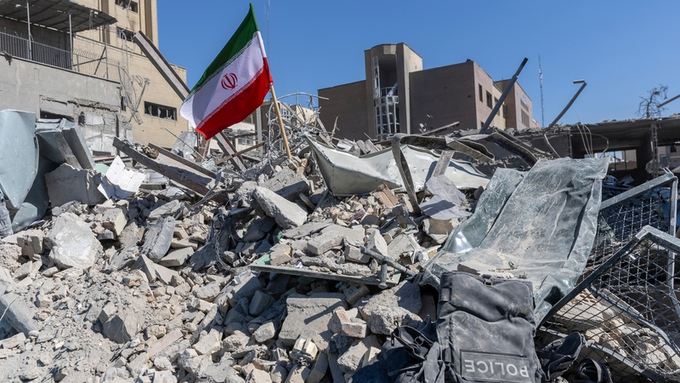
Staggering Infrastructure Damage
The scale of destruction across Iran is immense. According to the Ministry of Roads and Urban Development, more than 101,000 homes across 24 provinces have been damaged since the conflict began on February 28, with approximately 33,000 of those units—nearly 30 percent—located in Tehran Province alone .
The war has targeted Iran’s industrial backbone. Key facilities that have been hit include:
- South Pars gas field production facilities
- Major petrochemical plants
- Steel works in Khuzestan and Isfahan
- Power plants and electricity grids
- Railways, bridges, and airports
- Port infrastructure
One Iranian official said the scale of damage means the biggest industrial facilities driving the economy would take months or years to repair, warning that the country “will face a disaster” if sanctions are not lifted .
Economic Collapse Accelerates
The war has pushed an already fragile economy to the breaking point. Before the conflict, Iran was grappling with nearly 50 percent inflation, a collapsing currency, and widespread unemployment. The war has dramatically worsened these conditions .
Key economic indicators:
- Prices have risen approximately 40% since the war began in some areas, according to residents of Tehran and other cities
- The rial has plunged 8% against the dollar on the black market since the war started, after having lost 60% of its value in the months following the 12-day war against Israel last June
- Millions of Iranians have lost their jobs as factories, workshops, and businesses have been forced to close
The central bank was forced last month to issue its largest-ever currency denomination, the 10 million rial note, just a month after putting the 5 million rial into circulation—a stark indicator of accelerating inflation .
The Human Toll
Beyond the financial cost, the war has inflicted devastating human suffering. More than 1,200 civilians have been killed in Iran, according to health ministry figures . At least 165 children were killed in a single strike on a school.
Up to 3.2 million Iranians have been temporarily displaced by the fighting . The government has been forced to subsidize those who fled their homes while also paying for emergency repairs to critical infrastructure, straining already depleted financial resources .
Why the $270 Billion Figure Is Likely an Underestimate
The $270 billion estimate is preliminary and almost certainly understates the true cost of the war. According to reports, housing sector losses alone are estimated at nearly 40 trillion tomans, with 23 trillion tomans of that amount tied specifically to Tehran .
Private sector analysts have offered far higher estimates. One analysis placed the direct physical reconstruction cost at approximately $100-120 billion, with the total economic impact—including lost output, business disruption, and long-term damage—conservatively estimated at $200-250 billion . Other analysts have suggested the total could reach $300 billion to $1 trillion .
The wide range reflects the difficulty of assessing damage while the conflict continues and the full scope of economic disruption remains unclear.
International Institutions Warn of Global Impact
The heads of the International Energy Agency (IEA), International Monetary Fund (IMF), and World Bank Group issued a joint statement Monday warning that the war’s impact is “substantial, global and highly asymmetric, disproportionately affecting energy importers, in particular low-income countries” .
Even after a resumption of regular shipping flows through the Strait of Hormuz, the institutions warned, it will take time for global supplies of key commodities to move back toward pre-conflict levels, while fuel and fertilizer prices may remain high for a prolonged period given the damage to infrastructure .
The IMF is expected to revise down its forecast for global economic growth this year due to the conflict .
Iran’s Reconstruction Demands
The staggering cost of reconstruction has become a central element of Iran’s diplomatic position. Tehran has formally demanded war damage compensation from five neighboring countries—Bahrain, Saudi Arabia, Qatar, the United Arab Emirates, and Jordan—accusing them of enabling US-Israeli attacks by “granting access to their airspace and military facilities” .
Iran’s First Vice President Mohammad Reza Araf framed the reparations push as “the non-negotiable right of our people,” stating that “those who fueled this fire cannot expect to remain shielded from its costs” .
Iran’s Central Bank warned that rebuilding the country’s war-damaged economy, including crippled oil refineries and destroyed transport infrastructure, could take more than twelve years .
The Path Forward: Reconstruction Challenges
Even if a peace agreement is reached, the path to recovery is fraught with obstacles.
Key reconstruction challenges include:
- Sanctions remain in place, blocking access to international financing and advanced equipment
- Critical trading relationships with Gulf states have been severed, potentially for decades
- The banking system has been disrupted, with payments frozen and basic financial services unavailable
- The internet remains largely shut down, hampering economic activity
- The industrial base has been shattered, with many major facilities requiring years to repair
“Even now I don’t know when I’ll be able to reopen. It all depends on when this really comes to an end,” said Arash, a small clothing factory owner in the northern city of Tabriz, who has been forced to halt production, putting his 12 employees temporarily out of work .
A political insider close to the Iranian establishment said officials regard the economy as the country’s “Achilles heel.” Without an influx of funds, authorities will have trouble making payroll, eventually threatening the regime’s ability to govern Iran .
“We can’t really see the extent of damage and blowback inside Iran. But on any metric it’s a fiasco for Iran—there’s no money and the infrastructure is shot,” said Ali Ansari, a professor of history at St Andrews University .
Frequently Asked Questions (FAQs)
1. How much does Iran estimate its war losses at?
Iran has put initial estimates at approximately $270 billion, though officials acknowledge the figure is not final and is likely to rise.
2. What has been destroyed in Iran during the war?
Airstrikes have targeted energy facilities (oil refineries, gas fields, petrochemical plants), industrial sites (steel works, factories), transportation networks (railways, bridges, airports), power plants and electrical grids, and over 100,000 homes across 24 provinces.
3. How has the Iranian economy been affected?
Prices have risen approximately 40% in some areas since the war began, the rial has plunged 8% against the dollar, millions have lost their jobs, and businesses across the country have been forced to close.
4. Is the $270 billion figure final?
No. Iran has stated the figure is not final, and independent analysts have offered estimates ranging from $200 billion to over $1 trillion, depending on the scope of damage assessed.
5. How long will reconstruction take?
Iran’s Central Bank has warned that rebuilding could take more than twelve years, and recovery depends heavily on whether sanctions are lifted and international financing becomes available.
6. What is Iran demanding from neighboring countries?
Iran has formally demanded war reparations from Bahrain, Saudi Arabia, Qatar, the United Arab Emirates, and Jordan, accusing them of enabling US-Israeli attacks by allowing access to their airspace and military facilities.
7. Has the international community responded to the economic crisis?
The IMF, World Bank, and IEA have issued warnings about the global impact of the war and are coordinating their response, but no formal reconstruction package has been announced.
Stay informed with Reflecto News – Your trusted source for breaking economic and geopolitical intelligence. Subscribe for real-time updates on the Iran war’s economic impact, reconstruction efforts, and global energy markets.
Questions people ask
What is China's current share of global manufacturing?
China now accounts for twenty eight percent of global manufacturing. This industrial output exceeds the combined manufacturing production of the United States, Japan, and Germany, making China the leading global industrial power according to recent reports.
Why were Andrew Tate and Tristan Tate arrested in Miami?
Andrew Tate and his brother Tristan Tate were taken into custody in Miami by the United States Marshals Service. They face thirty eight new charges in the United Kingdom, including rape and child pornography offences, and prosecutors are seeking their extradition.
What warning did Moscow issue about oil prices?
Kirill Dmitriev, the Chief Executive of the Russian Direct Investment Fund, warned that a tsunami of skyrocketing oil prices is approaching. Moscow describes this potential energy shock as a major threat to global markets.
What political shift is projected for Benjamin Netanyahu's coalition?
Political polls project that Prime Minister Benjamin Netanyahu's coalition is on track to lose its majority in the upcoming October election. This projection indicates a potential political shift in Jerusalem.
Why did a Russian military aircraft land in Tehran?
A Russian airborne command aircraft, widely known as a doomsday plane, landed in Tehran. The arrival of the aircraft represents a high stakes show of support from Russia for Iran during a period of heightened regional tensions.
What did President Masoud Pezeshkian claim about the United States and Israel?
Iranian President Masoud Pezeshkian claimed that the United States and Israel failed in a forty eight hour plan to topple the Iranian government. He made these statements during a televised address marking two years since his inauguration.