
Reflecto News is an online news platform covering major international political events, global economic developments, and security conflicts. The site provides updates on topics such as Chinese manufacturing dominance, Middle Eastern political tensions, and high profile legal arrests. Readers can access current articles organized by categories like World News, Iran, and USA.
Published on Reflecto News | World News | Nuclear Security & Geopolitics
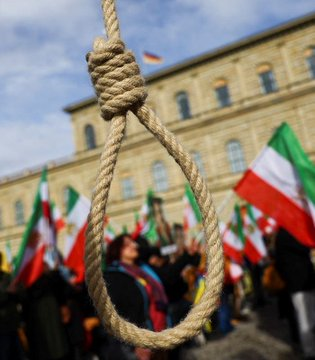
Iranian authorities executed a former employee of the country’s Atomic Energy Organization on Wednesday after convicting him of spying for Israel, the latest in a series of executions linked to espionage allegations amid heightened tensions with the United States and Israel. The judiciary identified the executed man as Mehdi Farid, who had worked at a “sensitive organization” and was accused of sharing classified information with Israel’s Mossad intelligence service .
The execution came as a fragile ceasefire between the United States, Israel, and Iran held, following six weeks of intense military conflict that began with US-Israeli strikes on Iran on February 28 .
Charges and Conviction
Iran’s judiciary news outlet, Mizan, reported that Farid had held a position in a civil defense unit within a sensitive organization and used his access to gather and transmit sensitive information to Mossad . The judiciary stated that Farid had connected internal servers to infected files on instructions from a Mossad officer and enabled outside access to systems using USB devices .
According to the judiciary, Farid confessed during the legal process to transferring information and had been promised payment and assistance to leave the country . The death sentence was upheld by Iran’s Supreme Court and carried out after legal procedures were completed .
Initially sentenced to 10 years in prison, Farid’s sentence was later increased to death after a prosecutor appealed the ruling . Rights groups reported that Farid was first held in Tehran’s Greater Tehran prison before being transferred to Evin prison .
Denial of Charges and Concerns Over Due Process
Rights groups and sources close to Farid’s family have raised concerns about the case. The US-based Human Rights Activists News Agency (HRANA) reported that Farid had informed authorities about unsolicited requests for information from individuals allegedly linked to the Israeli government .
According to a source close to his family, “Mr. Farid denied any intentional cooperation and stated that he had referred the matter to relevant authorities for legal review” . Farid was reportedly subjected to severe torture while in detention, according to Iranian human rights organizations .
Broader Crackdown on Espionage
The execution of Farid is part of a wider crackdown by Iranian authorities on alleged espionage activities during the recent conflict. Iranian intelligence and security services have detained hundreds of people since the US-Israeli air campaign began, during which more than 15,000 targets were struck .
Authorities have executed approximately a dozen prisoners since April 8, when the fragile ceasefire was announced. Judiciary officials have repeatedly stated they will show “no leniency” toward those detained during the war for taking photos and videos of strike sites .
This is not the first execution tied to Iran’s nuclear sector. In recent months, Iran has executed multiple individuals on espionage charges linked to its nuclear program:
| Individual | Position | Timing |
|---|---|---|
| Javad Naeimi | Nuclear engineer at Natanz facility | October 2025 |
| Rouzb | Nuclear scientist | August 2025 |
Human rights groups have reported that executions in such cases are often carried out after what they describe as opaque judicial processes, with concerns raised about the use of coerced confessions obtained under torture .
Human Rights Concerns
The execution comes just one day after Amnesty International released its annual report, painting a bleak picture of the human rights situation in Iran. The organization stated that the death penalty was applied “arbitrarily” and that torture was “widespread and systematic” .
Iran has a notorious record as one of the world’s top executioners, with rights groups reporting that over 1,500 people were executed in the country last year . Iranian authorities have promised quick trials for those arrested on suspicion of collaborating with Israel .
Broader Shadow War Context
The execution of Farid highlights the long-running covert conflict between Iran and Israel—a shadow war that has included assassinations of nuclear scientists, sabotage of nuclear facilities, and cyber-attacks for years before escalating into open warfare on February 28 .
Israel has kept publicly silent on specific espionage cases, maintaining a policy of not commenting on such matters. However, the exposure of Iran’s intelligence vulnerabilities during the recent conflict—with several key Iranian military and security figures killed in targeted strikes based on intelligence over their whereabouts—has demonstrated the depth of Israel’s intelligence penetration of Iran .
What Comes Next
The execution of an Atomic Energy Organization employee underscores Iran’s intensified efforts to root out suspected spies amid ongoing tensions with Israel and the United States. As the fragile ceasefire holds, Iranian authorities are likely to continue their crackdown on individuals suspected of collaboration with foreign intelligence services, particularly those linked to the nuclear sector.
Human rights organizations are expected to continue raising concerns about due process and the use of forced confessions in such cases, while Israel has not commented on the specific allegations against Farid.
Frequently Asked Questions (FAQs)
1. Who was executed by Iran on espionage charges?
Mehdi Farid, a former employee of Iran’s Atomic Energy Organization, was executed on Wednesday after being convicted of spying for Israel’s Mossad intelligence service .
2. What were the charges against Farid?
Farid was accused of sharing sensitive information including organizational structures, security arrangements, and infrastructure with Israeli intelligence. He was also accused of connecting internal servers to infected files and enabling outside access to systems using USB devices .
3. Did Farid deny the charges?
According to rights groups and sources close to his family, Farid denied any intentional cooperation and stated that he had referred the matter to relevant authorities for legal review .
4. How many executions has Iran carried out recently?
Authorities have executed approximately a dozen prisoners since April 8, when the fragile ceasefire was announced. Hundreds have been detained during the war .
5. Have other nuclear sector employees been executed?
Yes. In recent months, Iran has executed Javad Naeimi, a nuclear engineer at the Natanz facility, and nuclear scientist Rouzbeh Vadi on similar espionage charges .
6. What concerns have rights groups raised?
Human rights organizations have raised concerns about the use of forced confessions obtained under torture, lack of due process, and the arbitrary application of the death penalty in Iran .
Stay informed with Reflecto News – Your trusted source for breaking nuclear security, intelligence, and geopolitical news. Subscribe for real-time updates on the Iran-Israel shadow war, espionage cases, and global security developments.
Questions people ask
What is China's current share of global manufacturing?
China now accounts for twenty eight percent of global manufacturing. This industrial output exceeds the combined manufacturing production of the United States, Japan, and Germany, making China the leading global industrial power according to recent reports.
Why were Andrew Tate and Tristan Tate arrested in Miami?
Andrew Tate and his brother Tristan Tate were taken into custody in Miami by the United States Marshals Service. They face thirty eight new charges in the United Kingdom, including rape and child pornography offences, and prosecutors are seeking their extradition.
What warning did Moscow issue about oil prices?
Kirill Dmitriev, the Chief Executive of the Russian Direct Investment Fund, warned that a tsunami of skyrocketing oil prices is approaching. Moscow describes this potential energy shock as a major threat to global markets.
What political shift is projected for Benjamin Netanyahu's coalition?
Political polls project that Prime Minister Benjamin Netanyahu's coalition is on track to lose its majority in the upcoming October election. This projection indicates a potential political shift in Jerusalem.
Why did a Russian military aircraft land in Tehran?
A Russian airborne command aircraft, widely known as a doomsday plane, landed in Tehran. The arrival of the aircraft represents a high stakes show of support from Russia for Iran during a period of heightened regional tensions.
What did President Masoud Pezeshkian claim about the United States and Israel?
Iranian President Masoud Pezeshkian claimed that the United States and Israel failed in a forty eight hour plan to topple the Iranian government. He made these statements during a televised address marking two years since his inauguration.