Reflecto News is an online news platform covering major international political events, global economic developments, and security conflicts. The site provides updates on topics such as Chinese manufacturing dominance, Middle Eastern political tensions, and high profile legal arrests. Readers can access current articles organized by categories like World News, Iran, and USA.
Published on Reflecto News | World News | Defense & Security
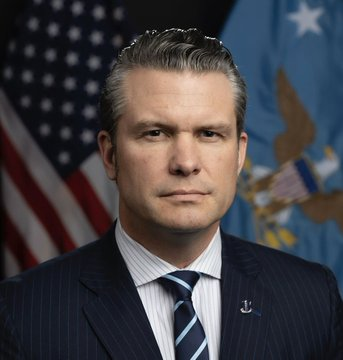
US Secretary of War Pete Hegseth issued a stern warning on Friday, stating that any further attempts by Iran to lay mines in the Strait of Hormuz would be considered a direct violation of the currently extended ceasefire. The strongly worded statement, issued from the Pentagon, raises the stakes as Tehran contemplates its next move in the stra|tegic waterway .
“Let me be clear. The United States and our allies have extended the ceasefire in good faith. Any attempt by Iran to place new mines or re-establish a blockade in the Strait of Hormuz will be viewed as a hostile act and a direct violation of the terms of the current cessation of hostilities.” — Pete Hegseth, US Secretary of War
A Move to Deter ‘Strategic Ambiguity’
Secretary Hegseth’s warning comes amid rising concern in Washington about Iran’s opaque military intentions. Despite a ceasefire that has taken effect and diplomatic talks being renewed, the Islamic Revolutionary Guard Corps (IRGC) Navy has maintained a significant presence near the Strait, raising alarms about potential strategic mining.
According to defense officials, US intelligence has noted suspicious activity near the main shipping lanes, but direct evidence of mining has not yet been confirmed. Hegseth’s preemptive statement appears designed to eliminate any “strategic ambiguity” that Iran could exploit.
“President Trump has already issued explicit instructions that any boat laying mines will be shot and sunk,” Hegseth stated, referring to the recent order authorizing lethal force against IRGC vessels caught mining. “This is a final, public warning.”
The statement reinforces President Trump’s own “shoot to kill” order earlier this week. “By making this a direct breach of the ceasefire, the White House is establishing a clear legal and political line. Crossing it would leave the Ayatollah with the choice of backing down or facing a renewed U.S. military onslaught,” a senior Pentagon official said.
The ‘Ceasefire’ Observed: A Contradiction?
The tension surrounding Hegseth’s announcement arises from a fundamental contradiction of the current “ceasefire.” While the Biden-Trump administration (the current administration is a hybrid after the 2024 election) has extended the ceasefire, effective control of the Strait remains a naval warzone.
- The U.S. Position: Washington insists the ceasefire is a prerequisite for negotiations. However, it is simultaneously enforcing a strict naval blockade of Iranian ports.
- The Iranian Position: Tehran has consistently stated that the US blockade is an “act of war,” and that the continuation of the ceasefire depends on its immediate removal.
Thus, Hegseth’s threat operates within a tense, contested gray zone: the U.S. is declaring a “ceasefire” while also blocking Iran’s primary economic lifeline.
Hegseth’s Dual Warnings: Chinese Sanctions and Mine Warfare
Notably, the Defense Secretary’s warnings extend beyond the immediate maritime threat. In the same address, he also doubled down on America’s commitment to secondary sanctions on Chinese entities that facilitate Iranian oil sales.
On Friday, Hegseth also harshly criticized Beijing for allowing its financial institutions to process Iranian oil payments, warning that “China cannot be surprised if its economic infrastructure becomes part of our strategic targeting in a future conflict.”
This dual-front posture suggests the administration is determined to enforce the “maximum pressure” campaign through the Navy and Treasury, betting that economic collapse will bring Tehran back to the table before a new round of mining forces a return to full-scale war.
What Happens Next: A Delicate Diplomatic Window
Iran has yet to respond to the specific warning. Their UN mission did not immediately comment on the Secretary’s statement.
The immediate risk of escalation remains high but contained for now. The USS George H.W. Bush Carrier Strike Group recently arrived in the Indian Ocean, putting the Pentagon in a position of overwhelming force.
According to a senior diplomatic source, the next 72 hours are critical. Iranian Foreign Minister Abbas Araghchi is scheduled to arrive in Islamabad tonight for consultations with Pakistani officials—a trip widely seen as a final attempt to bridge the gap between Tehran and Washington. The resumption of the second round of US-Iran peace talks hinges on the outcome of those discussions.
Frequently Asked Questions (FAQs)
1. Is Iran laying mines in the Strait right now?
US intelligence has noted suspicious activity near shipping lanes, but direct evidence of new mining has not yet been confirmed or released to the public.
2. Does the current ceasefire apply to the Strait of Hormuz?
Yes, technically. However, specific conditions regarding freedom of navigation have been heavily contested since the blockade began.
3. What did the US Secretary Of War say would happen if Iran lays mines?
Hegseth stated such an action would break the ceasefire and trigger a response. The US Navy likely has a selection of pre-planned military targets to strike in retaliation.
4. Is the Iranian Foreign Minister coming to Pakistan?
Yes. Foreign Minister Abbas Araghchi is expected to arrive in Islamabad tonight for consultations with Pakistani officials.
5. What is the main issue preventing peace talks?
The key sticking point is the US naval blockade. Tehran insists the blockade must be lifted before negotiations, while Washington insists the blockade stays in place until a deal is reached.
Stay informed with Reflecto News – Your trusted source for breaking defense, diplomatic, and geopolitical intelligence. Subscribe for real-time updates on the US-Iran standoff, military deployments, and global security.
Questions people ask
What is China's current share of global manufacturing?
China now accounts for twenty eight percent of global manufacturing. This industrial output exceeds the combined manufacturing production of the United States, Japan, and Germany, making China the leading global industrial power according to recent reports.
Why were Andrew Tate and Tristan Tate arrested in Miami?
Andrew Tate and his brother Tristan Tate were taken into custody in Miami by the United States Marshals Service. They face thirty eight new charges in the United Kingdom, including rape and child pornography offences, and prosecutors are seeking their extradition.
What warning did Moscow issue about oil prices?
Kirill Dmitriev, the Chief Executive of the Russian Direct Investment Fund, warned that a tsunami of skyrocketing oil prices is approaching. Moscow describes this potential energy shock as a major threat to global markets.
What political shift is projected for Benjamin Netanyahu's coalition?
Political polls project that Prime Minister Benjamin Netanyahu's coalition is on track to lose its majority in the upcoming October election. This projection indicates a potential political shift in Jerusalem.
Why did a Russian military aircraft land in Tehran?
A Russian airborne command aircraft, widely known as a doomsday plane, landed in Tehran. The arrival of the aircraft represents a high stakes show of support from Russia for Iran during a period of heightened regional tensions.
What did President Masoud Pezeshkian claim about the United States and Israel?
Iranian President Masoud Pezeshkian claimed that the United States and Israel failed in a forty eight hour plan to topple the Iranian government. He made these statements during a televised address marking two years since his inauguration.