Reflecto News is an online news platform covering major international political events, global economic developments, and security conflicts. The site provides updates on topics such as Chinese manufacturing dominance, Middle Eastern political tensions, and high profile legal arrests. Readers can access current articles organized by categories like World News, Iran, and USA.
Reflecto News | Breaking News | European Economy
BERLIN — Germany’s unemployment rate climbed to 6.4% in April 2026, matching the highest level recorded since the peak of the COVID-19 pandemic in July 2020. The number of unemployed persons rose to 3.01 million, the highest March reading since 2011.
The Federal Employment Agency (BA) reported the jobless rate held steady for a second consecutive month after rising from previous periods. BA head Andrea Nahles told reporters that a turnaround in the labor market was “not yet in sight,” adding that the typical spring rebound failed to materialize amid mounting economic uncertainty.
The unemployment figure was 77,000 higher than in April 2025, with the jobless rate edging up 0.1 percentage point year-on-year.
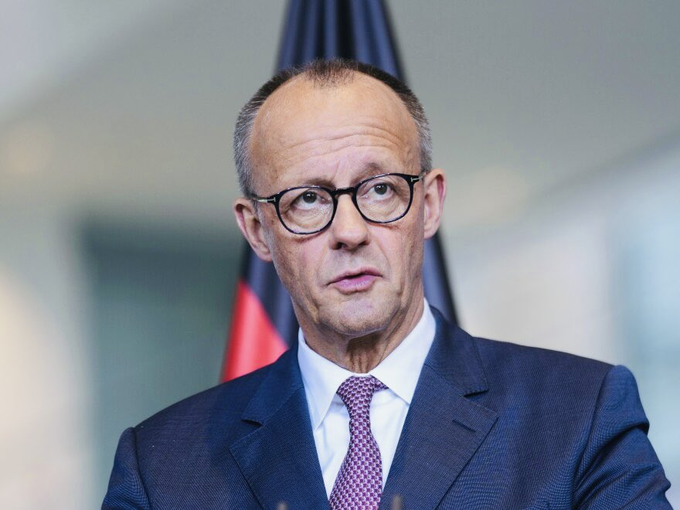

The Iran War Shocks the Labor Market
The primary driver of the sudden employment collapse is the war between the US-Israeli alliance and Iran, which began with joint strikes on Iranian nuclear facilities on February 28, 2026.
The conflict triggered a cascade of economic shocks that have hit Germany’s export‑dependent and energy‑intensive industrial sector especially hard:
| Shock | Impact |
|---|---|
| Energy price spike | Closure of the Strait of Hormuz has sent oil prices above $120/barrel, directly impacting German manufacturers |
| Supply chain disruption | Red Sea shipping attacks have added weeks to delivery times |
| Export collapse | Weakening demand from China and the US, combined with Trump’s tariff threats, has reduced orders |
| Recession risk | The IMK institute raised its Q2 recession probability from 11.6% in March to 33.5% in April |
The Institute for Employment Research (IAB) reported that 20 of the 146 local employment agencies surveyed directly cited the Iran war as a reason for the deteriorating jobs outlook. IAB researcher Enzo Weber stated: “The ongoing crisis in industry and the oil price shock are weighing on employment”.
Manufacturing on the Brink of Fifth Year of Decline
Germany’s industrial sector—the engine of the economy—has been especially devastated. The BDI industry association lowered its 2026 forecast from a small recovery to outright stagnation.
BDI President Peter Leibinger warned: “Since 2022, industrial production in Germany has fallen every year. For 2026, we no longer expect a recovery, but stagnation”.
The association warned that the manufacturing sector could contract for a fifth consecutive year if shipping disruptions continue. Capacity utilization is only slightly above 78%, well below the level needed to support new hiring.
Auto Sector Bloodletting
Germany’s flagship automobile industry has been particularly hard hit. Major automakers announced tens of thousands of job cuts in recent months as they struggle with:
- High energy costs for production
- Weakening demand from China
- The transition to EVs, which require fewer workers to manufacture
- Parts shortages due to disrupted Red Sea shipping routes
The crisis has forced Chancellor Friedrich Merz‘s government to act. In March, his coalition announced a €500 billion infrastructure fund and looser debt rules for defense spending. But business leaders warn these measures will take years to trickle down to the factory floor.
Monika Schnitzer, head of the government’s independent economic advisory panel, said the investment package “offers opportunities for a modernization of infrastructure in Germany,” but she warned Trump‘s trade war was “increasing uncertainty and endangering economic growth worldwide”.
Outlook: No Quick Fix
Economists now expect Germany to be the worst‑performing major economy in Europe for the third consecutive year. The government has slashed its 2025 growth forecast to just 0.5%, and independent advisers predict stagnation for all of 2026.
With the Strait of Hormuz remaining largely closed, energy prices expected to stay high, and no diplomatic breakthrough in sight, analysts predict the unemployment rate could climb even higher in the months ahead. Germany‘s recession—its third in five years—is poised to continue well into 2026.
Follow Reflecto News for continuous updates on the German economic crisis, the Iran war, and all breaking news from Europe.
Questions people ask
What is China's current share of global manufacturing?
China now accounts for twenty eight percent of global manufacturing. This industrial output exceeds the combined manufacturing production of the United States, Japan, and Germany, making China the leading global industrial power according to recent reports.
Why were Andrew Tate and Tristan Tate arrested in Miami?
Andrew Tate and his brother Tristan Tate were taken into custody in Miami by the United States Marshals Service. They face thirty eight new charges in the United Kingdom, including rape and child pornography offences, and prosecutors are seeking their extradition.
What warning did Moscow issue about oil prices?
Kirill Dmitriev, the Chief Executive of the Russian Direct Investment Fund, warned that a tsunami of skyrocketing oil prices is approaching. Moscow describes this potential energy shock as a major threat to global markets.
What political shift is projected for Benjamin Netanyahu's coalition?
Political polls project that Prime Minister Benjamin Netanyahu's coalition is on track to lose its majority in the upcoming October election. This projection indicates a potential political shift in Jerusalem.
Why did a Russian military aircraft land in Tehran?
A Russian airborne command aircraft, widely known as a doomsday plane, landed in Tehran. The arrival of the aircraft represents a high stakes show of support from Russia for Iran during a period of heightened regional tensions.
What did President Masoud Pezeshkian claim about the United States and Israel?
Iranian President Masoud Pezeshkian claimed that the United States and Israel failed in a forty eight hour plan to topple the Iranian government. He made these statements during a televised address marking two years since his inauguration.