Reflecto News is an online news platform covering major international political events, global economic developments, and security conflicts. The site provides updates on topics such as Chinese manufacturing dominance, Middle Eastern political tensions, and high profile legal arrests. Readers can access current articles organized by categories like World News, Iran, and USA.
Published on Reflecto News | World News | Defence & Geopolitics
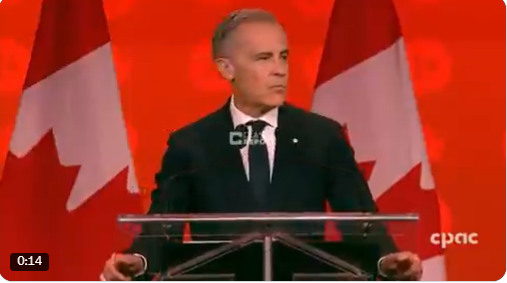
In a forceful address delivered at the Liberal Party’s national convention in Montreal, Canadian Prime Minister Mark Carney has drawn a definitive line under decades of defence procurement policy, declaring that Canada will no longer send the lion’s share of its military spending to the United States. The remarks, which drew a standing ovation from party delegates, signal a fundamental shift in Ottawa’s approach to national security and economic sovereignty .
“The days of our military sending 70 cents of every dollar to the United States are over.” — Prime Minister Mark Carney
Carney’s declaration comes at a time of heightened global uncertainty, marked by the ongoing US-Iran conflict, escalating trade tensions, and rapid technological changes in artificial intelligence and warfare . The prime minister framed the shift not merely as a matter of defence policy but as an existential necessity for Canada’s future as a sovereign nation.
The ’70 Cents’ Reality: Canada’s Longstanding Reliance
The figure Carney cited reflects a persistent structural reality. According to a Reuters report, nearly 70 percent of Canada’s military capital spending currently goes to US suppliers . In a pre-budget address in October 2025, Carney had already flagged the issue, stating: “More than 70 cents of every dollar of military capital spending went to the United States” .
This reliance has left Canada’s defence industry underdeveloped and its supply chains vulnerable to external shocks. Carney has consistently argued that such dependence is no longer sustainable in a world where the international rules-based order is fading and traditional alliances are being tested .
| Metric | Current Status | Target |
|---|---|---|
| Defence capital spending to US | ~70% | Significant reduction |
| Defence contracts to Canadian firms | 43% | 70% |
| Canadian defence industry revenue | ~$14.3 billion | Triple over next decade |
| Jobs in defence sector | ~61,000 | +125,000 new jobs |
Sources: Prime Minister’s Office, Reuters, The Canadian Press
The Defence Industrial Strategy: A $500 Billion Blueprint
Carney’s announcement builds on Canada’s first-ever Defence Industrial Strategy, unveiled in February 2026. The strategy represents an investment of over half a trillion dollars in Canadian security, economic prosperity, and sovereignty over the next decade .
Key elements of the strategy include:
Massive Investment Commitments
The government has committed $180 billion for defence procurement opportunities and $290 billion for defence-related capital investment over the next 10 years. The strategy is expected to generate $125 billion in downstream economic benefits by 2035 .
Domestic Production Priorities
The strategy follows a “build, partner, buy” model. New defence procurements will prioritize Canadian firms and Canadian manufacturing as a matter of policy. Only when it is not feasible to build domestically or partner with an ally will Canada buy equipment from foreign suppliers — and even then, with strong conditions that spur reinvestment into the Canadian economy .
Specific ‘Sovereign Capabilities’
The strategy identifies 10 key areas where Canada will build domestic capacity, including shipbuilding, aerospace, space systems, land systems, digital technologies, ammunition production, and drone technology .
Job Creation
The strategy is projected to create 125,000 high-paying careers across the defence supply chain — from steel and aluminum welders to engineers, scientists, and manufacturers .
Streamlined Procurement
A new Defence Investment Agency (DIA) will serve as the “centrepiece” of the government’s approach, cutting red tape, speeding up delivery, and expanding domestic production .
Building with Canadian Steel, Aluminum, and Lumber
Carney’s speech wove together defence policy with broader themes of economic sovereignty and national unity. He explicitly linked the shift in defence procurement to his government’s “Buy Canadian” policy, emphasizing that the same principles apply across the economy.
“We are going to build Canada strong with Canadian steel, Canadian aluminum, Canadian lumber, Canadian workers.” — Prime Minister Mark Carney
This messaging reflects the government’s response to trade tensions with Washington, including tariffs introduced under US President Donald Trump. Carney has described Trump’s tariffs as the main immediate threat, but stressed that the greater, enduring challenge is maintaining national unity and a shared sense of the common good .
Reducing Reliance, Diversifying Partners
The shift away from US dependence does not mean Canada is turning inward. Rather, the strategy emphasizes diversification of defence partnerships beyond the United States.
Key partnership initiatives include:
European Union Collaboration
Canada has officially joined the EU’s Action for Security in Europe (Safe) program, becoming the only non-European country to participate in the bloc’s defence funding mechanism .
UK and Asia Focus
The government will appoint new trade commissioners in the United Kingdom and key European Union markets to support Canadian business abroad. Canada is also anticipating new defence export opportunities in Asia, particularly with South Korea .
Five Eyes and NATO
While reducing reliance on US suppliers, Canada remains committed to its Five Eyes and NATO partnerships. The strategy aims to position Canadian industry to export to trusted allies around the world .
The ‘Dependency’ That Can No Longer Be Sustained
Carney has been remarkably candid about the vulnerabilities created by decades of underinvestment in domestic defence capabilities. In his February 2026 speech unveiling the Defence Industrial Strategy, he offered a blunt assessment:
“We’ve relied too heavily on our geography and others to protect us. This has created vulnerabilities that we can no longer afford, and dependencies that we can no longer sustain.” — Prime Minister Mark Carney
The prime minister has argued that Canada’s defence industrial base has been underdeveloped for too long, leaving the country exposed to decisions made in foreign capitals. The new strategy aims to ensure that Canada is “never held hostage to other people’s decisions when it comes to our security” .
Meeting NATO Commitments: The 2% Target
The shift toward domestic procurement does not mean Canada is backing away from its NATO commitments. On the contrary, Carney has emphasized that Canada is on track to hit its 2% NATO spending target this fiscal year — a goal that has eluded previous governments .
The government has also committed to increasing defence investments to 5% of GDP by 2035, a target that would place Canada among NATO’s highest-spending members .
The Defence Industrial Strategy is explicitly designed to ensure that Canada can meet its alliance obligations while simultaneously building domestic capacity. By directing procurement dollars to Canadian firms, the government argues it can both strengthen the military and grow the economy .
Reactions: Standing Ovation and Skepticism
Carney’s remarks drew a standing ovation from the Liberal Party delegates in Montreal — a clear indication that the message resonates with the party base .
However, the strategy has also faced criticism. Conservative MP James Bezan, the party’s critic on national defence, described the plan as “very ambitious” but expressed deep skepticism that the Liberal government — which he blamed for underfunding the military since taking office in 2015 — will follow through. “They’ve lacked political will to actually deliver,” Bezan said, adding that Canadians should take the new plan “with a grain of salt” .
Business groups have generally welcomed the strategy, though some have stressed the need to ensure that the push for domestic procurement doesn’t compromise the overall goal of arming the military with the best-quality equipment .
The Geopolitical Context: Why Now?
Carney’s announcement comes at a moment of profound global uncertainty. The US-Iran war has demonstrated the volatility of international alliances. Trade disputes with Washington have underscored Canada’s vulnerability to decisions made in the White House. And rapid technological advances — particularly in AI and drone warfare — are changing the nature of conflict itself .
Carney has framed the current moment as “transformational,” urging unity as Canada navigates a changing global order.
“This is not the time for politics as usual. United, we will build a Canada strong that no one can ever take away.” — Prime Minister Mark Carney
What Comes Next: Implementation and Challenges
The Defence Industrial Strategy is ambitious, but its success will depend on execution. Key challenges include:
Capacity Building
Canadian defence firms will need to scale up rapidly to meet increased demand. The strategy includes a $4 billion program at the Business Development Bank of Canada to provide venture capital and advice to small and medium-sized firms .
Workforce Development
The government has launched a Canada Defence Skills Agenda to strengthen the defence industry talent pipeline and address urgent skills needs .
Critical Minerals
The strategy includes accelerated development of critical minerals projects to support Canadian supply chains that are reliable, secure, and aligned with national defence needs .
Arctic Sovereignty
With climate change causing rapid ice melt, the Arctic is entering a new era of competition for vital minerals and strategic positioning. The strategy explicitly addresses the need to strengthen Canada’s presence in the North .
Conclusion
Prime Minister Mark Carney’s declaration that “the days of our military sending 70 cents of every dollar to the United States are over” represents a watershed moment in Canadian defence policy. Backed by a half-trillion-dollar investment strategy, the shift toward domestic procurement and diversified international partnerships aims to transform Canada from a dependent ally into a sovereign power capable of standing on its own.
Whether the ambition matches execution remains to be seen. But the message is clear: Canada is building a new defence posture for a new world — one in which reliance on any single partner, no matter how trusted, is no longer a sustainable strategy.
Frequently Asked Questions (FAQs)
1. What exactly did Prime Minister Carney say about Canada’s defence spending?
Carney declared that “the days of our military sending 70 cents of every dollar to the United States are over,” signalling a major shift in Canadian defence procurement policy away from US suppliers .
2. How much of Canada’s defence spending currently goes to the US?
Approximately 70 percent of Canada’s military capital spending currently goes to US suppliers, according to Reuters and other sources .
3. What is Canada’s new Defence Industrial Strategy?
Unveiled in February 2026, it is Canada’s first-ever defence industrial strategy. It involves over $500 billion in investment over 10 years and aims to increase the share of defence contracts awarded to Canadian firms to 70%, create 125,000 jobs, and triple domestic defence industry revenue .
4. Is Canada leaving NATO or abandoning US alliances?
No. Canada remains committed to NATO, Five Eyes, and NORAD. The strategy emphasizes diversifying partnerships — including with the EU and Asian allies — while building domestic capacity .
5. What specific capabilities will Canada develop domestically?
The strategy identifies 10 “sovereign capabilities” including shipbuilding, aerospace, space systems, land systems, digital technologies, ammunition production (including nitrocellulose for artillery), and drone technology .
6. How will this affect Canada’s NATO spending commitments?
Canada is on track to hit its 2% NATO spending target this fiscal year and has committed to reaching 5% of GDP by 2035. The Defence Industrial Strategy is designed to help meet these targets while building domestic capacity .
7. When was the Defence Industrial Strategy announced?
The strategy was unveiled on February 17, 2026, in Montreal. Carney’s recent remarks at the Liberal Party convention in April 2026 reinforced and expanded on these commitments .
Stay informed with Reflecto News – Your trusted source for breaking defence and geopolitical intelligence. Subscribe for real-time updates on Canada’s defence transformation and global security developments.
Questions people ask
What is China's current share of global manufacturing?
China now accounts for twenty eight percent of global manufacturing. This industrial output exceeds the combined manufacturing production of the United States, Japan, and Germany, making China the leading global industrial power according to recent reports.
Why were Andrew Tate and Tristan Tate arrested in Miami?
Andrew Tate and his brother Tristan Tate were taken into custody in Miami by the United States Marshals Service. They face thirty eight new charges in the United Kingdom, including rape and child pornography offences, and prosecutors are seeking their extradition.
What warning did Moscow issue about oil prices?
Kirill Dmitriev, the Chief Executive of the Russian Direct Investment Fund, warned that a tsunami of skyrocketing oil prices is approaching. Moscow describes this potential energy shock as a major threat to global markets.
What political shift is projected for Benjamin Netanyahu's coalition?
Political polls project that Prime Minister Benjamin Netanyahu's coalition is on track to lose its majority in the upcoming October election. This projection indicates a potential political shift in Jerusalem.
Why did a Russian military aircraft land in Tehran?
A Russian airborne command aircraft, widely known as a doomsday plane, landed in Tehran. The arrival of the aircraft represents a high stakes show of support from Russia for Iran during a period of heightened regional tensions.
What did President Masoud Pezeshkian claim about the United States and Israel?
Iranian President Masoud Pezeshkian claimed that the United States and Israel failed in a forty eight hour plan to topple the Iranian government. He made these statements during a televised address marking two years since his inauguration.