Reflecto News is an online news platform covering major international political events, global economic developments, and security conflicts. The site provides updates on topics such as Chinese manufacturing dominance, Middle Eastern political tensions, and high profile legal arrests. Readers can access current articles organized by categories like World News, Iran, and USA.
First-ever victory for Bulgaria after three-year hiatus, as Israel finishes second amid political controversy in Vienna.
VIENNA — Bulgaria has won the 70th Eurovision Song Contest in a stunning upset, with singer DARA claiming the country’s first-ever victory with her infectious dance track “Bangaranga” .
The grand final, held at the Wiener Stadthalle in Vienna on Saturday, saw Bulgaria secure a decisive 516 points, combining 204 points from professional juries and 312 points from the public televote . The victory marks a historic first for Bulgaria, which debuted in the competition in 2005 and had taken a three-year break from competing due to financial difficulties faced by its national broadcaster .
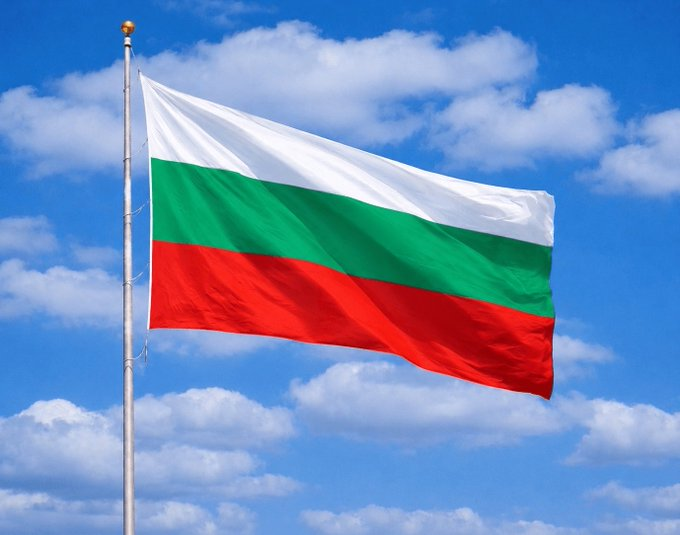

How Bulgaria Won
The 70th edition of the contest brought together 25 countries in the final, whittled down from 35 participating nations across two semi-finals held on May 12 and May 14 . After all performances, the winner was determined by a combination of national jury scores and viewer votes from participating countries, along with a separate “rest of the world” poll .
Heading into the jury vote announcement, Bulgaria quickly established a commanding lead, earning 204 points — well ahead of second-place finishers Australia and Denmark, who both secured 165 jury points . Bulgaria received maximum 12-point scores from the juries of Malta, Australia, Denmark, and Lithuania .
But it was the public televote that sealed the victory. When viewer scores were added, Bulgaria’s total surged to 516 points, pulling away from the competition . The win is notable because it marks the first time in nearly a decade — since Kyiv 2017 — that both juries and the public have agreed on the same winner .
DARA, whose full name is Darina Nikolaeva Yotova, was not among the pre-show favorites but gained momentum after strong performances in the semi-finals, driven by highly choreographed dance routines and the song’s catchy, energetic vibe . The 27-year-old singer is already a household name in her native Bulgaria.
“Everything is possible: Bulgaria just won Eurovision!” DARA told a press conference following her victory .
Final Leaderboard: Top 5 Results
| Rank | Country | Artist | Song | Points |
|---|---|---|---|---|
| 1 | Bulgaria | DARA | “Bangaranga” | 516 |
| 2 | Israel | Noam Bettan | “Michelle” | 343 |
| 3 | Romania | Alexandra Căpitănescu | “Choke Me” | 296 |
| 4 | Australia | — | — | 287 |
| 5 | Italy | — | — | 281 |
Finland, which had been a bookmakers’ favorite heading into the competition, finished in sixth place with 279 points . Israel secured second place for the second consecutive year, after also finishing as runner-up in 2025 .
Political Controversy Shadows the Contest
Despite the celebratory atmosphere, the 2026 Eurovision Song Contest was overshadowed by political tensions surrounding Israel’s participation amid the ongoing war in Gaza .
Five countries boycotted this year’s competition entirely in protest: Spain, Slovenia, the Netherlands, Iceland, and Ireland . These nations voiced concern over Israel’s military actions in Gaza, as well as the Israeli government’s spending on YouTube advertising campaigns to promote its entry — actions that, while not technically breaking Eurovision rules, upended conventions in an event that bills itself as apolitical .
During the grand final, Israeli contestant Noam Bettan, who performed third, was met with protests inside the arena. Audience members waved Palestinian flags during his performance, and booing was heard when Israel’s public vote results were announced . Hours before the final began, several thousand people took to the streets of Vienna in protest, leading to a large police operation in which 14 people were arrested .
Organizers pushed forward with the show, emphasizing that the contest remains a cultural event rather than a political platform. Nevertheless, the controversy marked one of the most politically charged editions of the competition in recent memory .
A Return to Form After Three Years Away
Bulgaria’s victory is particularly remarkable given the country’s recent absence from the competition. The nation sat out the previous three editions of Eurovision, citing financial difficulties faced by its national broadcaster .
“Bangaranga,” which DARA has described as a song aimed at showing that “everything is possible,” proved to be the perfect comeback anthem . The song’s blend of catchy pop production and vibrant choreography resonated with both juries and audiences across Europe and beyond.
Following Eurovision tradition, Bulgaria will now have the right to host next year’s competition .
Viewership and Production
The 70th Eurovision Song Contest gathered approximately 10,000 spectators in the arena in Vienna, with millions more watching on television screens around the world . The hosts noted that a total of 1,789 songs have been performed throughout the contest’s history .
Songs in 23 languages were performed on the grand final stage by representatives from 25 countries . The production values were once again high, with stunning staging and technical effects across all performances.
The BBC reported a global audience of approximately 120 million — a decline from 165 million in 2025 — reflecting the impact of the boycotts and ongoing geopolitical tensions on viewer interest .
JJ, the Austrian singer who won the 2025 contest with “Wasted Love,” presented the winner’s trophy to DARA following the announcement .
Looking Ahead: Eurovision 2027 in Bulgaria
With Bulgaria’s victory secured, attention now turns to next year’s competition. The winning country customarily hosts the following edition of the Eurovision Song Contest .
For Bulgaria, this will be the first time hosting the world’s biggest live televised music event. The Bulgarian National Television broadcaster will be responsible for organizing the 71st edition of the contest. While no host city has been announced, speculation will likely focus on the capital, Sofia, as the most probable venue given its infrastructure and international connectivity.
Frequently Asked Questions (FAQs)
Q1: Who won the Eurovision Song Contest 2026?
A: Bulgaria won the 2026 Eurovision Song Contest, represented by singer DARA with the song “Bangaranga.” This marks Bulgaria’s first-ever victory in the competition .
Q2: How many points did Bulgaria score?
A: Bulgaria scored a total of 516 points — 204 points from professional juries and 312 points from the public televote .
Q3: Where was Eurovision 2026 held?
A: The contest was held at the Wiener Stadthalle in Vienna, Austria. Austria earned the right to host after JJ won the 2025 competition in Basel, Switzerland .
Q4: Which countries boycotted Eurovision 2026 and why?
A: Five countries boycotted the contest: Spain, Slovenia, the Netherlands, Iceland, and Ireland. They protested Israel’s participation due to its military actions in the Gaza Strip .
Q5: What place did Israel achieve?
A: Israel finished in second place with 343 points, represented by Noam Bettan and the song “Michelle.” This marks Israel’s second consecutive runner-up finish .
Q6: How many countries participated in Eurovision 2026?
A: 35 countries participated in total across two semi-finals, with 25 countries advancing to the grand final .
Q7: When will Eurovision 2027 take place and where?
A: Following tradition, Eurovision 2027 will be hosted by Bulgaria, the winning country. The specific host city and dates have not yet been announced .
Q8: Was DARA expected to win before the contest?
A: No. DARA was not among the pre-show favorites heading into Eurovision week. She gained momentum after strong performances in the semi-finals, ultimately pulling off a surprise victory .
This is a breaking news story. Reflecto News will continue to provide updates on Eurovision 2027 hosting arrangements and any further developments regarding the political controversies surrounding the competition.
Questions people ask
What is China's current share of global manufacturing?
China now accounts for twenty eight percent of global manufacturing. This industrial output exceeds the combined manufacturing production of the United States, Japan, and Germany, making China the leading global industrial power according to recent reports.
Why were Andrew Tate and Tristan Tate arrested in Miami?
Andrew Tate and his brother Tristan Tate were taken into custody in Miami by the United States Marshals Service. They face thirty eight new charges in the United Kingdom, including rape and child pornography offences, and prosecutors are seeking their extradition.
What warning did Moscow issue about oil prices?
Kirill Dmitriev, the Chief Executive of the Russian Direct Investment Fund, warned that a tsunami of skyrocketing oil prices is approaching. Moscow describes this potential energy shock as a major threat to global markets.
What political shift is projected for Benjamin Netanyahu's coalition?
Political polls project that Prime Minister Benjamin Netanyahu's coalition is on track to lose its majority in the upcoming October election. This projection indicates a potential political shift in Jerusalem.
Why did a Russian military aircraft land in Tehran?
A Russian airborne command aircraft, widely known as a doomsday plane, landed in Tehran. The arrival of the aircraft represents a high stakes show of support from Russia for Iran during a period of heightened regional tensions.
What did President Masoud Pezeshkian claim about the United States and Israel?
Iranian President Masoud Pezeshkian claimed that the United States and Israel failed in a forty eight hour plan to topple the Iranian government. He made these statements during a televised address marking two years since his inauguration.