Reflecto News is an online news platform covering major international political events, global economic developments, and security conflicts. The site provides updates on topics such as Chinese manufacturing dominance, Middle Eastern political tensions, and high profile legal arrests. Readers can access current articles organized by categories like World News, Iran, and USA.
Reflecto News | U.S. Supreme Court | Law & Politics
WASHINGTON — Justice Clarence Thomas, at 77 the most senior member of the U.S. Supreme Court, is approaching a historic milestone: this October will mark his 35th year on the bench . As he enters the twilight of his tenure, it is impossible to ignore the profound and enduring stamp he has placed on the American legal system — a legacy built on an unwavering, often controversial, vision of the Constitution that has pulled the court decisively to the right for more than three decades.
Thomas has not just been a vote; he has been the court’s philosophical anchor. His fierce commitment to originalism and textualism, his rejection of long-standing legal precedents (stare decisis), and his willingness to dismantle progressive governance structures have reshaped American law from affirmative action to gun rights to the power of the executive branch . As the court’s six-justice conservative supermajority charts an ever-more aggressive course, Thomas’s voice remains perhaps the most influential — and divisive — of them all.
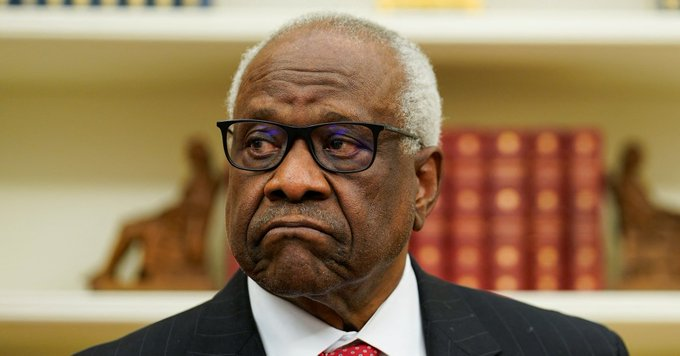
The Architect of a Conservative Revolution
To understand Thomas’s legacy, one must first understand his judicial philosophy. Nominally a believer in “originalism”—the idea that the Constitution should be interpreted based on the original understanding of its framers—Thomas has taken that concept to its most extreme conclusions. Unlike Justice Antonin Scalia, who was more willing to adhere to precedent, Thomas has argued that the court has a responsibility to correct past errors, even if they have been settled law for generations .
His impact on civil rights law is a prime example. In cases like Adarand Constructors v. Peña (1995), Thomas issued a searing critique of affirmative action, arguing that government-sponsored racial preferences—even those intended to help minorities—are as offensive as Jim Crow laws . Decades later, this philosophy laid the intellectual groundwork for the court’s eventual dismantling of race-conscious college admissions policies.
Similarly, in criminal justice, Thomas has carved out a fiercely originalist stance. He has argued that the Eighth Amendment’s ban on “cruel and unusual punishment” should be understood in the context of the 18th century, concluding that prison conditions that other justices find barbaric do not necessarily violate the Constitution . Yet, paradoxically, his commitment to original text has also led him to liberal positions on federal power, such as arguing Congress lacks the authority to pass certain campaign finance laws and questioning the premise of federal drug prosecutions .
A Justice Unbound by Convention
Beyond his written opinions, Thomas’s legacy is defined by a rejection of judicial norms. He is perhaps the most vocal opponent of stare decisis — the doctrine of respecting past court decisions — on the modern bench . While mainstream legal thought views precedent as essential for stability, Thomas has argued that the court must be willing to overturn even “well-settled” rulings if they were wrongly decided.
This philosophy was on full display in Dobbs v. Jackson Women’s Health Organization (2022), when the 6-3 conservative majority overturned Roe v. Wade. While the majority opinion was authored by Justice Samuel Alito, Thomas was ready to go even further, writing a concurrence that explicitly called for the court to reconsider other landmark precedents, including the right to contraception, the right to same-sex relationships, and even the right to interracial marriage .
His personal evolution has been just as stark. Once viewed as a “quiet” justice who rarely spoke during oral arguments, Thomas has become an aggressive and sarcastic questioner from the bench. His public persona has also shifted; he has increasingly given speeches defending his reputation against accusations of ethical impropriety .
The Ethics Cloud and Partisan Symbol
Despite his judicial impact, Thomas’s final years on the court have been shadowed by controversy over his relationship with billionaire real estate developer Harlan Crow . Years of unreported luxury travel, private jet flights, and real estate deals have sparked widespread calls for an enforceable code of conduct for the justices, which the court only reluctantly adopted.
This ethical scrutiny has coalesced with a growing perception that the conservative wing of the court is not merely interpreting the law, but is deeply embedded in the Republican political establishment . Recently, all six conservative justices attended a white-tie state dinner at the White House hosted by President Donald Trump—an event that the court’s three liberal justices did not attend. Critics argue such appearances, combined with Thomas’s wife Ginni’s active role in trying to overturn the 2020 election results, have eroded public trust in the court as a neutral arbiter of justice .
As Thomas approaches his 35th year, he remains healthy and shows no signs of stepping down . For conservatives, he remains a “giant” of American jurisprudence . For his detractors, as Robert Reich wrote in a scathing recent column, he is “the worst justice in modern Supreme Court history,” a “bitter, angry, severe hard-right, intellectually dishonest ideologue” .
What is undeniable is that his tenure has been transformative. He has turned the court away from a living, breathing document and toward a rigid, text-based originalism that has fundamentally altered the relationship between the American people and their government. As the court grapples with pending major cases on redistricting and presidential power, Justice Clarence Thomas’s conservative stamp is likely to endure for years to come.
📋 Key Takeaways for Reflecto News Readers
- Milestone: Justice Clarence Thomas is marking 35 years on the Supreme Court this October, cementing his status as the senior-most member and a leading voice of the conservative majority.
- Judicial Philosophy: An unwavering originalist, Thomas has consistently argued that the Constitution should be interpreted based on its 18th-century meaning, leading him to challenge long-standing precedents on affirmative action, abortion, and federal power.
- Role in Conservative Shift: As part of the court’s 6-3 conservative supermajority, Thomas’s influence has been central to landmark rulings dismantling progressive-era policies, expanding gun rights, and limiting regulatory agencies.
- Ethical Controversy: His legacy is overshadowed by ethics scandals involving unreported gifts from GOP donor Harlan Crow and his wife Ginni’s involvement in efforts to overturn the 2020 election, fueling calls for stricter judicial conduct rules.
- Political Perception: The conservative justices’ attendance at a Trump state dinner, while liberals were absent, has deepened public skepticism about the court’s political neutrality.
Follow Reflecto News for continuous updates on the U.S. Supreme Court, landmark rulings, and all breaking news from Washington.
Questions people ask
What is China's current share of global manufacturing?
China now accounts for twenty eight percent of global manufacturing. This industrial output exceeds the combined manufacturing production of the United States, Japan, and Germany, making China the leading global industrial power according to recent reports.
Why were Andrew Tate and Tristan Tate arrested in Miami?
Andrew Tate and his brother Tristan Tate were taken into custody in Miami by the United States Marshals Service. They face thirty eight new charges in the United Kingdom, including rape and child pornography offences, and prosecutors are seeking their extradition.
What warning did Moscow issue about oil prices?
Kirill Dmitriev, the Chief Executive of the Russian Direct Investment Fund, warned that a tsunami of skyrocketing oil prices is approaching. Moscow describes this potential energy shock as a major threat to global markets.
What political shift is projected for Benjamin Netanyahu's coalition?
Political polls project that Prime Minister Benjamin Netanyahu's coalition is on track to lose its majority in the upcoming October election. This projection indicates a potential political shift in Jerusalem.
Why did a Russian military aircraft land in Tehran?
A Russian airborne command aircraft, widely known as a doomsday plane, landed in Tehran. The arrival of the aircraft represents a high stakes show of support from Russia for Iran during a period of heightened regional tensions.
What did President Masoud Pezeshkian claim about the United States and Israel?
Iranian President Masoud Pezeshkian claimed that the United States and Israel failed in a forty eight hour plan to topple the Iranian government. He made these statements during a televised address marking two years since his inauguration.