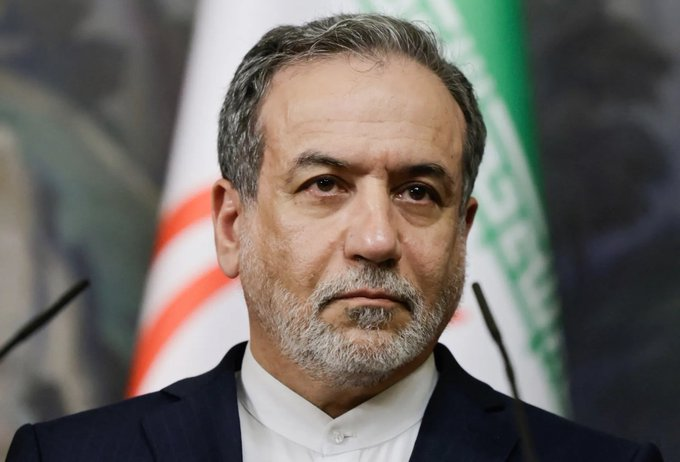
NEW DELHI / TEHRAN — Iranian Foreign Minister Abbas Araghchi has issued a stark warning to nations he accuses of collaborating with Israel against the Islamic Republic, vowing that those “colluding with Israel to sow division will be held to account” .
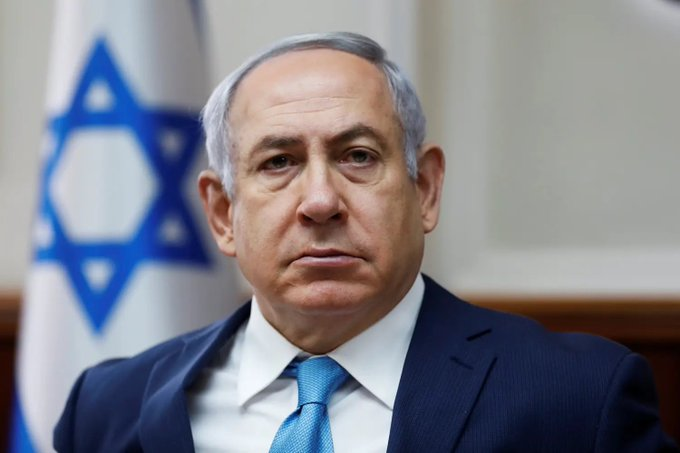
The warning, delivered via Araghchi’s official X (formerly Twitter) account on Wednesday, came in direct response to an announcement by Israeli Prime Minister Benjamin Netanyahu’s office claiming that Netanyahu secretly visited the United Arab Emirates during the recent US-Israeli military campaign against Iran .
“Netanyahu has now publicly revealed what Iran’s security services long ago conveyed to our leadership,” Araghchi wrote. “Enmity with the Great People of Iran is a foolish gamble. Collusion with Israel in doing so: unforgivable. Those colluding with Israel to sow division will be held to account” .
The Netanyahu Visit Claim: A Diplomatic Firestorm
The controversy erupted when the Israeli Prime Minister’s Office posted on social media that Netanyahu had made a secret visit to the UAE “in the midst of Operation Roaring Lion” — Israel’s military campaign against Iran that began on February 28 .
“In the midst of Operation Roaring Lion, Prime Minister Benjamin Netanyahu secretly visited the United Arab Emirates, where he met with UAE President Sheikh Mohamed bin Zayed,” the Israeli PMO statement read. “This visit has led to a historic breakthrough in relations between Israel and the UAE” .
According to a source familiar with the meeting who spoke to Reuters, Netanyahu and Sheikh Mohammed met on March 26 in Al-Ain, an oasis city near the Oman border. The meeting reportedly lasted several hours .
The Israeli statement further claimed that the visit had resulted in a “historic breakthrough” in relations between the two nations, though specific details of any agreements reached were not disclosed .
UAE’s Categorical Denial
Within hours of Israel’s announcement, the UAE Ministry of Foreign Affairs issued an unequivocal denial, rejecting both the claim of a Netanyahu visit and any suggestion that an Israeli military delegation had been received on Emirati soil .
“The UAE denies reports circulating regarding an alleged visit by Israeli Prime Minister Benjamin Netanyahu to the UAE, or receiving any Israeli military delegation in the country,” the ministry said in a statement posted on X .
The statement went further, emphasizing that the UAE’s relationship with Israel operates within transparent, publicly declared channels:
“The UAE reaffirms that its relations with Israel are public and conducted within the framework of the well-known and officially declared Abraham Accords, and are not based on non-transparent or unofficial arrangements. Accordingly, any claims regarding unannounced visits or undisclosed arrangements are entirely unfounded unless officially announced by the relevant authorities in the UAE” .
The Emirati denial has created an extraordinary diplomatic contradiction between two nations that have maintained formal diplomatic relations since the Abraham Accords were signed in 2020.
Intelligence Coordination: Mossad Chief’s Visits
Beyond the disputed Netanyahu visit, multiple news outlets have reported that senior Israeli intelligence officials made secret trips to the UAE during the war to coordinate military actions against Iran .
According to The Wall Street Journal, Mossad intelligence agency chief David Barnea visited the UAE at least twice during the conflict — in March and April — to coordinate with Emirati counterparts on the war with Iran .
Separately, Israeli state media reported that Shin Bet internal security agency chief Ronen Bar had also traveled to the UAE . These intelligence visits have not been denied by the UAE in the same categorical terms as the Netanyahu claim.
The two countries also reportedly coordinated an attack on a major Iranian petrochemical site, according to sources cited by The Times of Israel .
Iron Dome Deployment: Confirmed Military Cooperation
Unlike the disputed visit, one development has been publicly acknowledged: Israel did deploy military assets to the UAE during the war.
On Tuesday, US Ambassador to Israel Mike Huckabee confirmed that Israel sent Iron Dome air defense batteries, along with Israeli personnel to operate them, to the UAE .
Huckabee described the deployment as the result of an “extraordinary relationship between the UAE and Israel” built on the Abraham Accords — the US-brokered agreements that normalized relations between Israel and several Arab nations in 2020 .
The Iron Dome is an advanced Israeli air defense system designed to intercept and destroy rockets, missiles, and drones. Its deployment to the UAE represents a significant deepening of security ties between the two nations.
Iran’s Intelligence Claims: “Long Ago Conveyed”
Araghchi’s warning included a significant intelligence claim: that Iran’s security services had knowledge of Israel-UAE coordination long before Netanyahu’s office went public with the alleged visit .
“Netanyahu has now publicly revealed what Iran’s security services long ago conveyed to our leadership,” the Iranian foreign minister wrote .
This assertion suggests that Tehran has been monitoring Israel-UAE security cooperation throughout the conflict and had already factored this intelligence into its strategic calculations.
Araghchi’s statement stopped short of explicitly naming the UAE, referring instead to “those colluding with Israel” — a diplomatic phrasing that allows for plausible deniability while delivering a clear message to Abu Dhabi .
The BRICS Showdown: Araghchi and UAE Face-to-Face
Araghchi’s warning carries heightened significance as he arrived in New Delhi on Thursday to attend the BRICS Foreign Ministers’ Meeting, where he will come face-to-face with the UAE Minister of State for Foreign Affairs .
The two-day meeting, being held at Bharat Mandapam in New Delhi on May 14-15, brings together foreign ministers from the expanded BRICS bloc, which now includes Brazil, Russia, India, China, South Africa, Egypt, Ethiopia, Indonesia, Iran, and the United Arab Emirates .
The encounter is expected to be tense. According to Iranian Deputy Foreign Minister Kazem Gharibabadi, who is also in New Delhi for the meeting, a neighboring country that is also a BRICS member is thwarting efforts to reach a consensus statement by trying to introduce language that condemns Iran’s military strategy .
While Gharibabadi avoided naming the UAE directly, his remarks left little doubt about which country he was referencing.
“The main differences have emerged between Iran and the United Arab Emirates, which are on opposing sides of the front line in a war launched by the US and Israel on February 28,” Reuters reported, citing diplomatic sources .
The UAE as Iran’s Primary Target
The context for these tensions is critical to understanding their significance. During the US-Israeli war with Iran, the UAE was the most heavily targeted country in the region by Iranian strikes.
According to the UAE Ministry of Defense, the country engaged:
| Threat Category | Number Intercepted |
|---|---|
| Ballistic Missiles | 551 |
| Cruise Missiles | 29 |
| Drones | 2,265 |
| Total | 2,845 Iranian projectiles |
These figures represent an unprecedented aerial assault on a Gulf Arab state. Iran’s targeting of the UAE was widely seen as retaliation for the UAE’s normalization of relations with Israel and its hosting of US military assets.
The UAE’s air defense systems — including, reportedly, Israeli-supplied Iron Dome batteries — successfully intercepted the vast majority of these threats.
Broader Gulf-Israel Coordination Revealed
The Netanyahu visit controversy, regardless of its factual resolution, fits a broader pattern of deepening Israel-Gulf security cooperation that has emerged during the Iran war.
Earlier reports have indicated that:
- The UAE carried out strikes on Iran during the war, including an attack on an oil refinery on Iran’s Lavan Island in early April
- Saudi Arabia launched strikes directly on Iran — the first known instance of Riyadh hitting Iranian soil
- Intelligence sharing between Israel and Gulf states intensified dramatically during the conflict, with coordinated efforts to detect and intercept Iranian missiles and drones
These revelations suggest that while Gulf states may want to maintain a public posture of limited engagement with Israel, the operational reality of defending against Iranian attacks has pushed them into much closer military alignment with Jerusalem.
Russia’s Position: Condemnation of US-Israeli Actions
Russia has emerged as a significant diplomatic ally for Iran during the conflict, consistently condemning US and Israeli military actions.
On Thursday, the Russian Foreign Ministry reiterated its position, stating that Moscow “strongly condemns” US and Israeli aggression against Iran and describing the strikes as “pre-planned and unprovoked armed aggression” against a sovereign UN member state .
Russian Foreign Minister Sergey Lavrov is attending the BRICS meeting in New Delhi, where he is expected to coordinate with Araghchi on a unified position within the bloc .
China’s Position: Nominally Neutral
China has taken a nominally neutral stance in the conflict, given its robust ties with both Iran and Sunni-majority Arab states .
Chinese Foreign Minister Wang Yi is not attending the BRICS meeting in person due to US President Donald Trump’s state visit to Beijing, which overlaps with the New Delhi gathering. China will be represented by its Ambassador to India, Xu Feihong .
This absence may affect Beijing’s ability to actively shape the bloc’s position on the conflict during the ministerial meeting.
India’s Balancing Act
As the host and current chair of BRICS for 2026, India finds itself in a delicate diplomatic position .
Indian Foreign Ministry spokesperson Randhir Jaiswal acknowledged in March that some BRICS members are involved directly in the conflict, making it “difficult for us to forge a consensus” .
Despite these challenges, another ministry official told Reuters that India remains hopeful of securing a joint statement after the latest round of meetings with foreign ministers .
Former Indian diplomat Manjeev Singh Puri struck an optimistic note: “Glad that the foreign ministers from all the BRICS countries, except China who is otherwise tied up, are coming. This is a good sign on efforts to build a BRICS coalition around a matter of interest to emerging economies and the global south” .
Global Implications: Energy Prices and Economic Fallout
The ongoing conflict and the diplomatic tensions surrounding it have significant global economic implications.
Soaring energy prices caused by the war have prompted many BRICS nations, including India, to introduce emergency measures to protect their economies and consumers .
The Strait of Hormuz, through which approximately 20 percent of the world’s oil and liquefied natural gas normally passes, remains largely closed, disrupting global energy markets and sending prices soaring.
Gharibabadi disclosed on Wednesday that Iran is working on a new “protocol” for shipping in the Strait of Hormuz that would include a financial component covering costs Iran incurs to make navigation safe in the Persian Gulf region .
What to Watch in the Coming Days
Several key developments bear watching as the situation unfolds:
- The BRICS Joint Statement: Whether the foreign ministers can overcome their differences and issue a unified statement will test the bloc’s ability to function as a cohesive political force.
- The Araghchi-UAE Face-to-Face: The interaction between Araghchi and the UAE minister in New Delhi — both public and private — will signal whether any diplomatic breakthrough is possible.
- Iran’s “Accountability” Actions: Araghchi’s warning that colluding countries will be “held to account” raises the question of what form such accountability might take — diplomatic, economic, or military.
- The Ceasefire’s Future: A truce brokered through Pakistani mediation took effect on April 8, but US President Donald Trump recently stated that the ceasefire is “on massive life support” after rejecting Iran’s demands for ending the war.
Frequently Asked Questions (FAQs)
Q1: What exactly did Iranian Foreign Minister Abbas Araghchi say about countries colluding with Israel?
A: In a post on X, Araghchi stated: “Netanyahu has now publicly revealed what Iran’s security services long ago conveyed to our leadership. Enmity with the Great People of Iran is a foolish gamble. Collusion with Israel in doing so: unforgivable. Those colluding with Israel to sow division will be held to account” .
Q2: Which country is Araghchi primarily referring to?
A: While Araghchi did not explicitly name any country, his statement came in direct response to Israeli Prime Minister Netanyahu’s claim that he secretly visited the United Arab Emirates during the war with Iran. The UAE is widely understood to be the target of his warning .
Q3: Did Netanyahu actually visit the UAE during the war?
A: There are conflicting official statements on this matter. Israel says yes — Netanyahu’s office announced on May 13, 2026, that he made a secret visit and met with UAE President Sheikh Mohammed bin Zayed. The UAE says no — its foreign ministry issued a statement calling reports of the visit “entirely unfounded” .
Q4: When was the alleged meeting supposed to have taken place?
A: According to sources familiar with the matter, the meeting allegedly occurred on March 26 in Al-Ain, an oasis city near the Oman border. The meeting reportedly lasted several hours .
Q5: What other Israel-UAE cooperation has been revealed?
A: Multiple reports indicate that Mossad chief David Barnea visited the UAE at least twice during the war to coordinate military actions, and Israel deployed Iron Dome air defense batteries and personnel to the UAE. The two countries also reportedly coordinated an attack on a major Iranian petrochemical site .
Q6: How has the UAE responded to Iran’s warning?
A: The UAE has not directly responded to Araghchi’s warning. However, the UAE Ministry of Foreign Affairs categorically denied that any secret Netanyahu visit or Israeli military delegation arrival occurred, stating that UAE-Israel relations are “public and conducted within the framework of the well-known and officially declared Abraham Accords” .
Q7: How does this affect the BRICS Foreign Ministers’ Meeting in New Delhi?
A: Araghchi arrived in New Delhi on Thursday for the BRICS meeting and will come face-to-face with the UAE minister. The two countries are on opposing sides of the conflict, and their differences have prevented the bloc from reaching a consensus on a joint statement about the war .
Q8: What is Iran’s position on the Strait of Hormuz shipping?
A: Iranian Deputy Foreign Minister Kazem Gharibabadi stated that Iran has provided “free of charge services” to international shipping in the Strait of Hormuz for decades but is now working on a “protocol” to include a financial component covering costs it incurs to make navigation safe in the Persian Gulf region .
This is a developing story. Reflecto News will continue to provide updates on the BRICS Foreign Ministers’ Meeting and any actions Iran takes regarding its warning to hold colluding countries accountable.