Reflecto News is an online news platform covering major international political events, global economic developments, and security conflicts. The site provides updates on topics such as Chinese manufacturing dominance, Middle Eastern political tensions, and high profile legal arrests. Readers can access current articles organized by categories like World News, Iran, and USA.
By Reflecto News Staff
April 17, 2026
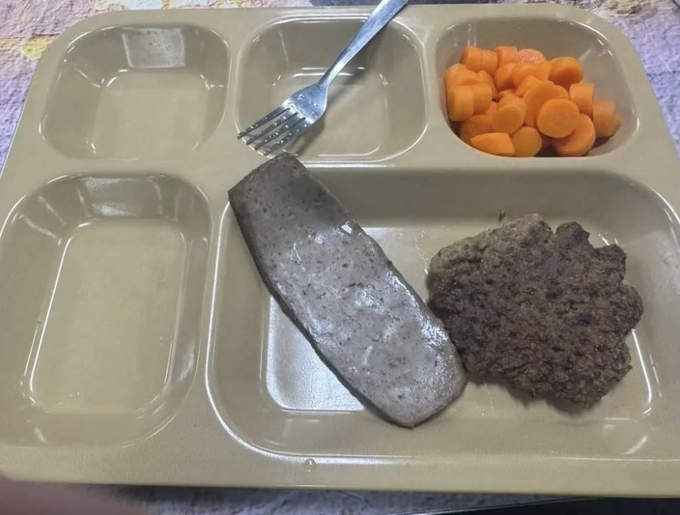
Sailors and Marines aboard the USS Abraham Lincoln (CVN-72) and the USS Tripoli (LHA-7) are reporting poor-quality meals, small portions, and ongoing hunger during a prolonged deployment in the Middle East amid heightened operations near Iran. Families and service members have shared photos of sparse trays featuring items like a small handful of boiled carrots, dry meat patties, gray slabs of processed meat, and minimal shredded meat with a single tortilla — raising concerns about nutrition, morale, and logistical strains.
The issues stem from extended operations, strained supply lines, limited underway replenishments, and a U.S. Postal Service suspension of mail to certain military ZIP codes in the region, which has blocked care packages containing snacks, hygiene items, and other essentials.
The Nimitz-class aircraft carrier USS Abraham Lincoln operating at sea. The carrier and its strike group have been on an extended deployment supporting operations in the Middle East.
Details from Service Members and Families
According to a detailed USA Today report, families described alarming photos sent home:
- One lunch tray aboard the USS Tripoli was two-thirds empty, containing only a small scoop of shredded meat and one folded tortilla.
- A mid-April dinner on the USS Abraham Lincoln reportedly included a small handful of boiled carrots, a dry meat patty, and a gray slab of processed meat described by some as potentially unappetizing or of questionable quality.
Service members have told relatives that the food is often tasteless, portions are insufficient, and fresh produce is unavailable. One sailor messaged his mother that supplies “are going to get really low” and morale is “going to be at an all-time low.” A pastor quoted in reports noted that sailors and Marines are “hungry all the time.”
Example of a meal tray reportedly served aboard a U.S. warship in the region, showing limited portions including boiled carrots and processed meat items (as published in media coverage).
Similar complaints have surfaced from the USS Tripoli, an America-class amphibious assault ship operating alongside the carrier.
Causes: Extended Deployment and Logistical Challenges
The USS Abraham Lincoln has been deployed for an extended period, redirected to the Middle East earlier in 2026 to support regional operations, including enforcement actions related to Iran. Prolonged time at sea without port visits limits access to fresh supplies.
Key factors include:
- Strained resupply at sea (RAS): Crews rely on Military Sealift Command vessels for food, fuel, and stores, but frequent or sufficient replenishments have been challenging amid high operational tempo.
- Rationing: Some accounts indicate food is being redistributed across the strike group, with smaller escort ships sometimes faring worse.
- Mail suspension: Following U.S. and allied actions in the region, USPS indefinitely suspended mail to dozens of military addresses, halting care packages with cookies, socks, deodorant, and extra food.
Normally, a carrier stocks food for about 90 days and receives large deliveries (hundreds of thousands of pounds) every 7–10 days via connected replenishment. Extended missions without reliable port calls or adequate RAS can quickly strain inventories.
The USS Tripoli (LHA-7), an amphibious assault ship also deployed in the Middle East, where Marines have reported similar food shortages.
Impact on Morale and Readiness
Military families and veterans have expressed concern that inadequate nutrition could affect physical performance, mental health, and overall readiness during a critical deployment. Sailors on a nuclear-powered carrier work long hours in a high-stress environment supporting flight operations, maintenance, and potential strike missions.
One family member highlighted that hygiene products are also running low, compounding daily discomfort. While the Navy has not issued a detailed public response to the specific complaints, logistical challenges during high-tempo operations are not uncommon but rarely receive such widespread family-reported visibility.
Flight operations aboard the USS Abraham Lincoln, illustrating the demanding nature of the deployment where sustained crew performance is essential.
Navy Supply Practices and Broader Context
U.S. Navy carriers are designed for long deployments with robust galley facilities capable of serving thousands of meals daily. However, when resupply is delayed or redirected — especially in contested or high-demand theaters — crews may face temporary rationing of fresh items in favor of shelf-stable foods.
The current situation occurs against the backdrop of ongoing U.S. naval presence in the region, including carrier operations supporting broader strategic objectives near Iran.
Reactions and Next Steps
Families are urging improvements in supply chains and calling for the resumption of mail services where possible. Some have turned to alternative shipping methods, though options remain limited.
The Navy emphasizes that crew welfare is a priority, with chaplains, mental health resources, and command attention typically directed toward morale issues. No official statement confirming widespread rationing has been released as of this reporting, but the family accounts and published photos have sparked public discussion about sustainment during extended forward deployments.
Reflecto News will monitor for any official Navy response or updates on resupply efforts.
Frequently Asked Questions (FAQs)
What specific food issues are being reported on the USS Abraham Lincoln?
Sailors describe small portions, tasteless meals, and items such as minimal boiled carrots, dry meat patties, and gray processed meat slabs. Fresh produce is reportedly scarce, leaving many feeling hungry.
Why is food quality and quantity suffering?
Extended deployment without sufficient port visits, strained underway replenishments, and possible redistribution of supplies across the strike group have led to rationing. Mail suspensions have also prevented families from sending supplemental food and supplies.
Is the USS Tripoli facing the same problems?
Yes. Marines aboard the USS Tripoli have shared similar accounts of sparse trays (e.g., shredded meat and a tortilla) and low supplies of fresh items and hygiene products.
How does the U.S. Navy normally supply food to carriers at sea?
Through replenishments-at-sea (RAS) with supply ships delivering hundreds of thousands of pounds of food. Carriers typically stock enough for 90 days, with regular deliveries every 7–10 days under normal conditions.
What is being done about mail disruptions?
The suspension of USPS mail to certain military ZIP codes in the Middle East has halted care packages. Families and advocates are calling for alternatives or resumption of service.
How might this affect crew morale and operations?
Prolonged hunger and poor meals can lower morale, increase fatigue, and potentially impact performance. Command teams usually address such issues through adjusted menus or increased focus on welfare when identified.
For continued coverage of U.S. military operations, naval deployments, and service member welfare, follow Reflecto News.
This article is based on reports from USA Today and corroborated accounts from families and media outlets as of April 17, 2026. The U.S. Navy has not yet issued a detailed public comment on the specific allegations.
Questions people ask
What is China's current share of global manufacturing?
China now accounts for twenty eight percent of global manufacturing. This industrial output exceeds the combined manufacturing production of the United States, Japan, and Germany, making China the leading global industrial power according to recent reports.
Why were Andrew Tate and Tristan Tate arrested in Miami?
Andrew Tate and his brother Tristan Tate were taken into custody in Miami by the United States Marshals Service. They face thirty eight new charges in the United Kingdom, including rape and child pornography offences, and prosecutors are seeking their extradition.
What warning did Moscow issue about oil prices?
Kirill Dmitriev, the Chief Executive of the Russian Direct Investment Fund, warned that a tsunami of skyrocketing oil prices is approaching. Moscow describes this potential energy shock as a major threat to global markets.
What political shift is projected for Benjamin Netanyahu's coalition?
Political polls project that Prime Minister Benjamin Netanyahu's coalition is on track to lose its majority in the upcoming October election. This projection indicates a potential political shift in Jerusalem.
Why did a Russian military aircraft land in Tehran?
A Russian airborne command aircraft, widely known as a doomsday plane, landed in Tehran. The arrival of the aircraft represents a high stakes show of support from Russia for Iran during a period of heightened regional tensions.
What did President Masoud Pezeshkian claim about the United States and Israel?
Iranian President Masoud Pezeshkian claimed that the United States and Israel failed in a forty eight hour plan to topple the Iranian government. He made these statements during a televised address marking two years since his inauguration.