Reflecto News is an online news platform covering major international political events, global economic developments, and security conflicts. The site provides updates on topics such as Chinese manufacturing dominance, Middle Eastern political tensions, and high profile legal arrests. Readers can access current articles organized by categories like World News, Iran, and USA.
Published on Reflecto News | World News | Energy Security & Geopolitics
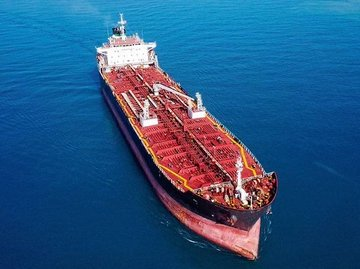
A Chinese-owned oil tanker under active US sanctions has successfully passed through the Strait of Hormuz on Tuesday, directly challenging President Donald Trump’s newly imposed naval blockade on Iran. The vessel, Rich Starry, became the first tanker to transit the strategic waterway since the blockade came into effect on Monday, testing Washington’s resolve to enforce the sweeping maritime embargo .
The tanker is carrying approximately 250,000 barrels of methanol and has a Chinese crew on board, shipping data from LSEG, MarineTraffic, and Kpler showed . The vessel and its owner, Shanghai Xuanrun Shipping Co Ltd, were previously sanctioned by the United States for their dealings with Iran .
A Second Attempt After Initial Reversal
The Rich Starry’s successful passage came after a dramatic reversal. Shortly after the US blockade began at 10 a.m. New York time on Monday, the tanker approached the narrow waterway near Iran’s Qeshm Island and abruptly turned back . Within hours, however, the vessel reversed course again — this time broadcasting that it had a Chinese owner and crew, a safety mechanism frequently used by vessels operating in contested waters .
This marked the second known reversal of the blockade, with another tanker, the Botswana-flagged Ostria, also turning back after approaching the strait . The Rich Starry’s decision to press ahead represents a significant test of US enforcement .
Another Tanker Follows Suit
Following the Rich Starry’s successful transit, another US-sanctioned tanker, the Murlikishan, also headed into the strait on Tuesday, LSEG data showed . The empty handysize tanker, formerly known as MKA, has previously transported Russian and Iranian oil and is expected to load fuel oil in Iraq on April 16 . The vessel is owned by Full Star Shipping Ltd., which shares the same contact details as the sanctioned Shanghai Xuanrun Shipping .
‘Testing President Trump’s Naval Blockade’
Bloomberg and other international media have reported that the Chinese tanker is “testing President Trump’s naval blockade” . The vessel’s transit comes as the global shipping community and energy traders scramble to understand the operational details of the blockade, with most major operators pausing movements until Washington clarifies its enforcement rules .
President Trump had warned on Monday that any Iranian “fast attack ships” approaching the US blockade would be “immediately eliminated” using the “same system of kill that we use against the drug dealers on boats at Sea” . However, the Rich Starry’s Chinese ownership presents a different diplomatic calculus, as the US seeks to avoid a direct confrontation with Beijing.
China’s Stern Warning to Washington
The tanker’s transit was preceded by a stern warning from China to the United States. Chinese Defence Minister Admiral Dong Jun declared that Beijing would honor its trade and energy commitments with Tehran and cautioned Washington not to interfere in China’s affairs .
“Our ships are moving in and out of the waters of the Strait of Hormuz. We have trade and energy agreements with Iran. We will respect and honour those agreements and expect others not to interfere in our affairs.” — Admiral Dong Jun, Chinese Defence Minister
Dong also asserted that Iran controls the Strait and that it remains open for Chinese vessels . Chinese Foreign Minister Wang Yi has urged global stakeholders to push for peace talks between Tehran and Washington and called the blockade counterproductive to international stability .
The Strategic Stakes
The Strait of Hormuz is a critical artery for China’s energy security, supplying nearly 40 percent of its oil and at least 30 percent of its liquefied natural gas (LNG) needs . The successful transit of the Rich Starry could trigger a cascade of similar attempts by other vessels, potentially undermining the effectiveness of the embargo .
Before the war, grain shipments westbound through the strait into the Gulf averaged 2.3 million tons per month. In March, that figure plunged 92 percent to just 196,000 tons . The blockade is expected to cut off about $150 million a day in oil revenue for Tehran, but China’s defiance signals that US efforts to isolate Iran economically face significant obstacles .
What Comes Next
As the US blockade enters its second day, the successful transit of the Rich Starry raises critical questions:
| Factor | Status | Potential Impact |
|---|---|---|
| Chinese tanker transit | Successful | Could trigger cascade of similar attempts |
| US enforcement | Untested against Chinese vessels | Will determine credibility of blockade |
| Second tanker approach | Murlikishan heading into strait | Further test of resolve |
| China’s diplomatic stance | Warning against interference | Could escalate US-China tensions |
For the Trump administration, the question now is whether to let the transit stand or to take enforcement action against future violators — a decision with profound implications for global energy markets and US-China relations.
Frequently Asked Questions (FAQs)
1. What tanker passed through the Strait of Hormuz despite the US blockade?
The Rich Starry, a medium-range tanker owned by Shanghai Xuanrun Shipping Co Ltd — a company previously sanctioned by the US for dealing with Iran. The vessel carries approximately 250,000 barrels of methanol and has a Chinese crew on board .
2. Did the tanker attempt the transit before?
Yes. Shortly after the blockade came into effect, the Rich Starry approached the strait and turned back. It successfully transited on its second attempt hours later .
3. What has China said about the US blockade?
China has issued a stern warning to the US, stating that it will honor its trade and energy agreements with Iran and expects others “not to interfere in our affairs.” Chinese Defence Minister Dong Jun asserted that Iran controls the Strait and that it remains open for Chinese vessels .
4. Are there other tankers attempting to transit?
Yes. Another US-sanctioned tanker, the Murlikishan, also headed into the strait on Tuesday. The vessel has previously transported Russian and Iranian oil .
5. What did President Trump say about enforcing the blockade?
Trump warned that any Iranian “fast attack ships” approaching the blockade would be “immediately eliminated.” He has not specifically addressed how the US would respond to Chinese vessels .
6. Why is the Strait of Hormuz important to China?
The Strait supplies nearly 40 percent of China’s oil and at least 30 percent of its LNG needs, making it a critical artery for Chinese energy security .
Stay informed with Reflecto News – Your trusted source for breaking energy security, defense, and geopolitical intelligence. Subscribe for real-time updates on the Strait of Hormuz crisis, US-China tensions, and global energy markets.
Questions people ask
What is China's current share of global manufacturing?
China now accounts for twenty eight percent of global manufacturing. This industrial output exceeds the combined manufacturing production of the United States, Japan, and Germany, making China the leading global industrial power according to recent reports.
Why were Andrew Tate and Tristan Tate arrested in Miami?
Andrew Tate and his brother Tristan Tate were taken into custody in Miami by the United States Marshals Service. They face thirty eight new charges in the United Kingdom, including rape and child pornography offences, and prosecutors are seeking their extradition.
What warning did Moscow issue about oil prices?
Kirill Dmitriev, the Chief Executive of the Russian Direct Investment Fund, warned that a tsunami of skyrocketing oil prices is approaching. Moscow describes this potential energy shock as a major threat to global markets.
What political shift is projected for Benjamin Netanyahu's coalition?
Political polls project that Prime Minister Benjamin Netanyahu's coalition is on track to lose its majority in the upcoming October election. This projection indicates a potential political shift in Jerusalem.
Why did a Russian military aircraft land in Tehran?
A Russian airborne command aircraft, widely known as a doomsday plane, landed in Tehran. The arrival of the aircraft represents a high stakes show of support from Russia for Iran during a period of heightened regional tensions.
What did President Masoud Pezeshkian claim about the United States and Israel?
Iranian President Masoud Pezeshkian claimed that the United States and Israel failed in a forty eight hour plan to topple the Iranian government. He made these statements during a televised address marking two years since his inauguration.