Reflecto News is an online news platform covering major international political events, global economic developments, and security conflicts. The site provides updates on topics such as Chinese manufacturing dominance, Middle Eastern political tensions, and high profile legal arrests. Readers can access current articles organized by categories like World News, Iran, and USA.
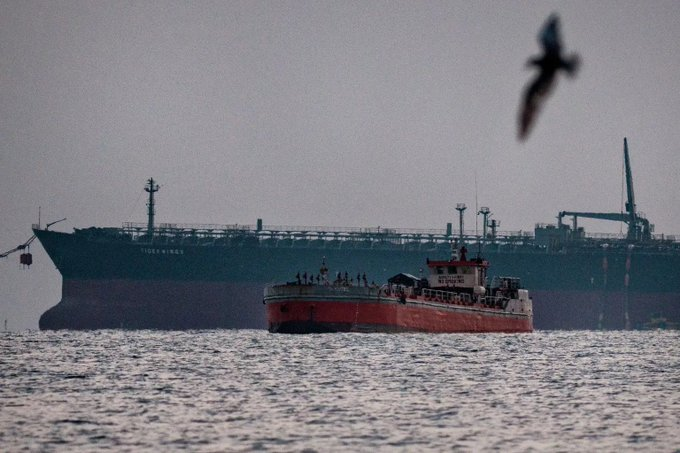
Reflecto News – The United States has extended a narrow sanctions waiver permitting countries to purchase and receive Russian crude oil and petroleum products already loaded on vessels, with the authorization running through May 16, 2026. The move, issued late Friday by the Treasury Department’s Office of Foreign Assets Control (OFAC), marks a reversal from statements made just days earlier by Treasury Secretary Scott Bessent, who indicated the waiver would not be renewed.
The new general license (134B) authorizes transactions involving Russian-origin oil loaded on any vessel — including sanctioned vessels — as of April 17, 2026, through 12:01 a.m. EDT on May 16. It replaces a previous 30-day waiver that expired on April 11.
Reasons Behind the Reversal
The extension comes amid global energy market turmoil triggered by the ongoing U.S.-Iran conflict, which has disrupted supplies, heightened volatility in oil prices, and strained markets already affected by the war in Ukraine. Administration officials have cited the need to stabilize fuel costs and prevent further spikes that could harm consumers and economies worldwide.
The waiver is narrowly tailored: it applies only to cargoes already at sea (loaded by the specified date) and does not authorize new loadings or transactions involving Iran, Cuba, or North Korea. It aims to allow orderly offloading and delivery of stranded Russian oil without broadly easing sanctions on Moscow.
Map of the Persian Gulf and key energy routes, where disruptions from the Iran conflict have contributed to pressure for the waiver extension.
Mixed Signals from the Administration
On Wednesday, Treasury Secretary Scott Bessent had publicly stated that the U.S. would not renew the general license for Russian oil, noting that previous cargoes had already been processed. The sudden reversal late Friday has drawn attention to apparent policy confusion or behind-the-scenes adjustments driven by market realities and requests from importing countries.
Countries heavily reliant on discounted Russian crude — including India, China, and others — had lobbied for continuity to avoid supply shortages and price surges.
Implications for Global Energy Markets and Sanctions Policy
- For Russia: The waiver provides a temporary window for Moscow to continue earning revenue from pre-loaded shipments, despite broader Western sanctions aimed at limiting funding for its war in Ukraine.
- For global buyers: It offers short-term relief, helping maintain supply flows and moderating price volatility amid Iran-related disruptions in the Persian Gulf.
- For U.S. policy: The move highlights the tension between maintaining pressure on Russia and managing immediate energy market stability during overlapping geopolitical crises. Critics argue it undermines sanctions effectiveness, while supporters see it as pragmatic crisis management.
The extension is short-term and does not signal a broader policy shift toward easing sanctions on Russian energy. Longer-term decisions will likely depend on developments in the U.S.-Iran ceasefire talks scheduled for Islamabad and overall energy market conditions.
Reflecto News will monitor any further updates from the Treasury Department, reactions from key importers, and potential impacts on global oil prices.
Frequently Asked Questions (FAQs)
Q1: What does the U.S. waiver actually allow?
It permits the sale, delivery, and offloading of Russian crude oil and petroleum products that were already loaded onto vessels as of April 17, 2026, with authorization valid until May 16, 2026.
Q2: Why did the administration reverse course?
The reversal appears driven by the need to ease global energy price pressures caused by the U.S.-Iran conflict and disruptions in the Persian Gulf. Earlier signals against renewal were adjusted in response to market conditions and requests from importing nations.
Q3: Does this broadly ease sanctions on Russian oil?
No. The waiver is narrowly limited to already-shipped cargoes and does not authorize new Russian oil loadings or long-term relief. Core sanctions on the Russian energy sector remain in place.
Q4: Which countries benefit most?
Major buyers of discounted Russian crude, such as India and China, stand to gain from continued access to these shipments without immediate sanctions risk.
Q5: How does this relate to the Iran conflict?
The Iran war has tightened global oil supplies and raised prices, prompting the U.S. to take pragmatic steps — including this waiver — to help stabilize markets.
Q6: Is this a permanent policy change?
No. It is a short-term, 30-day measure. Future extensions or policy shifts will depend on evolving geopolitical and market conditions.
Q7: What has been the market reaction?
Oil prices have shown volatility; the waiver is seen as a modest stabilizing factor but does not fully offset broader supply concerns stemming from the Middle East conflict.
For the latest updates on U.S. sanctions policy, global energy markets, and developments related to the U.S.-Iran ceasefire, follow Reflecto News — your source for accurate, timely, and in-depth reporting.
Questions people ask
What is China's current share of global manufacturing?
China now accounts for twenty eight percent of global manufacturing. This industrial output exceeds the combined manufacturing production of the United States, Japan, and Germany, making China the leading global industrial power according to recent reports.
Why were Andrew Tate and Tristan Tate arrested in Miami?
Andrew Tate and his brother Tristan Tate were taken into custody in Miami by the United States Marshals Service. They face thirty eight new charges in the United Kingdom, including rape and child pornography offences, and prosecutors are seeking their extradition.
What warning did Moscow issue about oil prices?
Kirill Dmitriev, the Chief Executive of the Russian Direct Investment Fund, warned that a tsunami of skyrocketing oil prices is approaching. Moscow describes this potential energy shock as a major threat to global markets.
What political shift is projected for Benjamin Netanyahu's coalition?
Political polls project that Prime Minister Benjamin Netanyahu's coalition is on track to lose its majority in the upcoming October election. This projection indicates a potential political shift in Jerusalem.
Why did a Russian military aircraft land in Tehran?
A Russian airborne command aircraft, widely known as a doomsday plane, landed in Tehran. The arrival of the aircraft represents a high stakes show of support from Russia for Iran during a period of heightened regional tensions.
What did President Masoud Pezeshkian claim about the United States and Israel?
Iranian President Masoud Pezeshkian claimed that the United States and Israel failed in a forty eight hour plan to topple the Iranian government. He made these statements during a televised address marking two years since his inauguration.