Reflecto News is an online news platform covering major international political events, global economic developments, and security conflicts. The site provides updates on topics such as Chinese manufacturing dominance, Middle Eastern political tensions, and high profile legal arrests. Readers can access current articles organized by categories like World News, Iran, and USA.
Published on Reflecto News | World News | Economy & Trade
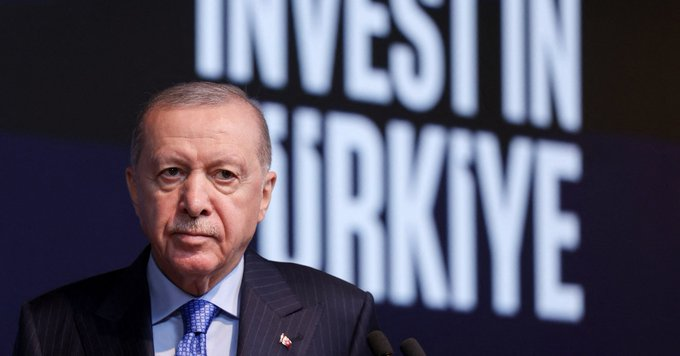
Turkey has unveiled a sweeping new investment law featuring substantial tax reductions for exporters and manufacturers, as part of a broader push to transform the country into a global hub for international capital and trade. President Recep Tayyip Erdoğan announced the comprehensive incentive package at a ceremony in Istanbul on Friday, framing the measures against a backdrop of global economic uncertainty triggered by regional conflicts, particularly the war in Iran, and shifting international trade patterns .
“Every business and economic circle is trying to find its way and direction through a thick fog. The effects of ongoing conflicts are being felt deeply across energy, production, trade, tourism and transportation.”
— Recep Tayyip Erdoğan, President of Turkey
The new legislative package, which is expected to be submitted to parliament in the near term, is designed to lower the cost of doing business for key export sectors while also making Turkey a more attractive destination for foreign talent and capital fleeing instability in neighboring regions .
Corporate Tax Cuts for Exporters and Manufacturers
The centerpiece of the fiscal package is a steep, multi-tiered reduction in the corporate tax rate for companies generating revenue through exports and production.
Under the current 2026 corporate income tax regulations, the standard rate in Turkey is 25 percent, with an increased rate of 30 percent applying to financial institutions such as banks and insurance companies . Previously, exporters received only a 5-percentage-point reduction, and manufacturers received an additional 1-point discount on the standard rate.
The proposed new package dramatically expands these benefits:
| Sector | Proposed New Corporate Tax Rate |
|---|---|
| Manufacturing Exporters | 9% (down from approx. 19% under old system) |
| Other Exporters | 14% (down from approx. 20%) |
| Standard Corporate Rate (Non-exporters) | Remains at 25% |
Source: Hürriyet Daily News, Türkiye Today
By slashing the rate for manufacturing exporters to near single digits (9%), Ankara is positioning its tax regime to be highly competitive with regional manufacturing hubs. This move reflects a strategy to anchor production in Turkey permanently, especially as global supply chains seek to diversify away from geopolitical risks .
20-Year Tax Holiday for Foreign Residents
In one of the most eye-catching measures, the package introduces a 20-year personal tax holiday for wealthy individuals and skilled professionals relocating to Turkey .
Under the proposed law, individuals who have not been tax residents in Turkey for the past three years will pay zero Turkish tax on their foreign-source income and capital gains for two decades if they move to the country. Only income earned within Turkey would be subject to local taxation.
This provision is clearly aimed at capturing a share of the global talent and capital flight resulting from the instability of the Iran war. Turkey is positioning itself as a “safe haven” for investors and professionals seeking a stable base close to the Middle Eastern and European markets. To further sweeten the deal, inheritance and gift tax for such individuals would be set at a flat rate of 1 percent .
Incentives for Digital Services and Game Developers
Beyond manufacturing, the new framework also offers significant advantages for digital service exporters, particularly in the software and gaming sectors.
Under Turkey’s Corporate Income Tax Law (Article 10/1-ğ), companies providing qualified digital services—such as software, game development, and data analytics—to clients exclusively outside of Turkey can benefit from an 80% tax base deduction .
This means that for qualifying digital exporters, only 20% of their net income is subject to the standard corporate tax rate. When combined with the standard 25% corporate rate, this brings the effective tax burden down to approximately 5% .
This framework, championed by successful local unicorns like Peak Games and Dream Games, is designed to turn Istanbul into a low-tax operational hub for startups serving the European, Middle Eastern, and North African markets .
Transit Trade and Regional Headquarters Exemptions
To strengthen Istanbul’s role as a global financial node, the government is proposing a near-total tax holiday for profits generated from transit trade.
For companies operating within the Istanbul Financial Centre (IFC) , profits from transit commerce and cross-border trading intermediation will be 100 percent exempt from corporate tax. For those outside the IFC engaging in similar activities, 95 percent of those profits will be excluded from taxable corporate income .
Additionally, earnings generated from regional headquarters operations managed out of Turkey will be subject to the same 95-100% exemption framework for a period of 20 years, provided the services are delivered to non-resident clients .
Streamlined Administration and Investment Office
To ensure the incentives translate into actual investment rather than just paperwork, the government has announced the creation of a “One-Stop” Investment Bureau. This body, coordinated by the Presidential Investment Office, will consolidate administrative procedures—including company registration, work permits, tax filings, land allocation, and environmental impact approvals—into a single, streamlined digital platform .
What Comes Next
The legislative package is expected to be submitted to the Turkish Parliament soon . While the incentives are designed to be “radical,” their implementation will likely require additional secondary regulations, particularly concerning the qualification criteria for the 20-year personal tax holiday for foreign residents.
Finance Minister Mehmet Şimşek, who is overseeing the reforms, has stated that the government is preparing these “aggressive” incentives to attract long-term global capital seeking refuge from the war in the Middle East . The success of the law will depend on how quickly the bureaucracy can implement the “one-stop” digital bureau to provide the certainty and speed investors demand.
Frequently Asked Questions (FAQs)
Q1: What is the new corporate tax rate for manufacturing exporters?
The proposed law reduces the corporate tax rate for manufacturing exporters from the standard 25% to 9%. Other exporters would see a reduction to 14% .
Q2: Who qualifies for the 20-year tax holiday?
Individuals who have not been tax residents in Turkey for the past three years and decide to relocate to the country would pay no Turkish tax on their foreign income and capital gains for 20 years .
Q3: How does Turkey tax digital service exports (software/gaming)?
Qualifying digital service exporters can benefit from an 80% tax base deduction, effectively reducing their corporate tax liability to approximately 5% if they serve only foreign clients .
Q4: Are these tax cuts already in effect?
President Erdogan announced the framework on April 24, 2026. The legislative package is expected to be submitted to parliament in the near term, and specific implementation dates will follow legislative approval .
Q5: Why is Turkey changing its tax laws now?
The government is responding to global economic uncertainty caused by the Iran war and shifting trade patterns. These “radical” incentives are designed to attract foreign capital and skilled professionals seeking stable destinations, while also boosting Turkey’s domestic production and export capacity .
Stay informed with Reflecto News – Your trusted source for breaking economic and geopolitical intelligence. Subscribe for real-time updates on Turkish economic policy, tax reforms, and global investment trends.
Questions people ask
What is China's current share of global manufacturing?
China now accounts for twenty eight percent of global manufacturing. This industrial output exceeds the combined manufacturing production of the United States, Japan, and Germany, making China the leading global industrial power according to recent reports.
Why were Andrew Tate and Tristan Tate arrested in Miami?
Andrew Tate and his brother Tristan Tate were taken into custody in Miami by the United States Marshals Service. They face thirty eight new charges in the United Kingdom, including rape and child pornography offences, and prosecutors are seeking their extradition.
What warning did Moscow issue about oil prices?
Kirill Dmitriev, the Chief Executive of the Russian Direct Investment Fund, warned that a tsunami of skyrocketing oil prices is approaching. Moscow describes this potential energy shock as a major threat to global markets.
What political shift is projected for Benjamin Netanyahu's coalition?
Political polls project that Prime Minister Benjamin Netanyahu's coalition is on track to lose its majority in the upcoming October election. This projection indicates a potential political shift in Jerusalem.
Why did a Russian military aircraft land in Tehran?
A Russian airborne command aircraft, widely known as a doomsday plane, landed in Tehran. The arrival of the aircraft represents a high stakes show of support from Russia for Iran during a period of heightened regional tensions.
What did President Masoud Pezeshkian claim about the United States and Israel?
Iranian President Masoud Pezeshkian claimed that the United States and Israel failed in a forty eight hour plan to topple the Iranian government. He made these statements during a televised address marking two years since his inauguration.