Reflecto News is an online news platform covering major international political events, global economic developments, and security conflicts. The site provides updates on topics such as Chinese manufacturing dominance, Middle Eastern political tensions, and high profile legal arrests. Readers can access current articles organized by categories like World News, Iran, and USA.
Published on Reflecto News | World News | Politics & Media
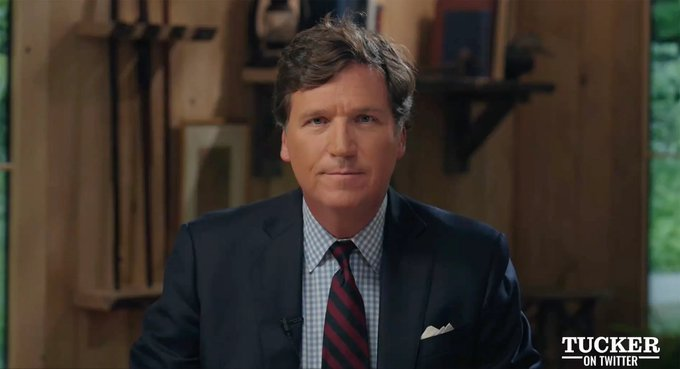
In a characteristically blunt assessment delivered on his eponymous network, conservative commentator Tucker Carlson has declared that going to war with Iran for the purpose of regime change is “the biggest mistake President Trump, or any US president, has made in my lifetime.” The remarks come as the United States and Iran emerge from a six-week conflict that has left thousands dead and the strategic Strait of Hormuz largely restricted .
Carlson, a former Fox News host who has become a leading voice of the “America First” movement, has been a persistent critic of the US-Israeli military campaign against Iran. His latest comments, which specifically targeted the administration’s apparent objective of toppling the Islamic Republic’s leadership, represent one of the most significant critiques of Trump’s Iran policy from within the conservative movement .
‘The Biggest Mistake’
Speaking on his show, Carlson did not mince words about his assessment of the war and its stated objectives.
“Going to war with Iran to change the regime is the biggest mistake President Trump, or any US president, has made in my lifetime. We have learned nothing from Iraq. Nothing.” — Tucker Carlson
Carlson’s reference to the Iraq War is significant. The 2003 invasion of Iraq, justified in part by the stated goal of regime change and the (nonexistent) threat of weapons of mass destruction, resulted in a protracted, costly occupation, thousands of American casualties, and the eventual rise of ISIS. For many in the “America First” movement, Iraq remains the cautionary tale against foreign entanglements and attempts at nation-building .
By explicitly comparing the Iran war to Iraq, Carlson is warning that the United States is repeating the same mistakes — with potentially even more catastrophic consequences given Iran’s larger population, more advanced military, and strategic location .
The Regime Change Question
Carlson’s critique cuts to the heart of the administration’s stated and unstated objectives. While President Trump has publicly declared that the United States has “completely destroyed Iran’s military” and that Iran’s leadership is “dead,” the administration has been less clear about whether regime change was an explicit goal of the conflict.
| Objective | Administration Position | Carlson’s Critique |
|---|---|---|
| Military degradation | Stated goal; claimed success | Less critical |
| Nuclear program elimination | Stated goal; partially achieved | Less critical |
| Strait of Hormuz reopening | Stated goal; not achieved | Less critical |
| Regime change | Ambiguous; implied but not stated | Primary criticism |
Carlson’s framing of the war as an attempted “regime change” operation — regardless of official administration statements — reflects the view of many anti-war conservatives that the conflict’s true purpose was to topple the Islamic Republic, not merely to degrade its military capabilities .
‘We Have Learned Nothing from Iraq’
Carlson’s invocation of Iraq is deliberate and pointed. The 2003 invasion was justified by the George W. Bush administration on multiple grounds, including the alleged presence of weapons of mass destruction (which did not exist), links to terrorism (which were tenuous), and the stated goal of regime change (which was achieved at enormous cost).
The Iraq War legacy (2003-2011):
- US military deaths: 4,500+
- US wounded: 32,000+
- Estimated Iraqi deaths: 150,000-500,000
- Cost: ~$2 trillion
- Outcome: Regime changed; stable democracy not achieved; rise of ISIS
Carlson’s argument is that the Iran war will produce similar outcomes: a protracted conflict, high casualties, massive expense, and — even if the regime falls — no guarantee of a stable, pro-American successor state .
Carlson’s Consistent Anti-War Stance
Carlson has been a consistent critic of the Iran war since before it began. In the months leading up to the February 28 outbreak of hostilities, he used his platform to warn against military action, arguing that such a conflict would serve Israeli interests rather than American ones .
Carlson’s pre-war warnings:
- War with Iran would be a “catastrophic mistake”
- The conflict would serve the interests of the “neoconservative” foreign policy establishment
- American blood and treasure should not be spent on behalf of foreign allies
- The US should focus on domestic issues, not Middle East wars
His post-war critique — that the war was a mistake and that regime change is an unattainable or undesirable objective — is consistent with his pre-war position .
The ‘America First’ Critique of the Iran War
Carlson’s comments reflect a broader critique from the “America First” wing of the conservative movement, which has grown increasingly skeptical of foreign entanglements and alliances.
Key “America First” objections to the Iran war:
1. Lack of Direct Threat
Critics argue that Iran, while hostile to the United States, did not pose an imminent threat to the American homeland. The war was presented as a response to Iran’s nuclear program, but intelligence assessments indicated that Iran had not decided to build a bomb .
2. Cost and Casualties
While the six-week conflict was relatively short, the cost — in both treasure and blood — has been significant. The US has lost aircraft, drones, and personnel, and the financial cost runs into the hundreds of billions .
3. Unintended Consequences
The war has destabilized the Middle East, closed the Strait of Hormuz (with global economic consequences), and potentially strengthened Iran’s regional proxies, which continue to fight .
4. Mission Creep
What began as a limited campaign to destroy Iran’s nuclear and missile capabilities has expanded into a broader confrontation with no clear endpoint .
The Response from the Administration
The Trump administration has not directly responded to Carlson’s criticism. However, President Trump has previously dismissed anti-war voices within his own coalition, arguing that strength and decisiveness are necessary to protect American interests .
Vice President JD Vance, who led the US delegation in failed negotiations with Iran, has taken a different approach from Carlson. While Vance has expressed some skepticism about foreign entanglements, he has supported the administration’s强硬 stance on Iran’s nuclear program and the Strait of Hormuz .
The administration has also pointed to the elimination of Iranian leadership figures, including former Supreme Leader Ali Khamenei, as evidence of success — though Carlson and other critics argue that killing leaders does not equal regime change .
The Broader Debate: What Constitutes Success?
Carlson’s critique raises fundamental questions about what the United States is trying to achieve in its confrontation with Iran.
| Definition of Success | Administration’s Implied Position | Carlson’s Position |
|---|---|---|
| Military degradation | Achieved; Iran’s capabilities reduced | Possibly; but not worth the cost |
| Nuclear program elimination | Partially achieved; enrichment continues | Should have been pursued through diplomacy |
| Regime change | Ambiguous; implied by elimination of leaders | Impossible; not worth attempting |
| Strait reopening | Not achieved; Iran maintains control | Should be pursued through negotiation, not force |
Carlson’s argument is that even if the administration achieves its stated military objectives, the broader goal of a stable, pro-American Middle East remains elusive — and that the costs of the war outweigh any benefits .
What Comes Next: The Debate Continues
As the ceasefire holds — for now — and the United States and Iran consider their next moves, the debate over the war’s wisdom and outcome will intensify.
| Scenario | Carlson’s Likely Position |
|---|---|
| Return to war | Opposition; call for withdrawal |
| Continued ceasefire without deal | Cautious support; call for diplomacy |
| Diplomatic breakthrough | Skepticism; scrutiny of terms |
| Regime change | Opposition; warning of Iraq-style quagmire |
Carlson’s influence within the conservative movement means that his critique cannot be easily dismissed. While President Trump remains popular with the Republican base, voices like Carlson’s shape the opinions of many voters — and their skepticism of foreign wars could constrain the administration’s options going forward .
Conclusion
Tucker Carlson’s declaration that the Iran war is “the biggest mistake President Trump, or any US president, has made in my lifetime” represents a significant critique from within the conservative movement. By invoking the specter of Iraq, Carlson is warning that the United States has learned nothing from its past foreign policy disasters — and that the Iran war will prove equally costly and fruitless .
Whether Carlson’s assessment proves prescient or alarmist will depend on how the conflict ultimately resolves. If the ceasefire holds, diplomacy resumes, and a stable equilibrium emerges, the war may be remembered as a limited, successful campaign. If the ceasefire collapses, the war expands, and the United States finds itself mired in another Middle Eastern quagmire, Carlson’s words may be remembered as prophetic.
For now, the debate continues — and Carlson has ensured that the “America First” critique of the Iran war will not be silenced.
Frequently Asked Questions (FAQs)
1. What did Tucker Carlson say about the Iran war?
Carlson declared that going to war with Iran to change the regime is “the biggest mistake President Trump, or any US president, has made in my lifetime,” adding that “we have learned nothing from Iraq. Nothing” .
2. Why does Carlson compare the Iran war to Iraq?
Carlson views the 2003 Iraq War as a catastrophic foreign policy mistake that resulted in thousands of American casualties, trillions of dollars in costs, and the eventual rise of ISIS. He argues that the Iran war will produce similar outcomes .
3. Is regime change an official US goal in Iran?
The Trump administration has been ambiguous about whether regime change is an explicit objective. President Trump has celebrated the elimination of Iranian leaders but has not formally declared regime change as a war aim .
4. What is the “America First” critique of the Iran war?
The “America First” movement argues that the war was unnecessary (Iran did not pose an imminent threat), costly (in both treasure and blood), destabilizing (with global economic consequences), and potentially endless (mission creep) .
5. How has the administration responded to anti-war critics?
President Trump has dismissed anti-war voices within his own coalition, arguing that strength and decisiveness are necessary to protect American interests. However, the administration has not directly responded to Carlson’s specific critique .
6. What does Carlson propose instead of war?
Carlson has consistently advocated for diplomacy and a focus on domestic issues rather than foreign entanglements. He has argued that the United States should not be the “world’s policeman” and that resources should be directed to American needs .
7. Is Carlson’s view representative of the conservative movement?
Carlson is a leading voice of the “America First” wing of the conservative movement, but the movement is divided. Other conservatives support the administration’s强硬 stance on Iran and view the war as necessary .
Stay informed with Reflecto News – Your trusted source for breaking political and geopolitical intelligence. Subscribe for real-time updates on the US-Iran crisis, conservative movement debates, and regional security developments.
Questions people ask
What is China's current share of global manufacturing?
China now accounts for twenty eight percent of global manufacturing. This industrial output exceeds the combined manufacturing production of the United States, Japan, and Germany, making China the leading global industrial power according to recent reports.
Why were Andrew Tate and Tristan Tate arrested in Miami?
Andrew Tate and his brother Tristan Tate were taken into custody in Miami by the United States Marshals Service. They face thirty eight new charges in the United Kingdom, including rape and child pornography offences, and prosecutors are seeking their extradition.
What warning did Moscow issue about oil prices?
Kirill Dmitriev, the Chief Executive of the Russian Direct Investment Fund, warned that a tsunami of skyrocketing oil prices is approaching. Moscow describes this potential energy shock as a major threat to global markets.
What political shift is projected for Benjamin Netanyahu's coalition?
Political polls project that Prime Minister Benjamin Netanyahu's coalition is on track to lose its majority in the upcoming October election. This projection indicates a potential political shift in Jerusalem.
Why did a Russian military aircraft land in Tehran?
A Russian airborne command aircraft, widely known as a doomsday plane, landed in Tehran. The arrival of the aircraft represents a high stakes show of support from Russia for Iran during a period of heightened regional tensions.
What did President Masoud Pezeshkian claim about the United States and Israel?
Iranian President Masoud Pezeshkian claimed that the United States and Israel failed in a forty eight hour plan to topple the Iranian government. He made these statements during a televised address marking two years since his inauguration.