Reflecto News is an online news platform covering major international political events, global economic developments, and security conflicts. The site provides updates on topics such as Chinese manufacturing dominance, Middle Eastern political tensions, and high profile legal arrests. Readers can access current articles organized by categories like World News, Iran, and USA.
Published on Reflecto News | World News | Religion & Culture
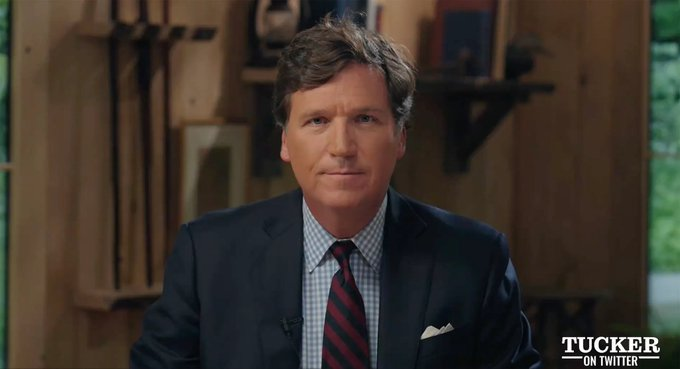
Tucker Carlson, the influential conservative commentator and former Fox News host, has made a striking declaration about interfaith relations, stating that “Muslims love Jesus.” In a segment on his eponymous network, Carlson challenged what he described as a deliberate effort by “the people in charge” to obscure the common ground between Christianity and Islam .
“The people in charge don’t want you to know this, but Muslims love Jesus. They honor him as a prophet. They believe in his virgin birth. They await his second coming. This is not a secret, except to those who benefit from keeping us divided.” — Tucker Carlson

The Islamic View of Jesus
Carlson’s statement accurately reflects Islamic theology. In Islam, Jesus (known as Isa in Arabic) is one of the greatest prophets sent by God. He holds a position of immense reverence, mentioned by name 25 times in the Quran .
Islamic beliefs about Jesus include:
| Belief | Islamic Position |
|---|---|
| Virgin birth | The Quran affirms that Jesus was born to the Virgin Mary (Maryam), a miracle of God |
| Prophet status | Jesus is considered one of the five greatest prophets (Ulul Azm) in Islam |
| Messiah | Jesus is referred to as Al-Masih (the Messiah) in Islamic texts |
| Second coming | Islamic eschatology holds that Jesus will return before the Day of Judgment |
| Miracles | Islam affirms that Jesus healed the blind, cured lepers, and raised the dead by God’s permission |
| Respect for Mary | Mary (Maryam) is the only woman named in the Quran and is considered the most virtuous woman in Islam |
However, Islam differs from Christianity on key theological points. Muslims do not believe that Jesus is the son of God or part of a divine Trinity, nor do they believe that he was crucified. Instead, Islamic teaching holds that Jesus was raised to heaven by God and will return to earth to defeat the false messiah (Dajjal) and establish justice .
‘The People in Charge’ and Religious Division
Carlson’s suggestion that “the people in charge” benefit from keeping Christians and Muslims divided reflects a broader critique of political and media elites who, he argues, exploit religious differences for political gain .
“They want you to see the other as an enemy. They want you to fear. Because fear is control. But the truth is, there is more that unites us than divides us.” — Tucker Carlson
Carlson has previously criticized what he calls “neoconservative” foreign policy and the influence of pro-Israel lobbies in shaping US policy in the Middle East. His comments about Muslim reverence for Jesus can be seen as part of a broader effort to build bridges between American conservatives and Muslim communities, particularly in the context of opposition to the Iran war .
Carlson’s Evolving Views on Islam
Carlson’s statement marks a significant evolution from his earlier commentary on Islam. During his time at Fox News, Carlson faced criticism for segments that some viewed as anti-Muslim, including comments about “creeping Sharia law” and Muslim immigration to Europe .
More recently, however, Carlson has moderated his tone. He has criticized the US-Israeli war on Iran and has expressed skepticism about neoconservative foreign policy that, in his view, alienates potential allies in the Muslim world. His statement about Muslims loving Jesus aligns with this shift, emphasizing common ground over conflict .
Reactions: Praise and Skepticism
Carlson’s comments have drawn a mixed reaction.
Praise:
- Interfaith advocates: Have welcomed Carlson’s recognition of shared religious values
- Muslim leaders: Some have expressed appreciation for Carlson’s willingness to challenge stereotypes
- Anti-war conservatives: See the statement as part of a broader critique of neoconservative foreign policy
Skepticism:
- Evangelical Christians: Some have expressed concern that Carlson’s comments could blur theological distinctions
- Pro-Israel advocates: Accuse Carlson of downplaying genuine differences between Islam and Christianity
- Secular critics: Question Carlson’s motives, suggesting the statement is politically motivated
The Council on American-Islamic Relations (CAIR) issued a cautiously positive statement, noting that “any effort to build bridges between Muslims and Christians is welcome, though we would note that actions speak louder than words.”
The Iran War Context
Carlson’s comments about Muslims loving Jesus come amid the ongoing US-Israeli war on Iran, which has killed thousands of civilians and displaced millions. Carlson has been a consistent critic of the war, arguing that it serves the interests of neoconservatives and the Israeli right rather than the American people .
By emphasizing the shared reverence for Jesus between Christians and Muslims, Carlson may be attempting to build a coalition of religious conservatives opposed to the war. His argument suggests that American Christians should see Iranian Muslims not as enemies but as fellow believers in the prophetic mission of Jesus .
Theological Implications
Carlson’s statement raises important theological questions about interfaith dialogue. While Muslims and Christians share a reverence for Jesus, their understandings of his identity and mission differ fundamentally .
| Aspect | Christianity | Islam |
|---|---|---|
| Identity | Son of God, second person of the Trinity | Prophet and Messiah, but not divine |
| Crucifixion | Central to salvation | Did not occur; Jesus was raised to heaven |
| Resurrection | Core belief | Jesus will return in the future |
| Scripture | New Testament | Quran (which affirms Jesus’ prophethood) |
Despite these differences, many interfaith advocates argue that shared reverence for Jesus can serve as a foundation for dialogue and cooperation. Pope Francis has frequently emphasized the importance of Muslim-Christian dialogue, noting that both faiths trace their origins to Abraham .
What Comes Next
Carlson’s statement is likely to spark further debate about interfaith relations and the role of religion in political discourse.
| Potential Development | Likelihood | Implication |
|---|---|---|
| Interfaith dialogue initiatives | Possible | Could build on Carlson’s comments |
| Criticism from evangelical leaders | Likely | Some may object to theological oversimplification |
| Political polarization | Likely | Carlson’s comments may be viewed through partisan lens |
| Further exploration on Carlson’s show | Likely | Carlson may invite Muslim and Christian leaders to discuss |
Carlson’s statement that “Muslims love Jesus” is factually accurate within Islamic theology. Whether his broader argument — that religious common ground should inform US foreign policy — gains traction remains to be seen.
Frequently Asked Questions (FAQs)
1. What did Tucker Carlson say about Muslims and Jesus?
Carlson stated that “Muslims love Jesus,” noting that they honor him as a prophet, believe in his virgin birth, and await his second coming.
2. Is it true that Muslims love Jesus?
Yes. In Islam, Jesus (Isa) is considered one of the greatest prophets. Muslims affirm his virgin birth, his miracles, and his role as the Messiah. They also believe in his second coming.
3. Do Muslims believe Jesus is the son of God?
No. Islam teaches that Jesus is a prophet and messenger of God, but not divine. The concept of the Trinity is rejected in Islam.
4. Why is Carlson making this statement now?
Carlson is a consistent critic of the US-Israeli war on Iran. By emphasizing shared religious values, he may be attempting to build opposition to the war among religious conservatives.
5. How have Muslims responded to Carlson’s comments?
Some Muslim leaders have expressed appreciation for Carlson’s willingness to challenge stereotypes, while others remain skeptical of his motives.
6. How have Christians responded?
Reactions are mixed. Some evangelical leaders have expressed concern about theological oversimplification, while others have welcomed interfaith bridge-building.
7. What is the significance of this statement?
Carlson’s statement challenges the narrative that Islam and Christianity are irreconcilably opposed, emphasizing common ground that could inform US foreign policy and domestic interfaith relations
Stay informed with Reflecto News – Your trusted source for breaking religious, political, and geopolitical intelligence. Subscribe for real-time updates on interfaith relations, US foreign policy, and global cultural developments.
Questions people ask
What is China's current share of global manufacturing?
China now accounts for twenty eight percent of global manufacturing. This industrial output exceeds the combined manufacturing production of the United States, Japan, and Germany, making China the leading global industrial power according to recent reports.
Why were Andrew Tate and Tristan Tate arrested in Miami?
Andrew Tate and his brother Tristan Tate were taken into custody in Miami by the United States Marshals Service. They face thirty eight new charges in the United Kingdom, including rape and child pornography offences, and prosecutors are seeking their extradition.
What warning did Moscow issue about oil prices?
Kirill Dmitriev, the Chief Executive of the Russian Direct Investment Fund, warned that a tsunami of skyrocketing oil prices is approaching. Moscow describes this potential energy shock as a major threat to global markets.
What political shift is projected for Benjamin Netanyahu's coalition?
Political polls project that Prime Minister Benjamin Netanyahu's coalition is on track to lose its majority in the upcoming October election. This projection indicates a potential political shift in Jerusalem.
Why did a Russian military aircraft land in Tehran?
A Russian airborne command aircraft, widely known as a doomsday plane, landed in Tehran. The arrival of the aircraft represents a high stakes show of support from Russia for Iran during a period of heightened regional tensions.
What did President Masoud Pezeshkian claim about the United States and Israel?
Iranian President Masoud Pezeshkian claimed that the United States and Israel failed in a forty eight hour plan to topple the Iranian government. He made these statements during a televised address marking two years since his inauguration.