Reflecto News is an online news platform covering major international political events, global economic developments, and security conflicts. The site provides updates on topics such as Chinese manufacturing dominance, Middle Eastern political tensions, and high profile legal arrests. Readers can access current articles organized by categories like World News, Iran, and USA.
Published on Reflecto News | World News | Diplomacy & Geopolitics
President Donald Trump declared on Friday that American negotiators are now dealing directly with “the people who are in charge” in Iran, signaling a potential breakthrough in the long-stalled diplomatic effort to end the six-week war. The comment — made as US envoys Steve Witkoff and Jared Kushner prepared to travel to Pakistan — appeared designed to project that Washington has finally reached Iran’s true centers of power after earlier rounds of talks collapsed amid concerns that negotiators were not empowered to make a deal .
“They’re making an offer and we’ll have to see. We’re dealing with the people who are in charge now.” — President Donald Trump
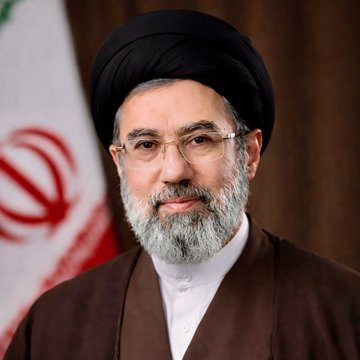
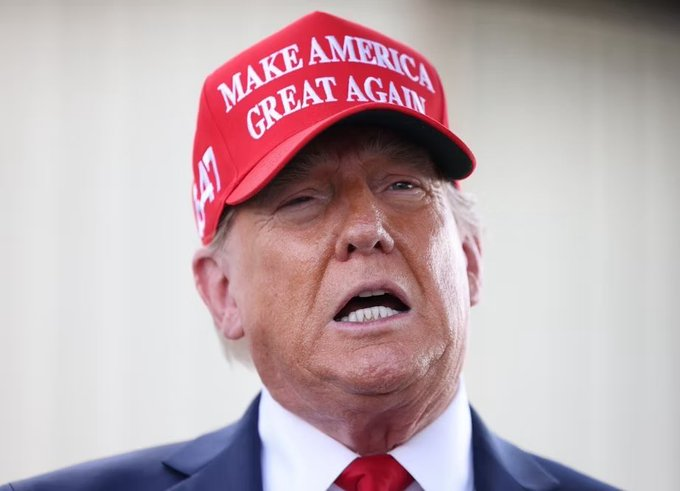
A Widening Disconnect Between Claims and Reality
Trump’s assertion that the US is now in contact with Tehran’s ultimate decision-makers comes as Iranian officials continue to publicly deny any direct engagement with the American delegation. Iran’s Foreign Minister Abbas Araghchi is in Islamabad as part of a regional tour, but Iranian state-linked media has insisted he has no plans to meet with US officials — a contradiction that directly undercuts Trump’s claims .
On paper, the overlap of diplomatic movements suggests momentum. In practice, it points to a diplomatic track struggling to define itself. While Washington describes the meetings as engagement with Iranian representatives, Tehran maintains that Araghchi’s visit is for consultations with Pakistan, not the United States .
The involvement of Pakistan as an intermediary further complicates the picture, suggesting that any communication that is taking place may be indirect — routed through mediators rather than conducted face-to-face .
Doubts About Who Can Approve a Deal
Behind Trump’s optimism lies a persistent concern shared by his own negotiators: even if contact is established, there may be no single Iranian figure empowered to approve any agreement.
According to an Axios report cited by Yeni Şafak, US negotiators worry that internal power struggles have left no one in Tehran with the authority to say “yes.” The report claims that Supreme Leader Mojtaba Khamenei is “barely communicating,” and that the Islamic Revolutionary Guard Corps (IRGC) and civilian negotiators are “openly at odds over strategy” .
The reported interior fracture is partly attributed to Israel’s assassination in March of Ali Larijani, the former secretary of Iran’s Supreme National Security Council. Larijani was regarded as a voice of stability and pragmatism — a figure capable of bridging divides between hardliners and policymakers. His replacement, Mohammad Bagher Zolghadr, is described as “not effective” at coordinating between the IRGC, civilian leadership, and the supreme leader .
According to Axios, Iran appeared to signal through Pakistani intermediaries on Monday that it was open to negotiations. By Tuesday morning, however, that openness had vanished, replaced by a demand that the US end its naval blockade of Iranian ports .
Who Is Actually Running Iran?
While Trump has repeatedly claimed that Iran’s leadership is “seriously fractured” and having a “hard time figuring out who their leader is,” multiple security sources paint a more complex picture .
According to ABC News, decision-making in Iran is no longer centralized around the supreme leader as it was before the war. Mojtaba Khamenei, who succeeded his father after the February 28 airstrike that killed former Supreme Leader Ali Khamenei, is reportedly in hiding and “hard to reach.” One security source says he is in “disarray” but nonetheless retains control .
Key members of this new, decentralized leadership structure laid out by multiple security sources are all bound by one common thread: the Islamic Revolutionary Guard Corps (IRGC) .
| Key Figure | Role | IRGC Connection |
|---|---|---|
| Mojtaba Khamenei | Supreme Leader | Fought with IRGC in Iran-Iraq War |
| Brig. Gen. Ahmad Vahidi | IRGC Commander-in-Chief | Current IRGC chief |
| Gen. Mohammad Bagher Zolghadr | Head of Supreme National Security Council | Former IRGC deputy commander |
| Gen. Yahya Rahim Safavi | Military adviser to Supreme Leader | Former IRGC chief commander |
| Mohammad Bagher Ghalibaf | Parliament Speaker, chief negotiator | Former IRGC commander-in-chief |
Sources: ABC News, multiple security sources
Mojtaba Khamenei’s health remains a subject of speculation after he was badly injured in the bombing that killed his father. Most sources agree he is conscious and involved in decision-making, though one security source told ABC News, “You can’t run a country like that. They’re in disarray, but they’re still in control. I wouldn’t say they’ve lost control” .
Iran Projects Unity Amid Internal Strains
Iranian officials, aware of Trump’s narrative, have rushed to present a unified front. An account attributed to Mojtaba Khamenei reposted part of his Nowruz message warning of “enemy psychological operations” aimed at undermining national unity .
President Masoud Pezeshkian and Parliament Speaker Mohammad Bagher Ghalibaf issued a joint statement declaring that there are no “hardliners” or “moderates” in Iran — an apparent response to Trump’s repeated claims of internal fractures .
“In Iran there are no ‘hardliners’ or ‘moderates’… We are all Iranians and revolutionaries. One God, one nation, one leader, and one path; the path to victory in Iran, which is more precious than life.” — President Masoud Pezeshkian and Parliament Speaker Mohammad Bagher Ghalibaf
Judiciary chief Gholamhossein Mohseni Ejei described such labels as “fabricated,” and senior military figures issued similar statements stressing allegiance to “one leader” in what appeared to be a coordinated response .
Despite the messaging, recent developments suggest internal disagreements remain. Conflicting signals emerged last week over maritime policy when Foreign Minister Abbas Araghchi announced the reopening of the Strait of Hormuz before the IRGC indicated renewed restrictions . Reports have also pointed to disputes over nuclear negotiations, with sources telling Iran International that disagreements between government-aligned officials and figures linked to Mojtaba Khamenei disrupted plans for talks in Islamabad .
‘Two Sides, Two Stories’
The contradictory accounts from Washington and Tehran leave a central question unresolved: who exactly is talking to whom?
White House Press Secretary Karoline Leavitt confirmed the envoys’ trip, stating that “the Iranians reached out, as the President called on them to do, and asked for this in-person conversation” .
But the Iranian news agency Tasnim dismissed these claims, stating that “American officials and the media have been fabricating stories about a new round of talks for more than 10 days.” It insisted that negotiations with the Americans “are not currently on the agenda” and that Araghchi will discuss with the Pakistani side “Iran’s considerations regarding ending the war” .
The Diplomatic Stakes
The conflicting signals come as a fragile ceasefire holds without a fixed expiration date . Vice President JD Vance, who led the first round of talks, is not traveling to Pakistan but remains on standby, underscoring the tentative nature of the process .
Trump’s claim that the US is now dealing with Iran’s “real power” appears aimed at projecting a breakthrough after earlier rounds of talks collapsed, in part due to concerns that negotiations were not reaching Tehran’s key decision-makers . But with Iran publicly rejecting the premise of direct engagement, the claim risks appearing detached from the reality on the ground.
For now, both sides appear to be describing entirely different realities: one claiming access to Iran’s top decision-makers, the other denying the talks are happening at all. In a process defined by proximity but not clarity, even the basic question of whether negotiations are taking place remains contested .
Frequently Asked Questions (FAQs)
Q1: Who exactly is “in charge” of Iran right now?
Decision-making in Iran is decentralized following the death of former Supreme Leader Ali Khamenei. A small group of senior figures — all with ties to the Islamic Revolutionary Guard Corps (IRGC) — appears to be running the country, with Supreme Leader Mojtaba Khamenei remaining in hiding and “hard to reach” .
Q2: Is Iran actually talking to the United States?
The US says yes; Iran says no. The White House has confirmed that envoys Witkoff and Kushner are traveling to Pakistan for talks with the Iranian delegation. Iranian officials maintain that Foreign Minister Araghchi is there for consultations with Pakistan, not the United States .
Q3: Why can’t Iran agree on a negotiating position?
Internal disagreements have reportedly centered on two key issues: uranium enrichment and the fate of Iran’s enriched uranium stockpile. The Trump administration believes Iran’s new supreme leader may not be giving clear instructions to his subordinates, leaving them to guess what he wants without specific guidance .
Q4: Has the ceasefire expired?
No. President Trump extended the ceasefire at Pakistan’s request. It now has no fixed expiration date, but remains fragile .
Q5: Is a deal actually possible?
According to US officials cited by Axios, a deal is still seen as achievable. However, US negotiators fear that internal power struggles have left no single Iranian figure “empowered to say yes,” and that even if an agreement is reached, it may not hold .
Stay informed with Reflecto News – Your trusted source for breaking diplomatic, intelligence, and geopolitical reporting. Subscribe for real-time updates on the US-Iran standoff, leadership changes, and global security developments.
Questions people ask
What is China's current share of global manufacturing?
China now accounts for twenty eight percent of global manufacturing. This industrial output exceeds the combined manufacturing production of the United States, Japan, and Germany, making China the leading global industrial power according to recent reports.
Why were Andrew Tate and Tristan Tate arrested in Miami?
Andrew Tate and his brother Tristan Tate were taken into custody in Miami by the United States Marshals Service. They face thirty eight new charges in the United Kingdom, including rape and child pornography offences, and prosecutors are seeking their extradition.
What warning did Moscow issue about oil prices?
Kirill Dmitriev, the Chief Executive of the Russian Direct Investment Fund, warned that a tsunami of skyrocketing oil prices is approaching. Moscow describes this potential energy shock as a major threat to global markets.
What political shift is projected for Benjamin Netanyahu's coalition?
Political polls project that Prime Minister Benjamin Netanyahu's coalition is on track to lose its majority in the upcoming October election. This projection indicates a potential political shift in Jerusalem.
Why did a Russian military aircraft land in Tehran?
A Russian airborne command aircraft, widely known as a doomsday plane, landed in Tehran. The arrival of the aircraft represents a high stakes show of support from Russia for Iran during a period of heightened regional tensions.
What did President Masoud Pezeshkian claim about the United States and Israel?
Iranian President Masoud Pezeshkian claimed that the United States and Israel failed in a forty eight hour plan to topple the Iranian government. He made these statements during a televised address marking two years since his inauguration.