Reflecto News is an online news platform covering major international political events, global economic developments, and security conflicts. The site provides updates on topics such as Chinese manufacturing dominance, Middle Eastern political tensions, and high profile legal arrests. Readers can access current articles organized by categories like World News, Iran, and USA.
Published on Reflecto News | World News | Defense & Geopolitics
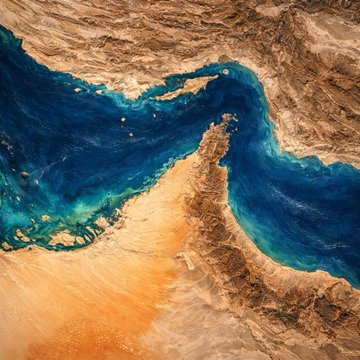
President Donald Trump has issued a direct order to the United States Navy to “shoot and kill” any Iranian crew members laying mines in the Strait of Hormuz, dramatically escalating the rules of engagement during a fragile ceasefire . The order, announced on Thursday via Truth Social, explicitly authorizes lethal force against personnel on Iranian vessels engaged in mining operations, moving beyond standard naval interdiction protocols.
“We have many of their mine laying boats. They’re all lying at the bottom of the sea. But our Navy has been ordered to shoot and kill any Iranian boat that is putting mines in the Strait of Hormuz. I am in no rush to have this war end.” — President Donald Trump
‘Shoot and Kill’: A Clear Authorization of Lethal Force
The order is significant because it moves the rules of engagement from “intercept and divert” to “identify and destroy” when it comes to specific threats. The phrase “shoot and kill” is unusually blunt for a presidential directive and implies a “target-first, question-later” posture regarding confirmed mine-laying activities.
Rules of Engagement Comparison:
| Action | Previous ROE | New ROE (Trump Order) |
|---|---|---|
| Intercepting tankers | Stop, board, divert, or capture | Unchanged |
| Approaching fast-attack craft | Hail, warn, disable | Unchanged (until this order) |
| Laying mines (observed) | Hail, warn, attempt to stop | Shoot and kill |
| Laying mines (unobserved) | N/A (void of conflict) | Shoot and kill |
Sources: Multiple news reports
The explicit reference to laying mines is crucial. Iran has a large stockpile of naval mines and has used them in the past to threaten the strategic waterway. By pre-authorizing lethal force, Trump is signaling that the US will not tolerate any attempt to re-seed the strait with mines after previous clearance operations .
‘I Am in No Rush to Have This War End’
The president’s statement that he is “in no rush to have this war end” is a significant shift in tone from calls for immediate diplomatic resolution. The comment suggests that the White House believes continued military and economic pressure will eventually force Tehran to capitulate .
This aligns with the administration’s “maximum pressure” strategy, which has included a naval blockade, sanctions, and now escalated rules of engagement. The language fits the president’s broader pattern of using aggressive rhetoric to signal resolve while diplomatic channels remain technically open.
The Mining Threat: Iran’s Asymmetric Weapon
Naval mines are one of Iran’s most effective asymmetric weapons. They are relatively inexpensive, difficult to detect, and can paralyze commercial shipping without requiring a direct military confrontation.
Iran’s mine warfare capability:
| Aspect | Details |
|---|---|
| Stockpile estimate | 2,000-6,000 naval mines |
| Deployment method | Small boats, submarines, aircraft |
| Types | Bottom, moored, drifting |
| Past use | 1980s “Tanker War,” 2019 Gulf incidents |
| Current threat | Re-mining of strait after clearance ops |
Sources: US intelligence, multiple reports
Trump ordered the mining threat neutralized after US and Israeli airstrikes destroyed much of Iran’s larger naval vessels, leaving the fast-attack boats as the primary delivery system for mines .
The Ceasefire Contradiction
The escalation in rhetoric and rules of engagement raises questions about the viability of the fragile ceasefire brokered by Pakistan.
| Ceasefare Element | Status |
|---|---|
| Formal ceasefire | Extended, but fragile |
| US naval blockade | Active |
| Iran refusing talks | Refuses delegation until blockade lifted |
| US-Iran direct military exchanges | Paused (formal) |
| US rules of engagement | Escalated (shoot and kill) |
Sources: Multiple news reports
The US naval blockade of Iranian ports remains in place, and President Trump is clearly not easing pressure. Trump’s stated timeline of being in “no rush” suggests the ceasefire may continue indefinitely in its current form—a state of neither war nor peace.
‘Cat-and-Mouse’: The Maritime Chess Game
Trump’s order escalates the “cat-and-mouse” game in the Gulf. The US has been deliberately intercepting Iranian tankers far from the strait in open ocean waters to avoid minefields.
The new rules of engagement signal that the “mouse” (Iranian mining boats) has been put on notice: if caught, they will be killed, not just chased away.
What Comes Next
The coming days will test whether this order changes Iranian behavior or triggers a direct confrontation in the narrow waters of the Strait of Hormuz.
| Scenario | Likelihood | Implication |
|---|---|---|
| Iran avoids mining the strait | Likely (deterrence) | Status quo continues |
| Iran tests the order with a decoy | Possible | Risk of miscalculation |
| Iran retaliates via proxies | Likely | Hezbollah or Houthi escalation |
| Direct US-Iran clash | Elevated | Immediate spike in oil prices |
Trump’s order is a classic “escalate to de-escalate” move. The question is whether Tehran will blink—or test whether the president’s threat is real.
Frequently Asked Questions (FAQs)
1. What did President Trump order the Navy to do?
Trump ordered the US Navy to “shoot and kill” any Iranian boat crew members caught laying mines in the Strait of Hormuz.
2. Is this a formal change to the rules of engagement?
The order appears to be a direct presidential directive, which would hold the force of an order to the US military. It explicitly authorizes lethal force against Iranian personnel observed laying mines.
3. Is the US still enforcing a naval blockade?
Yes. The US naval blockade of Iranian ports remains in place and is being enforced by more than 10,000 troops, 17 warships, and 100+ aircraft.
4. Will this affect the ceasefire?
The formal ceasefire remains in effect, but the order escalates the rules of engagement, making a direct military confrontation more likely.
5. Does Trump want peace or war?
Trump stated he is “in no rush to have this war end.” His administration is using maximum pressure and now escalated rules of engagement to force Iranian capitulation.
6. What are Iranian ‘mine laying boats’?
Iran operates small, fast-attack boats that can deploy naval mines. These vessels are difficult to detect and are a key part of Iran’s asymmetric naval strategy.
7. Is Iran currently laying mines in the strait?
US minesweepers have been clearing the strait since early April. Trump’s order is a proactive deterrent, likely based on intelligence that Iran may attempt to re-mine the waterway.
Stay informed with Reflecto News – Your trusted source for breaking defense, intelligence, and geopolitical reporting. Subscribe for real-time updates on the US-Iran standoff, military operations, and global security developments.
Questions people ask
What is China's current share of global manufacturing?
China now accounts for twenty eight percent of global manufacturing. This industrial output exceeds the combined manufacturing production of the United States, Japan, and Germany, making China the leading global industrial power according to recent reports.
Why were Andrew Tate and Tristan Tate arrested in Miami?
Andrew Tate and his brother Tristan Tate were taken into custody in Miami by the United States Marshals Service. They face thirty eight new charges in the United Kingdom, including rape and child pornography offences, and prosecutors are seeking their extradition.
What warning did Moscow issue about oil prices?
Kirill Dmitriev, the Chief Executive of the Russian Direct Investment Fund, warned that a tsunami of skyrocketing oil prices is approaching. Moscow describes this potential energy shock as a major threat to global markets.
What political shift is projected for Benjamin Netanyahu's coalition?
Political polls project that Prime Minister Benjamin Netanyahu's coalition is on track to lose its majority in the upcoming October election. This projection indicates a potential political shift in Jerusalem.
Why did a Russian military aircraft land in Tehran?
A Russian airborne command aircraft, widely known as a doomsday plane, landed in Tehran. The arrival of the aircraft represents a high stakes show of support from Russia for Iran during a period of heightened regional tensions.
What did President Masoud Pezeshkian claim about the United States and Israel?
Iranian President Masoud Pezeshkian claimed that the United States and Israel failed in a forty eight hour plan to topple the Iranian government. He made these statements during a televised address marking two years since his inauguration.