Reflecto News is an online news platform covering major international political events, global economic developments, and security conflicts. The site provides updates on topics such as Chinese manufacturing dominance, Middle Eastern political tensions, and high profile legal arrests. Readers can access current articles organized by categories like World News, Iran, and USA.

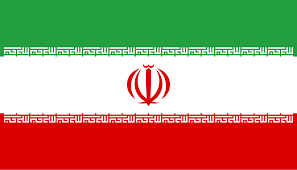
WASHINGTON — In a pair of rapid-fire announcements on Wednesday, April 1, 2026, President Donald Trump provided the most definitive timeline yet for the conclusion of Operation Epic Fury, stating that U.S. forces will “leave Iran within two to three weeks.” Simultaneously, the President sought to de-escalate regional fears by clarifying that “regime change” was never an official objective of the American military campaign.
The statements arrive just five days before the President’s self-imposed April 6 deadline for a regional settlement, signaling a shift from “Maximum Pressure” to an active “Exit Strategy.”
The Two-Week Countdown
Speaking to reporters at the White House, President Trump projected a sense of mission completion following the massive overnight air strikes on Tehran, Isfahan, and Zanjan.
- The Timeline: “We’ve done a tremendous job. The military has been incredible,” Trump stated. “I think you’re going to see us leaving Iran within two to three weeks. We’ve hit what we needed to hit.”
- The “Finish Line”: The President suggested that the degradation of Iran’s aviation, command hubs, and energy grid has reached a point where a long-term occupation or continued bombing is no longer necessary to achieve U.S. security goals.
- Economic Relief: Markets responded instantly to the “three-week” window, with WTI Crude dropping below $100/barrel for the first time since the start of the conflict, as traders anticipate a reopening of the Strait of Hormuz.
No “Regime Change” Policy
In a significant diplomatic pivot, President Trump explicitly distanced his administration from the “regime change” rhetoric often associated with his more hawkish advisors.
- Strategic Clarity: “Regime change was not a goal for the United States. It’s not our job to tell them how to run their country,” Trump clarified. “Our goal was to stop the terrorism, stop the nuclear threat, and protect our interests. We’ve done that.”
- Addressing the “Butcher” Precedent: The President framed the February 28 “elimination” of high-ranking Iranian officials not as a coup attempt, but as a “surgical strike” against specific threats to American lives.
- The Sovereignty Signal: This clarification appears aimed at Foreign Minister Abbas Araghchi and President Masoud Pezeshkian, who have both demanded “security guarantees” that the U.S. will not seek to overthrow the Islamic Republic as a condition for ending the war.
The “Islamabad Track” and the Deadline
Despite the withdrawal timeline, the President maintained his April 6 deadline for a formal agreement.
| Policy Pillar | Status (April 1, 2026) |
| Withdrawal Window | 14 to 21 Days |
| Official Goal | Security & Denuclearization (NOT Regime Change) |
| Peace Framework | U.S. 15-Point Plan / Islamabad 5-Point Plan |
| Regional Impact | Oil Prices dropping; Shipping lanes under watch |
| Final Deadline | Monday, April 6, 2026 |
Analysis: A Bridge to a Deal?
By explicitly ruling out regime change and setting a firm departure date, President Trump is offering the Iranian leadership a “face-saving” exit. These comments directly address Araghchi’s claim that the “trust level is zero,” providing a public assurance that the U.S. is not seeking a permanent foothold in Iran.
However, the “two to three weeks” timeline also serves as a final warning. If a deal is not reached by April 6, the “leaving” phase could be preceded by a final, even more intense wave of strikes—a “closing argument” of military force. With thousands of U.S. troops still arriving in the Gulf, the administration is making it clear: the U.S. is ready to leave, but only after it is satisfied that the “job is finished.”
Questions people ask
What is China's current share of global manufacturing?
China now accounts for twenty eight percent of global manufacturing. This industrial output exceeds the combined manufacturing production of the United States, Japan, and Germany, making China the leading global industrial power according to recent reports.
Why were Andrew Tate and Tristan Tate arrested in Miami?
Andrew Tate and his brother Tristan Tate were taken into custody in Miami by the United States Marshals Service. They face thirty eight new charges in the United Kingdom, including rape and child pornography offences, and prosecutors are seeking their extradition.
What warning did Moscow issue about oil prices?
Kirill Dmitriev, the Chief Executive of the Russian Direct Investment Fund, warned that a tsunami of skyrocketing oil prices is approaching. Moscow describes this potential energy shock as a major threat to global markets.
What political shift is projected for Benjamin Netanyahu's coalition?
Political polls project that Prime Minister Benjamin Netanyahu's coalition is on track to lose its majority in the upcoming October election. This projection indicates a potential political shift in Jerusalem.
Why did a Russian military aircraft land in Tehran?
A Russian airborne command aircraft, widely known as a doomsday plane, landed in Tehran. The arrival of the aircraft represents a high stakes show of support from Russia for Iran during a period of heightened regional tensions.
What did President Masoud Pezeshkian claim about the United States and Israel?
Iranian President Masoud Pezeshkian claimed that the United States and Israel failed in a forty eight hour plan to topple the Iranian government. He made these statements during a televised address marking two years since his inauguration.