Reflecto News is an online news platform covering major international political events, global economic developments, and security conflicts. The site provides updates on topics such as Chinese manufacturing dominance, Middle Eastern political tensions, and high profile legal arrests. Readers can access current articles organized by categories like World News, Iran, and USA.
Published on Reflecto News | World News | Energy Security & Geopolitics
Saudi Arabia is urgently pressing the United States to lift its newly imposed naval blockade of the Strait of Hormuz and return to negotiations with Iran, fearing that the aggressive move could trigger a wider regional escalation that would directly threaten the Kingdom’s alternative oil export routes through the Red Sea . Officials in Riyadh have warned the Trump administration that Iran could retaliate by disrupting the Bab al-Mandeb Strait, a critical chokepoint for global trade and the gateway to the Suez Canal .
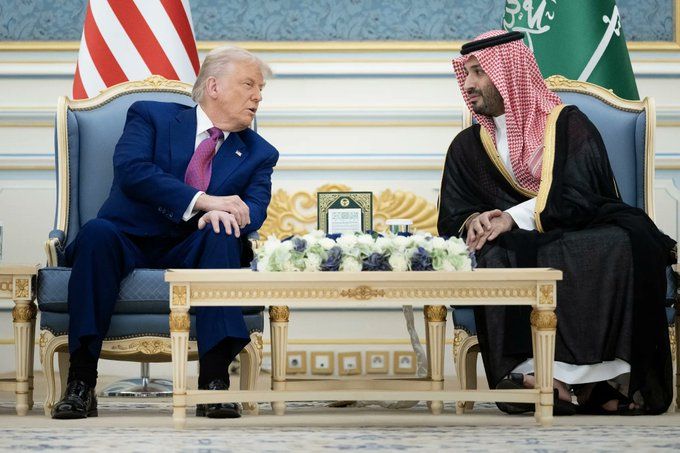
“Saudi has warned that Iran could retaliate by blocking the Bab al-Mandeb strait, a Red Sea waterway crucial for the kingdom’s remaining oil exports.” — WSJ report citing Gulf officials
The Red Sea “Second Card”
Despite the closure of the Strait of Hormuz, Saudi Arabia has managed to keep its oil flowing by rerouting crude through the East-West Petroline pipeline to the Red Sea port of Yanbu, restoring exports to approximately 7 million barrels per day . However, this alternative route is entirely dependent on safe passage through the Bab al-Mandeb Strait—the narrow waterway between Yemen and the Horn of Africa connecting the Red Sea to the Gulf of Aden.
Before the war in Gaza, nearly 9.3 million barrels of oil passed through Bab al-Mandeb daily . The Houthi movement, which controls large swaths of the Yemeni coastline along this strategic strait, has already demonstrated a formidable capacity to disrupt Red Sea shipping using missiles and drones .
Iran’s Leverage: The Houthi Factor
Tehran has made clear that it views Bab al-Mandeb with the same strategic importance as the Strait of Hormuz. Ali Akbar Velayati, a foreign policy adviser to Iran’s Supreme Leader, warned on social media that “the Resistance Front’s unified command views the Bab al-Mandeb Strait just like the Strait of Hormuz” .
Gulf officials told the WSJ that Iran is pressuring its Houthi allies to escalate their involvement in the conflict. While Saudi energy officials have received assurances from the Houthis that they will not target Saudi vessels passing through the strait, Riyadh believes these assurances are fragile . If Iran exerts further pressure, the Houthis could begin attacking ships again or even start charging transit fees for vessels passing through the waterway .
“This would be a way for Iran to escalate its response: ‘If you restrict our oil exports, we will disrupt your exports through Yanbu.'” — Erik Meyersson, SEB
Saudi Arabia’s Strategic Dilemma
Riyadh finds itself in an impossible position. Early in the war, reports indicated that Crown Prince Mohammed bin Salman had urged President Trump to continue military operations against Iran, viewing the conflict as an opportunity to degrade a regional rival . However, as the war has dragged on and the risks to Saudi infrastructure have multiplied, the Kingdom has shifted toward de-escalation.
Key Drivers of Saudi Arabia’s Urgency:
- Dependency on Red Sea Route: The Bab al-Mandeb is the only viable alternative to the blocked Strait of Hormuz for Saudi oil.
- Credible Threat: Iran has the proven ability to disrupt this route via its Houthi proxies.
- Economic Vulnerability: The Kingdom cannot afford a prolonged disruption of its primary source of revenue.
- Diplomatic Isolation: Riyadh fears being caught in the crossfire of a U.S.-Iran war it did not choose.
The “Two Chokehold” Nightmare
The situation presents a worst-case scenario for global energy markets: the simultaneous closure of both the Strait of Hormuz (in the Persian Gulf) and the Bab al-Mandeb Strait (in the Red Sea).
| Waterway | Significance | Threat Level |
|---|---|---|
| Strait of Hormuz | 20% of global oil passes through; currently blockaded by US | Active blockade |
| Bab al-Mandeb | ~9.3 million bpd pre-war; critical for Saudi Red Sea exports | Elevated risk of Houthi escalation |
If Iran successfully pressures the Houthis to shut down the Red Sea lane, Saudi Arabia’s ability to export oil would be effectively paralyzed, sending global energy prices spiraling.
What Comes Next
As the U.S. naval blockade enters its second day, the diplomatic battle is intensifying behind the scenes. Saudi Arabia is leading a Gulf effort to bring Washington and Tehran back to the table . Despite public hostility, regional officials indicate both sides remain engaged with mediators and are open to talks if conditions allow .
The White House has so far resisted pressure, stating that “President Trump has made clear that he wants the Strait of Hormuz fully opened to facilitate the free flow of energy” . However, the strategic reality remains: a victory in the Gulf that comes at the cost of losing the Red Sea is no victory at all for the world’s largest oil exporter.
Frequently Asked Questions (FAQs)
1. Why is Saudi Arabia urging the US to end the blockade?
Saudi Arabia fears that the blockade will provoke Iran to retaliate by closing the Bab al-Mandeb Strait, which would cut off the Kingdom’s alternative oil export route through the Red Sea .
2. What is the Bab al-Mandeb Strait?
It is the narrow waterway between Yemen and the Horn of Africa that connects the Red Sea to the Gulf of Aden. It is a critical chokepoint for global trade, leading to the Suez Canal .
3. How has Saudi Arabia adapted to the closure of the Strait of Hormuz?
Saudi Arabia has rerouted its crude oil exports through the Petroline East-West Pipeline to the Red Sea port of Yanbu, maintaining exports of about 7 million barrels per day .
4. What role do the Houthis play in this threat?
The Houthis control large portions of the Yemeni coastline along the Bab al-Mandeb. They are allied with Iran and have previously used missiles and drones to disrupt Red Sea shipping .
5. Is there any chance of a diplomatic resolution?
Yes. Despite the hardening of public positions, regional officials say both the US and Iran remain engaged with mediators and are open to negotiations if conditions allow .
Stay informed with Reflecto News – Your trusted source for breaking energy security, diplomatic, and geopolitical intelligence. Subscribe for real-time updates on the Strait of Hormuz crisis, US-Iran tensions, and global energy markets.
Questions people ask
What is China's current share of global manufacturing?
China now accounts for twenty eight percent of global manufacturing. This industrial output exceeds the combined manufacturing production of the United States, Japan, and Germany, making China the leading global industrial power according to recent reports.
Why were Andrew Tate and Tristan Tate arrested in Miami?
Andrew Tate and his brother Tristan Tate were taken into custody in Miami by the United States Marshals Service. They face thirty eight new charges in the United Kingdom, including rape and child pornography offences, and prosecutors are seeking their extradition.
What warning did Moscow issue about oil prices?
Kirill Dmitriev, the Chief Executive of the Russian Direct Investment Fund, warned that a tsunami of skyrocketing oil prices is approaching. Moscow describes this potential energy shock as a major threat to global markets.
What political shift is projected for Benjamin Netanyahu's coalition?
Political polls project that Prime Minister Benjamin Netanyahu's coalition is on track to lose its majority in the upcoming October election. This projection indicates a potential political shift in Jerusalem.
Why did a Russian military aircraft land in Tehran?
A Russian airborne command aircraft, widely known as a doomsday plane, landed in Tehran. The arrival of the aircraft represents a high stakes show of support from Russia for Iran during a period of heightened regional tensions.
What did President Masoud Pezeshkian claim about the United States and Israel?
Iranian President Masoud Pezeshkian claimed that the United States and Israel failed in a forty eight hour plan to topple the Iranian government. He made these statements during a televised address marking two years since his inauguration.