Reflecto News is an online news platform covering major international political events, global economic developments, and security conflicts. The site provides updates on topics such as Chinese manufacturing dominance, Middle Eastern political tensions, and high profile legal arrests. Readers can access current articles organized by categories like World News, Iran, and USA.
Published on Reflecto News | World News | Nuclear Diplomacy & Geopolitics
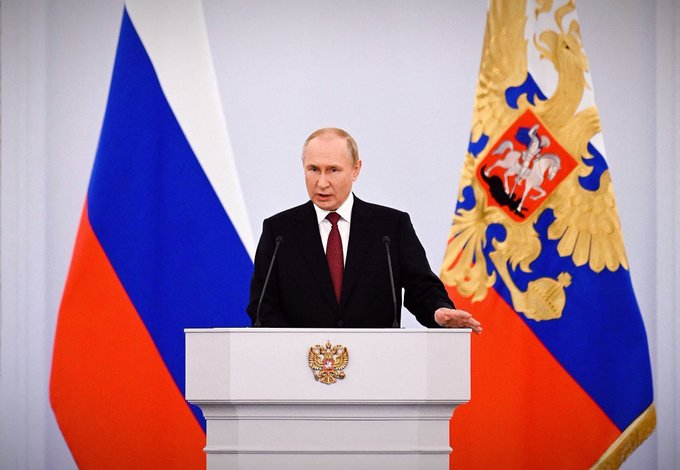
The Kremlin has formally reiterated its readiness to accept Iran’s stockpile of enriched uranium as part of a future peace agreement between Tehran and Washington, a move that could potentially break the nuclear deadlock that has stalled negotiations following the collapse of high-stakes talks in Islamabad .
Kremlin spokesman Dmitry Peskov confirmed on Monday that President Vladimir Putin’s proposal to host Iran’s enriched uranium remains on the table, though it has yet to be acted upon by either party .
“This proposal was made by President Putin in conversations with both the United States and regional states. The offer still stands, but has not been acted upon.” — Dmitry Peskov, Kremlin Spokesman
The Proposal: A Third-Party Custodian
Russia, which possesses the world’s largest stockpile of nuclear weapons, has repeatedly offered to serve as the custodian for Iran’s enriched uranium as part of any comprehensive peace deal . The proposal is designed to address a key US demand—the removal of highly enriched uranium from Iranian territory—while potentially allowing Tehran to maintain some form of nuclear cooperation with Moscow.
Key aspects of the Russian proposal:
- Custodianship: Russia would accept Iran’s enriched uranium for storage on its territory
- Bilateral or trilateral format: Rosatom chief Alexei Likhachev has suggested the arrangement could involve a third interested party
- Compensation mechanisms: Russia could compensate Iran with natural uranium, cash, or other supplies
- IAEA monitoring: Any transfer would be conducted under International Atomic Energy Agency supervision
The offer comes as the US and Iran remain deadlocked over the fate of Tehran’s nuclear program following the collapse of nearly 21 hours of direct negotiations in Islamabad over the weekend .
What Iran Currently Possesses
According to reports cited by Russian news agencies, the proposal involves approximately 450 kilograms of uranium enriched to 60 percent . From a technical perspective, this material is of significant concern to Western intelligence agencies, as it can be further enriched to 90 percent weapons-grade level in a matter of weeks—enough material for over ten nuclear devices .
Iran’s enriched uranium stockpile:
| Enrichment Level | Estimated Quantity | Weapon Potential |
|---|---|---|
| 60% | ~400-450 kg | Can be enriched to 90% in weeks |
| 20% | ~1,000 kg | Further enrichment required |
| 3.67% | ~8,500 kg | Used for civilian power |
Sources: IAEA, US intelligence assessments
The Stalled Nuclear Negotiations
The Russian offer comes after US-Iran talks in Islamabad failed to bridge the gap on several core issues, most notably the duration of any nuclear pause and the fate of Iran’s existing stockpile.
| Nuclear Issue | US Position | Iranian Position |
|---|---|---|
| Enrichment suspension | 20 years | 5 years (offered) |
| Enriched uranium stockpile | Ship out of Iran | Keep, but dilute |
| Nuclear sites | Dismantle | Maintain for civilian use |
| Verification | Full IAEA access | Limited |
Sources: The New York Times, multiple news reports
President Donald Trump has blamed Iran’s “nuclear ambitions” for the failure of the talks, stating that Tehran is unwilling to give up its nuclear program . Vice President JD Vance, who led the US delegation, said the talks “did make some progress” but that Iran must take the next step .
Russia’s Broader Mediation Role
Moscow has positioned itself as a potential mediator in the conflict, with Putin holding a phone call with Iranian President Masoud Pezeshkian on Saturday to discuss peace efforts . Russia has also been critical of the US naval blockade of the Strait of Hormuz, with Peskov stating that “such actions will likely continue to negatively impact international markets” .
Russia’s diplomatic assets in the Iran crisis:
- World’s largest nuclear weapons stockpile (credibility as custodian)
- Long-standing nuclear cooperation with Iran (Bushehr plant)
- Diplomatic relations with both Washington and Tehran
- Permanent seat on the UN Security Council
- Repeated offers of mediation
The Bushehr Factor: Russian Personnel Evacuated
The uranium offer coincides with Russia’s decision to evacuate almost all of its staff from Iran’s Bushehr nuclear power plant, the country’s only operational nuclear facility. According to Rosatom chief Alexei Likhachev, 108 Russian employees have been evacuated, leaving just 20 personnel to maintain critical safety systems .
Russia has warned that continued attacks near the facility risk a “radiological disaster more devastating than Chernobyl” . The plant’s area has been struck at least four times during the war, with one attack killing a security guard at the facility .
The Bushehr plant is equipped with a 1,000-megawatt reactor built and operated with Russian assistance. Russia was also in the process of constructing additional reactors at the site when the war broke out .
What Comes Next: A Potential Path Forward
The Russian proposal offers a potential pathway to break the nuclear deadlock. By accepting Iran’s enriched uranium, Moscow could provide Washington with the assurance that the material will not be used for weapons purposes, while allowing Tehran to avoid the humiliation of surrendering its nuclear assets to a Western power.
Potential scenarios for uranium transfer:
| Scenario | Likelihood | Implications |
|---|---|---|
| US accepts Russian custodianship | Possible | Could break nuclear deadlock |
| Iran rejects transfer | Likely | Tehran may view as surrender |
| Multilateral arrangement with IAEA | Possible | Would require extensive verification |
| Transfer linked to sanctions relief | Possible | Could be part of broader deal |
However, significant obstacles remain. Iran has consistently refused to ship its enriched uranium out of the country, and any transfer to Russia would require Tehran to accept a level of foreign control over its nuclear materials that it has historically resisted.
Moreover, the US has not indicated whether it would accept Russia as a custodian for Iran’s uranium. The Trump administration has thus far insisted on the removal of all highly enriched material from Iran without specifying a destination.
For now, the Russian offer remains on the table—an unexplored diplomatic option in a crisis that has already claimed thousands of lives and disrupted global energy markets .
Frequently Asked Questions (FAQs)
1. What exactly is Russia offering to do with Iran’s enriched uranium?
Russia has offered to accept Iran’s stockpile of enriched uranium for storage on its territory as part of a future peace deal between Tehran and Washington. Rosatom has indicated it could compensate Iran with natural uranium, cash, or other supplies in exchange .
2. How much uranium is involved in the proposal?
According to reports cited by Russian news agencies, the proposal involves approximately 450 kilograms of uranium enriched to 60 percent—material that could be further enriched to weapons-grade level in a matter of weeks .
3. Has the US responded to Russia’s offer?
The Trump administration has not officially responded to Russia’s uranium proposal. The US has insisted on the removal of all highly enriched material from Iran but has not specified a destination .
4. Is Iran likely to accept Russia’s offer?
Iran has historically refused to ship its enriched uranium out of the country. However, transferring the material to Russia—a country with which Tehran maintains close ties—may be more palatable than surrendering it to Western powers.
5. What is the current status of the Bushehr nuclear plant?
Russia has evacuated almost all of its personnel from the Bushehr plant due to the risk of airstrikes. Only 20 Russian staff remain to maintain critical safety systems .
6. What are the main obstacles to a nuclear deal?
The US demands a 20-year suspension of Iran’s enrichment activities and the removal of all highly enriched uranium from the country. Iran has offered a five-year pause and has refused to ship its uranium stockpile out of the country .
Stay informed with Reflecto News – Your trusted source for breaking nuclear security and diplomatic intelligence. Subscribe for real-time updates on the US-Iran nuclear standoff, Russian mediation efforts, and global security developments.
Questions people ask
What is China's current share of global manufacturing?
China now accounts for twenty eight percent of global manufacturing. This industrial output exceeds the combined manufacturing production of the United States, Japan, and Germany, making China the leading global industrial power according to recent reports.
Why were Andrew Tate and Tristan Tate arrested in Miami?
Andrew Tate and his brother Tristan Tate were taken into custody in Miami by the United States Marshals Service. They face thirty eight new charges in the United Kingdom, including rape and child pornography offences, and prosecutors are seeking their extradition.
What warning did Moscow issue about oil prices?
Kirill Dmitriev, the Chief Executive of the Russian Direct Investment Fund, warned that a tsunami of skyrocketing oil prices is approaching. Moscow describes this potential energy shock as a major threat to global markets.
What political shift is projected for Benjamin Netanyahu's coalition?
Political polls project that Prime Minister Benjamin Netanyahu's coalition is on track to lose its majority in the upcoming October election. This projection indicates a potential political shift in Jerusalem.
Why did a Russian military aircraft land in Tehran?
A Russian airborne command aircraft, widely known as a doomsday plane, landed in Tehran. The arrival of the aircraft represents a high stakes show of support from Russia for Iran during a period of heightened regional tensions.
What did President Masoud Pezeshkian claim about the United States and Israel?
Iranian President Masoud Pezeshkian claimed that the United States and Israel failed in a forty eight hour plan to topple the Iranian government. He made these statements during a televised address marking two years since his inauguration.