Reflecto News is an online news platform covering major international political events, global economic developments, and security conflicts. The site provides updates on topics such as Chinese manufacturing dominance, Middle Eastern political tensions, and high profile legal arrests. Readers can access current articles organized by categories like World News, Iran, and USA.
Published on Reflecto News | World News | Nuclear Security & Geopolitics
Russia has issued a series of increasingly sharp warnings to Israel regarding its airstrikes near Iran’s Bushehr nuclear power plant, cautioning that the attacks are endangering Russian personnel and risk triggering a “major nuclear disaster” that would be “more destructive than Chernobyl” . The warnings, which culminated in the near-complete evacuation of Russian specialists from the facility, have pushed diplomatic relations between Moscow and Jerusalem to a “boiling point” .
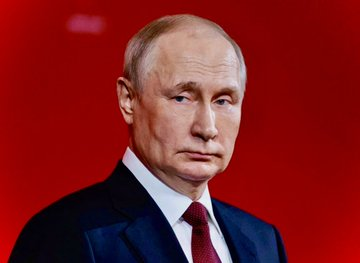
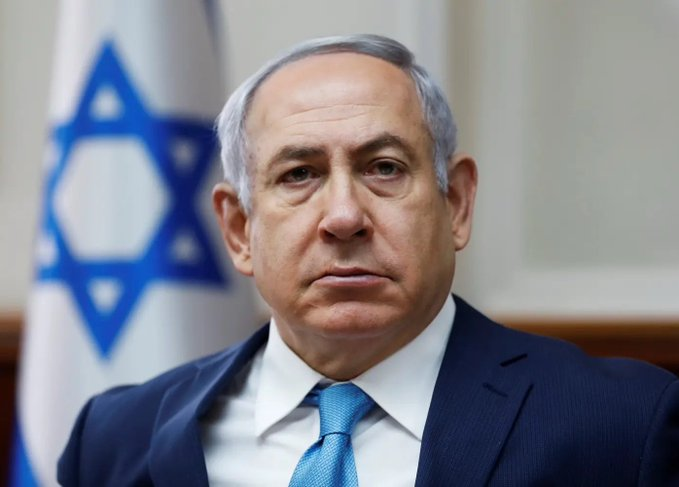
‘A Dangerous Game’: Russia’s Blunt Warning
Israeli officials reportedly received multiple urgent communications from the Russian Foreign Ministry and the Russian embassy in Israel over several weeks. The tone shifted from diplomatic concern to outright condemnation following a specific Israeli airstrike that occurred dangerously close to Russian personnel at the facility .
According to a formal message obtained by Israeli media, a senior Kremlin official delivered a blunt warning to a top Israeli counterpart :
“You are placing our people in danger. This is a dangerous game that is likely to cause a major nuclear disaster, with grave implications for the Middle East. We call on you to stop.”
The ‘Blind Spot’ Strike
Israeli defense sources reportedly acknowledged that the IDF was unaware of the presence of Russian citizens and experts at the specific location during the strike in question . While Israeli officials have since “sharpened protocols” and clarified that there was no intent to harm Russian envoys, the incident has caused significant damage to the strategic coordination between the two powers .
According to The Times of Israel, heeding the warnings, the IDF changed its operating procedures in the area, clarified that it was unaware of the dangers, and said it had no intention of harming any Russian personnel .
Evacuation of Russian Personnel
The tensions have resulted in a significant operational shift on the ground. Rosatom chief Alexei Likhachev announced that the state nuclear corporation has begun evacuating nearly all of its staff from the Bushehr facility .
- Final Wave: On April 13, 108 Russian employees were evacuated, leaving only 20 personnel behind to maintain critical safety systems .
- Previous Evacuations: This followed the removal of 198 staff on April 4 and hundreds more in prior waves, totaling approximately 600 personnel .
The evacuation represents a physical manifestation of Moscow’s loss of patience. By pulling its specialists out, Russia is signaling that it no longer considers the site safe, or its relationship with Israel stable enough to guarantee the safety of its citizens .
The Specter of a Nuclear Disaster
Russia has framed its warnings not merely as a matter of bilateral relations but as a grave threat to regional and global safety.
- Official Condemnation: The Russian Foreign Ministry has repeatedly slammed the “evil” US-Israeli attacks, urging a cessation of hostilities on Iranian nuclear facilities immediately .
- Chernobyl Comparison: Moscow has warned that continued attacks could cause a radioactive disaster “more destructive than Chernobyl,” with devastating implications for the Persian Gulf region and adjacent parts of Eurasia .
- UN Call: Russia has urged the IAEA to speak more clearly about the seriousness of the threat that Iran’s adversaries are trying to ignore .
Diplomatic Fallout
The friction highlights the precarious nature of the ongoing conflict, which has evolved from a regional skirmish into a high-stakes standoff involving global superpowers .
Russian Foreign Minister Sergey Lavrov and his Iranian counterpart Abbas Araghchi agreed on the need to stop the “reckless attacks” on the Bushehr Nuclear Power Plant . In a statement, Lavrov’s ministry emphasized “the inadmissibility of creating threats to the lives and health” of the plant’s personnel and “the risks of a radioactive disaster for the entire region” .
“The growing number of reckless attacks on the Bushehr Nuclear Power Plant has been a matter of special concern. These attacks have resulted in civilian casualties. A shadow of radioactive disaster more destructive than Chernobyl is hanging over the Persian Gulf region.” — Russian Foreign Ministry Statement
As the Russian experts depart and the rhetoric from Moscow intensifies, Jerusalem faces a narrowing corridor of operation. The warning from the Kremlin is clear: Israel is not just fighting Tehran; it is risking its vital, yet fragile, standing with Moscow . The International Atomic Energy Agency (IAEA) has voiced “deep concern” at the strikes, calling for “maximum military restraint” to avoid a nuclear accident .
Frequently Asked Questions (FAQs)
1. Why is Russia warning Israel about the Bushehr nuclear plant?
Russia is warning Israel because Israeli airstrikes near the Bushehr facility have endangered Russian personnel working at the site. Moscow also fears that continued strikes could cause a catastrophic nuclear disaster, warning of a potential event “more destructive than Chernobyl” .
2. Has Israel responded to Russia’s warnings?
Yes. According to reports, Israel responded that it was unaware of the dangers to Russian personnel, and it subsequently changed its operating procedures in the area to avoid future incidents .
3. Has Russia evacuated its staff from the Bushehr plant?
Yes. Russia has evacuated nearly all of its staff. The final wave saw 108 employees leave, leaving only 20 skeleton crew members behind to maintain the equipment. Approximately 600 personnel have been removed in total .
4. What is the current status of the Bushehr nuclear plant?
The Bushehr plant is Iran’s only operational nuclear power facility. It was built with Russian assistance and has been operating with Russian support. While the plant itself has not been damaged, the area surrounding it has been struck multiple times during the war .
5. What is the risk of a nuclear disaster?
Russia has warned that the risk of a radiological disaster is “increasing daily.” Officials warn that a major strike could release radioactive material, causing an environmental catastrophe worse than Chernobyl, which would devastate the Persian Gulf region and beyond .
Stay informed with Reflecto News – Your trusted source for breaking nuclear security and geopolitical intelligence. Subscribe for real-time updates on the Iran war, Bushehr nuclear tensions, and global security developments.
Questions people ask
What is China's current share of global manufacturing?
China now accounts for twenty eight percent of global manufacturing. This industrial output exceeds the combined manufacturing production of the United States, Japan, and Germany, making China the leading global industrial power according to recent reports.
Why were Andrew Tate and Tristan Tate arrested in Miami?
Andrew Tate and his brother Tristan Tate were taken into custody in Miami by the United States Marshals Service. They face thirty eight new charges in the United Kingdom, including rape and child pornography offences, and prosecutors are seeking their extradition.
What warning did Moscow issue about oil prices?
Kirill Dmitriev, the Chief Executive of the Russian Direct Investment Fund, warned that a tsunami of skyrocketing oil prices is approaching. Moscow describes this potential energy shock as a major threat to global markets.
What political shift is projected for Benjamin Netanyahu's coalition?
Political polls project that Prime Minister Benjamin Netanyahu's coalition is on track to lose its majority in the upcoming October election. This projection indicates a potential political shift in Jerusalem.
Why did a Russian military aircraft land in Tehran?
A Russian airborne command aircraft, widely known as a doomsday plane, landed in Tehran. The arrival of the aircraft represents a high stakes show of support from Russia for Iran during a period of heightened regional tensions.
What did President Masoud Pezeshkian claim about the United States and Israel?
Iranian President Masoud Pezeshkian claimed that the United States and Israel failed in a forty eight hour plan to topple the Iranian government. He made these statements during a televised address marking two years since his inauguration.