Pakistan’s first astronaut, Muhammad Zeeshan Ali, boarded China’s Tiangong space station on Wednesday, November 25, 2026, after the Shenzhou-24 spacecraft docked about three and a half hours after launching from the Jiuquan Satellite Launch Centre. The 40-year-old Pakistan Air Force pilot is the first foreign astronaut to visit the station.
Launch and Docking
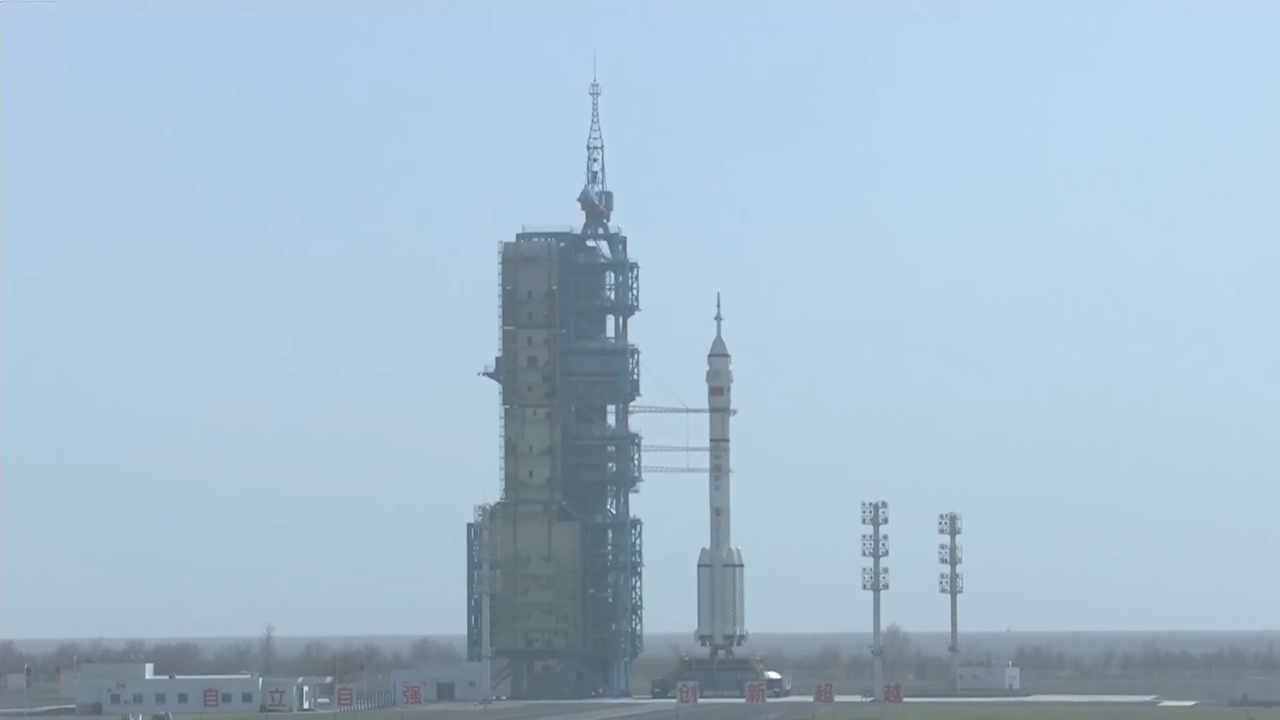
The Shenzhou-24 spacecraft lifted off atop a Long March-2F rocket at 8:18 a.m. Beijing time (0018 GMT) on Wednesday from the Jiuquan Satellite Launch Centre in northwest China, according to the China Manned Space Agency (CMSA). Video from state broadcaster CCTV showed the rocket rising in a cloud of flames and smoke under a pink morning sky.
About 10 minutes after liftoff, the spacecraft separated from the carrier rocket and entered its preset orbit, the CMSA said. An official at the Jiuquan centre then declared the launch mission a complete success, saying the spacecraft was functioning well.
The spacecraft docked with the Tiangong space station at 11:56 a.m. Beijing time (8:56 a.m. Pakistan Standard Time), roughly three and a half hours after launch, according to The News. The crew entered the station later on Wednesday afternoon, at about 2:35 p.m. Beijing time, Dawn reported. They were greeted with hugs by the three Shenzhou-23 crew members already living aboard the station, who had prepared a cake to celebrate the arrival.
The Flight of Pakistan’s First Astronaut
Ali, a 40-year-old pilot serving in the Pakistan Air Force, is flying as a payload specialist. He is the first Pakistani to travel into orbit and the first foreign astronaut to board the Tiangong space station, according to Reuters and Dawn. Channel News Asia reported that he is the first foreign astronaut to fly on a Chinese space mission.
He is travelling with Chinese commander Tang Hongbo, who is commanding the mission, and flight engineer Wu Yi, who is serving as mission pilot. The three were selected and trained under a programme that followed an agreement signed between Pakistan and China in February 2025 on selecting and training Pakistani astronauts for missions to the Chinese space station, according to The News.
“As the first foreign crew member to board the China Space Station, I am incredibly excited. China Space Station here I come!” Ali said in Chinese before the flight, according to a report from CCTV carried by Dawn.
Ali is expected to spend about a week in orbit, with the CMSA saying his stay at the station will last five to 10 days. He will then return to Earth aboard the Shenzhou-23 spacecraft alongside two Shenzhou-23 crew members, according to Channel News Asia. The other two Shenzhou-24 astronauts will remain in orbit for roughly six months.
Ali is not the first Pakistani to travel to space. Monaco-based polar adventurer Namira Salim flew on Virgin Galactic’s Galactic 04 mission in October 2023, Channel News Asia reported. Ali is, however, the first Pakistani to reach orbit and the first to fly as a professional astronaut on a government space mission.
Experiments in Orbit
During his stay, Ali will conduct a series of scientific experiments alongside the Chinese crew. Pakistan’s space agency, Suparco, said he would work on cultivating microalgae as a potential food and oxygen source for future space missions, and on testing the effects of spaceflight on quinoa seeds, Dawn reported.
The CMSA said the crew would conduct around 90 experiments during the mission. The Express Tribune reported that four China-Pakistan cooperative projects in biotechnology and materials will also run during the flight, including an in-orbit experiment on photosynthetic cyanobacteria.
The short stay is designed as a joint flight rather than a full expedition. It gives Pakistan’s space programme direct experience of crewed orbital operations, from launch and docking to living and working aboard a station, and it gives China its first international crew member aboard Tiangong.
Why the Mission Matters
The flight is a milestone for Pakistan’s science ambitions and for Beijing’s efforts to extend its space diplomacy, Dawn reported. Pakistan becomes the first country after China to send an astronaut to the Tiangong station.
Prime Minister Shehbaz Sharif congratulated the nation on Ali’s departure for the station, saying Pakistan had begun its journey “beyond the stars”, the Prime Minister’s Office said. He said the journey belonged not just to one astronaut but to 240 million Pakistanis, particularly the younger generation and scientists. He also noted that Ali and backup astronaut Khurram Daud had completed their training in China with hard work, discipline and dedication.
Pakistan’s military leadership also congratulated the nation, Suparco and the scientific community on the launch, the Inter-Services Public Relations (ISPR) said in a press release.
What Happens Next
After about a week aboard Tiangong, Ali will return to Earth on the Shenzhou-23 spacecraft. His crewmates Tang Hongbo and Wu Yi will stay on the station for about six months, joining Shenzhou-23 astronaut Zhu Yangzhu, who has already spent six months in orbit and will remain aboard to complete a year-long stay experiment, according to the Express Tribune.
For Pakistan, the mission opens a practical path into human spaceflight. The training, the flight and the experiments give Suparco hands-on experience that a ground programme alone cannot provide, and the February 2025 agreement leaves open the possibility of further Pakistani astronauts flying to the station in future missions.
Frequently Asked Questions
Who is Pakistan’s first astronaut?
Muhammad Zeeshan Ali, a 40-year-old Pakistan Air Force pilot, is Pakistan’s first astronaut. He flew to China’s Tiangong space station aboard the Shenzhou-24 mission on November 25, 2026, as a payload specialist.
When did Shenzhou-24 dock with the Tiangong space station?
Shenzhou-24 docked with the Tiangong space station on Wednesday, November 25, 2026, about three and a half hours after launching from the Jiuquan Satellite Launch Centre in northwest China, according to the China Manned Space Agency.
How long will Zeeshan Ali stay in space?
Ali is expected to stay at the Tiangong space station for five to 10 days, about a week, conducting experiments before returning to Earth aboard the Shenzhou-23 spacecraft.
What experiments will Zeeshan Ali conduct in orbit?
According to Suparco, Ali will work on cultivating microalgae as a potential food and oxygen source for future missions and on testing the effects of spaceflight on quinoa seeds. The mission also includes an experiment on photosynthetic cyanobacteria and around 90 experiments in total, according to the CMSA.