Reflecto News is an online news platform covering major international political events, global economic developments, and security conflicts. The site provides updates on topics such as Chinese manufacturing dominance, Middle Eastern political tensions, and high profile legal arrests. Readers can access current articles organized by categories like World News, Iran, and USA.
Published on Reflecto News | World News | Middle East Conflict
Israeli Prime Minister Benjamin Netanyahu has ordered the military to launch forceful strikes on Hezbollah targets in Lebanon, marking a significant escalation in the fragile ceasefire between the two countries. The directive came as the Israeli military reported a series of ceasefire violations by the Iran-backed militant group, casting serious doubt on the durability of the three-week truce that was extended just days ago .
“I have ordered the IDF to forcefully attack Hezbollah targets in Lebanon.” — Prime Minister Benjamin Netanyahu
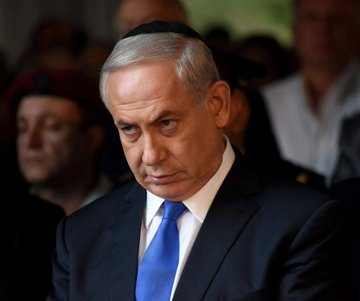

The Escalation: Strikes Across Southern Lebanon
Following Netanyahu’s orders, the Israel Defense Forces (IDF) carried out a series of airstrikes across multiple locations in southern Lebanon. According to Lebanon’s state-run National News Agency, strikes were reported in at least four different locations, including towns in the Bint Jbeil, Tyre, and Nabatieh districts .
The IDF confirmed in a statement that it had “struck Hezbollah terrorist infrastructure used for military purposes across southern Lebanon” and that it would “continue to operate decisively against threats” . The strikes targeted rocket launchers, weapons storage facilities, and positions used by Hezbollah’s elite Radwan forces .
Lebanese health authorities reported casualties from the renewed violence. At least four people were killed on Saturday in strikes on southern Lebanon, including a strike on a vehicle in Yohmor al-Shaqeef in the Nabatieh district, which killed four people, and a separate attack on the town of Safad al-Battikh that killed two and injured 17 . Later strikes also killed one person and wounded another in the town of Hadatha .
Netanyahu’s Accusation: Ceasefire Violations
Netanyahu’s decision to escalate followed reports from the IDF that Hezbollah had violated the ceasefire agreement that was brokered by the United States and extended for three weeks on April 23 . According to military statements, the violations included:
- Hezbollah operatives launching explosive drones toward Israeli soldiers in the Qantara area
- Rockets fired from Lebanese territory into northern Israel, one of which was intercepted by Israeli air defenses
- Identification of a “suspicious aerial target” in the Malkia area, which the IDF called an “additional violation of the ceasefire”
The IDF said it had “eliminated more than 15 terrorists in southern Lebanon” over the weekend, including three who were driving a vehicle “loaded with weapons” . Troops also discovered an anti-tank missile cache in a Hezbollah weapons storage facility and an underground shaft containing Kalashnikov rifles .
Hezbollah’s Response: Retaliatory Attacks
Hezbollah responded to the Israeli strikes with its own military actions. The group said it targeted an Israeli army vehicle in south Lebanon in retaliation for the attack on Yohmor al-Shaqeef . It also claimed to have targeted a gathering of Israeli soldiers and military vehicles near a school in Bint Jbeil with artillery shells and struck an Israeli army bulldozer using an attack drone .
Hezbollah Secretary General Naim Qassem had earlier warned that the ceasefire “cannot be one-sided,” terming it “an insult” to Lebanon and criticizing the Lebanese government for allowing the United States to dictate terms . He stated that Hezbollah fighters would keep their “hands on the trigger” .
The Fragile Ceasefire: A Timeline of Events
The current hostilities represent a significant test of the ceasefire agreement that was reached on April 16 after weeks of intense cross-border fighting linked to the broader US-Israeli war with Iran . The initial 10-day truce was extended by three weeks on April 23 following talks between Israeli and Lebanese ambassadors in Washington .
Ceasefire Timeline:
- April 16: 10-day ceasefire announced, brokered by the United States
- April 23: Ceasefire extended by three weeks
- April 25-26: Netanyahu orders forceful strikes; multiple casualties reported
Despite the agreement, the ceasefire has been characterized by a reduction in fire rather than a complete halt, with both sides continuing to clash in southern Lebanon where Israel has maintained troops in a self-declared buffer zone . Israeli Defense Minister Israel Katz stated that IDF forces would remain in a 10-kilometer security zone in south Lebanon and continue to destroy terrorist infrastructure near the border .
US and International Reactions
The United States, which brokered the original ceasefire, has not issued an immediate public response to the escalation. President Donald Trump had earlier warned Hezbollah to “act nicely” during the ceasefire, to which the group responded that its fighters had kept their “hands on the trigger” .
The escalation comes at a time of heightened regional tensions. The ceasefire between Israel and Lebanon is linked to the broader understanding between the United States and Iran, with Tehran insisting on a halt to hostilities in Lebanon as a key condition for regional security talks . Meanwhile, on the same day as Netanyahu’s orders, President Trump called off the planned visit of American negotiators to Pakistan for talks with Iran, reflecting the fragility of the broader diplomatic landscape .
What Comes Next
The situation in southern Lebanon remains highly volatile. Israeli security officials have expressed fear that the ceasefire with Lebanon could collapse entirely, with sources telling Israeli media that Israel demands the United States put pressure on the Lebanese army to act against Hezbollah in areas north of the Israeli-controlled “security strip” .
The IDF has warned Lebanese residents not to approach the Litani River area in southern Lebanon while it continues operations against Hezbollah . The military has stated it will “continue to operate decisively against threats directed at Israeli civilians and IDF soldiers, in accordance with directives from the political echelon” .
As both sides exchange fire and casualties mount, the coming days will be critical in determining whether the ceasefire can be salvaged or whether the region will slide back into full-scale conflict.
Frequently Asked Questions (FAQs)
Q1: Why did Netanyahu order strikes on Hezbollah?
Netanyahu ordered the strikes after the Israeli military reported that Hezbollah had violated the ceasefire agreement, including launching explosive drones toward Israeli soldiers and firing rockets into northern Israel .
Q2: What were the casualties from the Israeli strikes?
At least six people were reported killed in southern Lebanon on April 25-26, including four in a strike on a vehicle in Yohmor al-Shaqeef and two in an attack on Safad al-Battikh .
Q3: Is the Israel-Lebanon ceasefire still in effect?
The ceasefire, which was extended for three weeks on April 23, remains technically in effect but has been severely strained. Both sides have continued to clash, and Israeli officials have expressed fears that the truce could collapse .
Q4: How has Hezbollah responded to the Israeli strikes?
Hezbollah has targeted Israeli military vehicles and positions in southern Lebanon, including artillery and drone strikes. The group’s leader has stated that Hezbollah fighters keep their “hands on the trigger” and that the ceasefire “cannot be one-sided” .
Q5: Is this escalation connected to the broader US-Iran conflict?
Yes. The Israel-Lebanon ceasefire is linked to the broader understanding between the United States and Iran, with Tehran insisting on a halt to hostilities in Lebanon as a condition for broader regional security talks and the reopening of the Strait of Hormuz .
Stay informed with Reflecto News – Your trusted source for breaking conflict and diplomatic intelligence. Subscribe for real-time updates on the Israel-Lebanon front, the US-Iran ceasefire, and regional security developments.
Questions people ask
What is China's current share of global manufacturing?
China now accounts for twenty eight percent of global manufacturing. This industrial output exceeds the combined manufacturing production of the United States, Japan, and Germany, making China the leading global industrial power according to recent reports.
Why were Andrew Tate and Tristan Tate arrested in Miami?
Andrew Tate and his brother Tristan Tate were taken into custody in Miami by the United States Marshals Service. They face thirty eight new charges in the United Kingdom, including rape and child pornography offences, and prosecutors are seeking their extradition.
What warning did Moscow issue about oil prices?
Kirill Dmitriev, the Chief Executive of the Russian Direct Investment Fund, warned that a tsunami of skyrocketing oil prices is approaching. Moscow describes this potential energy shock as a major threat to global markets.
What political shift is projected for Benjamin Netanyahu's coalition?
Political polls project that Prime Minister Benjamin Netanyahu's coalition is on track to lose its majority in the upcoming October election. This projection indicates a potential political shift in Jerusalem.
Why did a Russian military aircraft land in Tehran?
A Russian airborne command aircraft, widely known as a doomsday plane, landed in Tehran. The arrival of the aircraft represents a high stakes show of support from Russia for Iran during a period of heightened regional tensions.
What did President Masoud Pezeshkian claim about the United States and Israel?
Iranian President Masoud Pezeshkian claimed that the United States and Israel failed in a forty eight hour plan to topple the Iranian government. He made these statements during a televised address marking two years since his inauguration.