Reflecto News is an online news platform covering major international political events, global economic developments, and security conflicts. The site provides updates on topics such as Chinese manufacturing dominance, Middle Eastern political tensions, and high profile legal arrests. Readers can access current articles organized by categories like World News, Iran, and USA.
Published on Reflecto News | World News | Diplomacy & Conflict
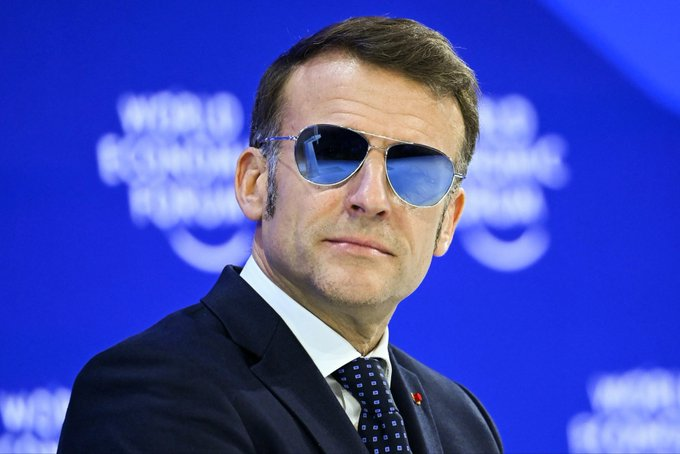
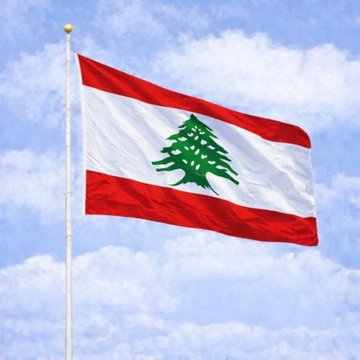
French President Emmanuel Macron has issued a forceful statement declaring that any lasting ceasefire in the Middle East must explicitly include Lebanon and requires the “full commitment” of all parties involved. The remarks, made during a press conference in Paris on Tuesday, position France as a key advocate for Lebanese sovereignty amid the escalating cross-border conflict between Israel and Hezbollah .
“The ceasefire must include Lebanon and requires full commitment from all sides. There can be no lasting peace while Lebanese territory remains a battlefield.” — President Emmanuel Macron
Macron’s statement comes as the fragile two-week ceasefire between the United States and Iran, brokered by Pakistan, remains in effect but has been explicitly declared by Israel as not applicable to Lebanon . It also comes just hours before Israeli and Lebanese ambassadors are set to meet in Washington for the first direct negotiations between the two countries in decades .
A Direct Challenge to US and Israeli Positions
Macron’s declaration directly challenges the positions of both the United States and Israel, which have consistently maintained that the ceasefire applies only to direct US-Iran military exchanges and does not cover Israel’s operations against Hezbollah .
| Party | Position on Lebanon Ceasefire |
|---|---|
| France | Ceasefire must include Lebanon |
| Iran | Lebanon is “inseparable part” of any agreement |
| Pakistan (Mediator) | Ceasefire applies “everywhere, including Lebanon” |
| United States | Lebanon NOT included; “separate skirmish” |
| Israel | Ceasefire “does not include Lebanon”; Hezbollah not covered |
Macron’s intervention signals that France is prepared to take a leading role in shaping the post-conflict diplomatic framework, even if that means diverging from Washington’s position. It also reflects growing European frustration with the exclusion of Lebanon from the current ceasefire framework .
The Humanitarian Imperative
Macron’s call for a ceasefire in Lebanon is driven in part by the devastating humanitarian toll of the conflict. According to Lebanon’s health ministry, Israeli strikes have killed over 2,000 people since March 2, including more than 250 women, 165 children, and 87 medical workers. More than 6,500 people have been injured, and over one million have been displaced .
“The suffering of the Lebanese people cannot be ignored. A ceasefire is not just a political necessity—it is a humanitarian imperative.” — President Emmanuel Macron
The French president also announced an additional €50 million in humanitarian aid for Lebanon, bringing France’s total assistance to over €150 million since the conflict began .
France’s Diplomatic Push
Macron’s statement is part of a broader French diplomatic effort to de-escalate the conflict and restore Lebanese sovereignty. France has historical ties to Lebanon, dating back to the French Mandate period (1920-1943), and maintains significant political, economic, and cultural influence in the country .
Key elements of France’s Lebanon strategy:
| Element | Details |
|---|---|
| Humanitarian aid | €150 million total; additional €50 million announced |
| Political engagement | Direct communication with Israeli, Iranian, Lebanese, and US officials |
| UN diplomacy | Pushing for Security Council action on Lebanon |
| Peacekeeping | France contributes to UNIFIL forces in southern Lebanon |
French Foreign Minister Jean-Noël Barrot has been shuttling between Beirut, Tel Aviv, and Washington in recent days, pressing for a cessation of hostilities. France has also proposed a three-point plan for Lebanon that includes:
- Immediate ceasefire along the Blue Line
- Implementation of UN Security Council Resolution 1701 (which calls for Hezbollah’s disarmament and withdrawal from southern Lebanon)
- Election of a new Lebanese president to address the country’s political vacuum
The Washington Talks: A Test of French Influence
Macron’s statement comes just hours before Israeli and Lebanese ambassadors are scheduled to meet in Washington, D.C., for the first direct negotiations between the two countries in decades. The talks, hosted by US Secretary of State Marco Rubio, are expected to focus on the long-term security of Israel’s northern border and Lebanon’s sovereignty .
However, France has not been invited to participate in the Washington talks, reflecting the US’s lead role in mediation. Macron’s public statement can be seen as an effort to influence the negotiations from the outside and to ensure that France’s interests—and Lebanon’s—are represented .
“France will not be a bystander. We have a responsibility to speak for peace, and we will exercise that responsibility.” — President Emmanuel Macron
The Ceasefire Dispute
The question of whether the US-Iran ceasefire applies to Lebanon has been a major point of contention since the truce was announced on April 7. While Pakistan, which brokered the agreement, announced that the ceasefire applied “everywhere, including Lebanon,” both the United States and Israel have explicitly rejected this interpretation .
President Trump has described the war in Lebanon as “a separate skirmish,” and Israeli Prime Minister Benjamin Netanyahu has declared that the ceasefire “does not include Lebanon” . Hezbollah has continued its military operations throughout the ceasefire period, launching rockets, missiles, and drones at Israeli targets .
What Comes Next
Macron’s intervention sets the stage for a potential diplomatic confrontation between France and the United States over the scope of any ceasefire. As the Washington talks proceed and a second round of US-Iran negotiations is reportedly being considered, several scenarios are possible:
| Scenario | Likelihood | Implication |
|---|---|---|
| US revises position on Lebanon | Possible but unlikely | Would require significant pressure from allies |
| France leads separate diplomatic track | Likely | Macron to engage directly with Israeli and Lebanese leaders |
| Lebanon ceasefire negotiated separately | Possible | Parallel to US-Iran talks |
| Status quo continues | Likely | Fighting continues; diplomatic efforts stall |
Macron’s call for a ceasefire that includes Lebanon and requires “full commitment from all sides” ensures that France will remain a central player in the diplomatic efforts to end the conflict—even as the United States takes the lead in negotiations with Iran.
Frequently Asked Questions (FAQs)
1. What did President Macron say about the ceasefire?
Macron declared that “the ceasefire must include Lebanon and requires full commitment from all sides,” challenging the US and Israeli position that the current truce does not apply to Lebanon .
2. Why is France taking this position?
France has historical ties to Lebanon and significant political and economic influence there. Macron is also responding to the devastating humanitarian toll of the conflict, which has killed over 2,000 Lebanese civilians .
3. Does the current US-Iran ceasefire apply to Lebanon?
This remains disputed. Pakistan, which brokered the agreement, says it applies “everywhere, including Lebanon.” The US and Israel have explicitly rejected this interpretation .
4. What is France doing to help Lebanon?
France has provided €150 million in humanitarian aid, is pushing for a ceasefire through diplomatic channels, and has proposed a three-point plan for Lebanon that includes implementing UN Security Council Resolution 1701 .
5. Is France participating in the Washington talks between Israel and Lebanon?
France has not been invited to participate in the talks hosted by US Secretary of State Marco Rubio. Macron’s statement can be seen as an effort to influence the negotiations from the outside .
6. What is the status of the Israel-Hezbollah conflict?
Fighting continues despite the US-Iran ceasefire. Hezbollah has continued rocket, missile, and drone attacks on Israel, and Israel has continued airstrikes and ground operations in southern Lebanon .
Stay informed with Reflecto News – Your trusted source for breaking diplomatic and geopolitical intelligence. Subscribe for real-time updates on the Middle East ceasefire, French diplomacy, and regional security developments.
Questions people ask
What is China's current share of global manufacturing?
China now accounts for twenty eight percent of global manufacturing. This industrial output exceeds the combined manufacturing production of the United States, Japan, and Germany, making China the leading global industrial power according to recent reports.
Why were Andrew Tate and Tristan Tate arrested in Miami?
Andrew Tate and his brother Tristan Tate were taken into custody in Miami by the United States Marshals Service. They face thirty eight new charges in the United Kingdom, including rape and child pornography offences, and prosecutors are seeking their extradition.
What warning did Moscow issue about oil prices?
Kirill Dmitriev, the Chief Executive of the Russian Direct Investment Fund, warned that a tsunami of skyrocketing oil prices is approaching. Moscow describes this potential energy shock as a major threat to global markets.
What political shift is projected for Benjamin Netanyahu's coalition?
Political polls project that Prime Minister Benjamin Netanyahu's coalition is on track to lose its majority in the upcoming October election. This projection indicates a potential political shift in Jerusalem.
Why did a Russian military aircraft land in Tehran?
A Russian airborne command aircraft, widely known as a doomsday plane, landed in Tehran. The arrival of the aircraft represents a high stakes show of support from Russia for Iran during a period of heightened regional tensions.
What did President Masoud Pezeshkian claim about the United States and Israel?
Iranian President Masoud Pezeshkian claimed that the United States and Israel failed in a forty eight hour plan to topple the Iranian government. He made these statements during a televised address marking two years since his inauguration.