Reflecto News is an online news platform covering major international political events, global economic developments, and security conflicts. The site provides updates on topics such as Chinese manufacturing dominance, Middle Eastern political tensions, and high profile legal arrests. Readers can access current articles organized by categories like World News, Iran, and USA.
Published on Reflecto News | World News | Diplomacy & Conflict
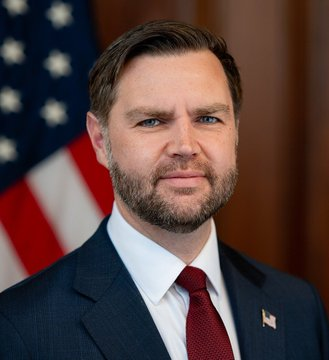
US Vice President JD Vance has officially departed Pakistan after nearly 21 hours of direct negotiations with Iranian officials failed to produce a breakthrough agreement. The high-stakes talks, held at the heavily fortified Serena Hotel in Islamabad, ended without a deal, marking a significant setback for diplomatic efforts to end the six-week regional conflict .
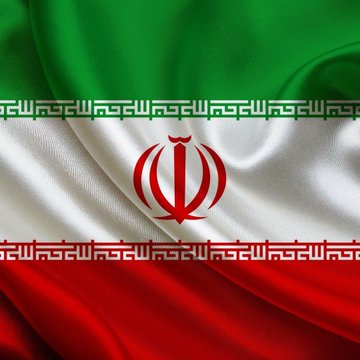
Vance’s departure came after Iranian state media reported that the Islamic Republic has no plans for another round of negotiations with the United States, citing “excessive American demands” related to the Strait of Hormuz, Iran’s nuclear program, and the surrender of its enriched uranium stockpile .
‘We Have Not Reached an Agreement’
Speaking briefly before departing Islamabad, Vice President Vance confirmed the failure of the talks in characteristically blunt terms.
“We have not yet reached an agreement acceptable to the Iranian side. The bad news is that we have not reached an agreement. And I think that’s bad news for Iran much more than it’s bad news for the United States.” — Vice President JD Vance
Vance added that Iran had “chosen not to accept” the terms put forward by Washington, which included demands related to the Strait of Hormuz, Iran’s nuclear program, and the surrender of enriched uranium . The vice president emphasized that the US had clearly outlined its red lines, including areas where it was willing to show flexibility and those where it would not compromise .
The American delegation, which included special envoy Steve Witkoff and former senior advisor Jared Kushner, departed Islamabad early Sunday morning. The delegation’s exit came after multiple rounds of talks that extended into the late night, including trilateral discussions with Pakistani mediators .
‘No Plans for Another Round’
The failure of the talks was underscored by Iranian state media reports that the Islamic Republic has no plans for another round of negotiations with the United States. The semi-official Tasnim News Agency reported that the negotiations collapsed because of “excessive US demands” .
According to the agency, the Iranian delegation repeatedly offered new initiatives and proposals in an attempt to move the negotiations forward, but “the American spirit of excessive demands” prevented progress .
| Iranian Complaint | Details |
|---|---|
| Excessive demands | US sought what it “failed to achieve in war” |
| Nuclear program | Demands regarding enrichment and material removal |
| Strait of Hormuz | US insistence on immediate, unconditional reopening |
| Negotiating approach | US “looking for pretext to leave the table” |
Sources: Tasnim News Agency, Fars News Agency, Iranian state media
The Failed Demands: What Iran Rejected
Multiple reports indicate that the negotiations foundered on several key US demands that Iran refused to accept.
Surrender of Enriched Uranium
The United States demanded that Iran give up its stockpile of enriched uranium — estimated at more than 400 kilograms of uranium enriched to 60%, along with additional stockpiles at lower enrichment levels . Iran rejected this demand, which it framed as an infringement on its sovereign rights under the Nuclear Non-Proliferation Treaty (NPT) .
Strait of Hormuz Concessions
The US demanded the immediate reopening of the strait to shipping, without conditions. Iran insisted that the vital waterway would only fully reopen after a final peace agreement is reached, viewing its control over the strait as its primary source of leverage .
Nuclear Program Restrictions
The US sought permanent restrictions on Iran’s nuclear program, including an end to enrichment and robust verification measures. Iran insisted on its right to enrich uranium for civilian purposes .
Additional Demands
According to Iranian Foreign Ministry spokesman Esmaeil Baghaei, the US also sought concessions on war reparations, sanctions relief sequencing, and the scope of any ceasefire regarding Lebanon .
A Source Close to the Delegation: ‘The US Wanted Everything It Couldn’t Achieve in War’
A source close to the Iranian delegation, speaking to Fars News Agency, encapsulated Tehran’s perspective on the failed talks. The source said the United States sought “through negotiation everything they couldn’t obtain during war” .
The source added that Iran had rejected what it described as “ambitious conditions” relating to the Strait of Hormuz, nuclear energy, and other key issues .
The Iranian embassy in Ghana posted on social media platform X, amplifying this message: “The US flew their Vice President halfway across the world to Islamabad. 21 hours of talks. They demanded everything they couldn’t achieve through war. Iran said a BIG NO. The talks are over. The Strait is still closed. And the VP is flying home empty-handed” .
The Fragile Ceasefire: What Remains
Despite the collapse of negotiations, the fragile two-week ceasefire announced on April 7 remains in effect . However, its future is highly uncertain.
| Ceasefire Element | Status |
|---|---|
| Duration | Two weeks (announced April 7) |
| Direct US-Iran hostilities | Paused (for now) |
| Strait of Hormuz | Largely restricted; Iran maintains control |
| Israel-Lebanon front | Active; no ceasefire |
| Future negotiations | No new rounds planned |
The ceasefire was explicitly conditioned on Iran’s agreement to the “COMPLETE, IMMEDIATE, and SAFE OPENING of the Strait of Hormuz” — a condition Iran has not met . With no further negotiations scheduled and both sides hardening their positions, the risk of a return to full-scale hostilities has increased significantly .
Trump’s Response: ‘Out-Blockade Iran’
Following the collapse of the talks, President Donald Trump shared an article suggesting he would “out-blockade Iran’s hold over the Strait of Hormuz,” repurposing the strategy he used against Venezuela .
The article, from Just the News, claimed that the president could repurpose the strategy he used against Venezuela, and that “it would be very easy for the US Navy to exert complete control over what does and does not go up and down the Strait now” .
Trump had previously announced that the United States was “starting the process of clearing out the Strait of Hormuz” and claimed that Iran’s only remaining capability was “the threat that a ship may ‘bunk’ into one of their sea mines.” The US military has begun mine-clearing operations in the strait, with two guided-missile destroyers and additional forces, including underwater drones, participating .
Pakistan’s Role: ‘Make or Break’ Moment Passes
Pakistan, which served as mediator for the talks, released a statement expressing gratitude to both sides for their willingness to negotiate and urging them to uphold the ceasefire until a deal could be reached .
Prime Minister Shehbaz Sharif had previously described the current moment as a “make or break” opportunity for regional peace. With Vance departing without a deal and no new round planned, that opportunity appears to have passed — at least for now .
The talks were the highest-level face-to-face meetings between the United States and Iran since the 1979 Islamic Revolution, and their failure represents a significant diplomatic setback .
What Comes Next: Military Option Remains
With diplomatic efforts having failed and Vice President Vance departing Pakistan empty-handed, the military option remains on the table.
| Option | Status | Likelihood |
|---|---|---|
| Diplomacy | Failed; no new rounds planned | Low |
| Maintain ceasefire | Possible but fragile | Uncertain |
| Military strikes | US forces preparing; “out-blockade” strategy discussed | Elevated |
| Strait of Hormuz pressure | US conducting mine-clearing operations | Ongoing |
| Sanctions | Existing sanctions remain; potential for additional measures | Possible |
Israeli Prime Minister Benjamin Netanyahu has declared that the campaign against Iran is “not over” and that Israel still has “more to do” . He specifically mentioned the enriched uranium stockpile, stating that it must be removed “either by agreement, or it will come out in other ways” .
The US military presence in the region remains significant, with two carrier strike groups and additional forces deployed. The coming days will determine whether the fragile ceasefire holds — or whether the region returns to full-scale war .
Frequently Asked Questions (FAQs)
1. Did the US and Iran reach a deal in Islamabad?
No. After nearly 21 hours of negotiations, Vice President JD Vance departed Pakistan without a deal. Iran has stated it has no plans for another round of negotiations .
2. What did Vice President Vance say about the outcome?
Vance confirmed that “we have not yet reached an agreement acceptable to the Iranian side” and that Iran had “chosen not to accept” the US terms. He called the failure “bad news for Iran much more than it’s bad news for the United States” .
3. Why did the talks fail?
Iranian officials and state media blame “excessive US demands” related to the Strait of Hormuz, Iran’s nuclear program, and the surrender of enriched uranium. A source close to the Iranian delegation said the US sought “through negotiation everything they couldn’t obtain during war” .
4. Is the ceasefire still in effect?
The fragile two-week ceasefire announced on April 7 remains in effect for now. However, with no further negotiations planned, its future is uncertain .
5. What did President Trump say about the outcome?
Trump shared an article suggesting he would “out-blockade Iran’s hold over the Strait of Hormutz,” repurposing the strategy he used against Venezuela. He has previously announced that the US is “starting the process of clearing out” the strait .
6. Will there be more negotiations?
Iranian state media reports that Iran has no plans for another round of negotiations with the United States. The US has not announced any plans for further talks .
7. What happens next?
The military option remains on the table. The US has begun mine-clearing operations in the Strait of Hormuz, and Israel has indicated that its campaign against Iran is “not over.” The fragile ceasefire remains in effect, but its future is highly uncertain .
Stay informed with Reflecto News – Your trusted source for breaking diplomatic and geopolitical intelligence. Subscribe for real-time updates on the US-Iran crisis, the future of the ceasefire, and regional security developments.
Questions people ask
What is China's current share of global manufacturing?
China now accounts for twenty eight percent of global manufacturing. This industrial output exceeds the combined manufacturing production of the United States, Japan, and Germany, making China the leading global industrial power according to recent reports.
Why were Andrew Tate and Tristan Tate arrested in Miami?
Andrew Tate and his brother Tristan Tate were taken into custody in Miami by the United States Marshals Service. They face thirty eight new charges in the United Kingdom, including rape and child pornography offences, and prosecutors are seeking their extradition.
What warning did Moscow issue about oil prices?
Kirill Dmitriev, the Chief Executive of the Russian Direct Investment Fund, warned that a tsunami of skyrocketing oil prices is approaching. Moscow describes this potential energy shock as a major threat to global markets.
What political shift is projected for Benjamin Netanyahu's coalition?
Political polls project that Prime Minister Benjamin Netanyahu's coalition is on track to lose its majority in the upcoming October election. This projection indicates a potential political shift in Jerusalem.
Why did a Russian military aircraft land in Tehran?
A Russian airborne command aircraft, widely known as a doomsday plane, landed in Tehran. The arrival of the aircraft represents a high stakes show of support from Russia for Iran during a period of heightened regional tensions.
What did President Masoud Pezeshkian claim about the United States and Israel?
Iranian President Masoud Pezeshkian claimed that the United States and Israel failed in a forty eight hour plan to topple the Iranian government. He made these statements during a televised address marking two years since his inauguration.