Reflecto News is an online news platform covering major international political events, global economic developments, and security conflicts. The site provides updates on topics such as Chinese manufacturing dominance, Middle Eastern political tensions, and high profile legal arrests. Readers can access current articles organized by categories like World News, Iran, and USA.
Reflecto News – April 8, 2026
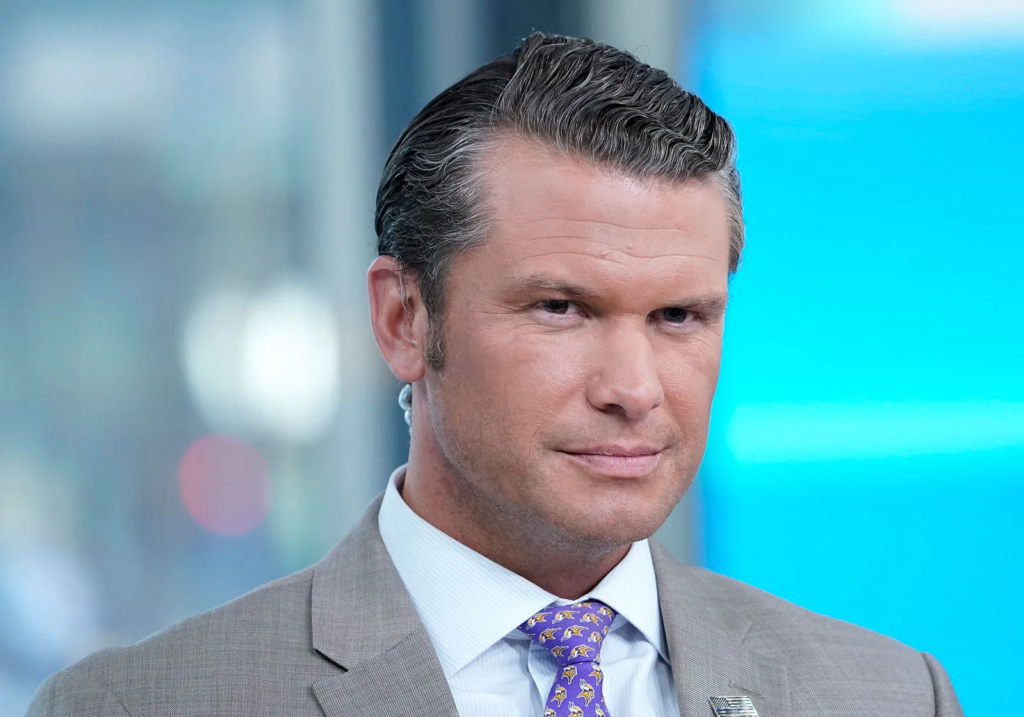
U.S. Secretary of War Pete Hegseth stated that Iran’s newly appointed Supreme Leader, Mojtaba Khamenei, is “wounded and likely disfigured,” casting doubt on his ability to effectively govern amid the fragile two-week ceasefire with the United States. The remarks, made during a Pentagon briefing on the ongoing situation, come as Iran signals a possible limited reopening of the Strait of Hormuz on Thursday or Friday and as direct U.S.-Iran talks are set to begin in Islamabad, Pakistan.
Hegseth’s comments echo similar assertions he made in mid-March 2026, shortly after Mojtaba Khamenei was named successor following the reported death of his father, Ayatollah Ali Khamenei, in the early days of the conflict.
Hegseth’s Latest Remarks
In the briefing, Hegseth reiterated that the new Iranian leader “is wounded and likely disfigured,” questioning whether he is truly in control. He described the leadership transition as weakened, noting that Mojtaba Khamenei has largely communicated through written statements rather than public appearances or video addresses since assuming the role.
The Secretary of War framed the situation as evidence of the success of Operation Epic Fury, claiming the U.S. and Israeli strikes had significantly degraded Iran’s command structure and left the new leadership vulnerable.
Background on Mojtaba Khamenei
Mojtaba Khamenei, the second son of the late Supreme Leader Ayatollah Ali Khamenei, was formally selected by Iran’s Assembly of Experts as the country’s new Supreme Leader in early March 2026. A mid-ranking cleric known for operating behind the scenes, he has been described as a hardliner who influenced security and political decisions under his father.
Since his appointment, Mojtaba Khamenei has maintained a low public profile, fueling speculation about his physical condition and capacity to lead. Iranian state media has released statements and, in some cases, AI-generated or archival footage, but no recent verified public appearances have been confirmed by independent sources.
U.S. officials have repeatedly suggested that he was injured during the initial waves of strikes that killed his father and other senior figures.
Context Within the Two-Week Ceasefire
The comments arrive as the conditional ceasefire — which includes Iran’s planned limited reopening of the Strait of Hormuz under military coordination — begins to take shape. Iran has indicated that safe passage for commercial vessels could resume on April 9 or 10, subject to technical and security arrangements.
Direct talks between U.S. and Iranian delegations are scheduled to start Friday in Islamabad, facilitated by Pakistani mediation. Key issues expected to dominate discussions include:
- Verification of Strait of Hormuz reopening
- Iran’s enriched uranium stockpiles (with the U.S. demanding voluntary handover or removal)
- Sanctions relief and security guarantees for a longer-term agreement
Despite the pause in major U.S. strikes, Israel continues operations against Hezbollah in Lebanon, as demonstrated by today’s large-scale strikes in Beirut.
Reactions and Implications
Iran has not issued an immediate official response to Hegseth’s latest statement. Previous similar claims were dismissed by Tehran as psychological warfare.
The remarks add tension to the delicate ceasefire phase and could complicate upcoming talks in Pakistan. Analysts note that any perception of instability in Iran’s leadership may influence negotiating positions on both sides.
International observers, including European leaders, continue to urge restraint to prevent the fragile truce from collapsing.
Impact on Global LNG Markets
The anticipated limited reopening of the Strait of Hormuz offers hope for easing disruptions that have already caused significant damage to Qatar’s LNG exports. However, prolonged uncertainty surrounding Iranian leadership and compliance could delay full recovery of energy flows.
FAQs on Hegseth’s Statement and Iran’s Leadership
Q1: What did Secretary Hegseth say about Mojtaba Khamenei?
He claimed the new Supreme Leader is “wounded and likely disfigured,” questioning his ability to govern effectively and suggesting he lacks full legitimacy.
Q2: Who is Mojtaba Khamenei?
He is the son of the late Ayatollah Ali Khamenei and was appointed as Iran’s new Supreme Leader in early March 2026 following his father’s death in the initial strikes.
Q3: Has Mojtaba Khamenei appeared publicly?
He has largely avoided verified public appearances or video statements since taking power, communicating mainly through written messages released by state media.
Q4: How does this relate to the ceasefire?
The two-week truce focuses on the Strait of Hormuz and a pause in major hostilities, but U.S. officials continue to press demands on nuclear issues and view the Iranian leadership as weakened.
Q5: When are U.S.-Iran talks scheduled?
Direct negotiations are set to begin Friday, April 10, 2026, in Islamabad, Pakistan.
Q6: What is the current status of the Strait of Hormuz?
Iran has signaled a possible limited, military-controlled reopening on Thursday or Friday, April 9–10, as part of the ceasefire framework.
Reflecto News will continue monitoring developments from the Pentagon, any Iranian response, progress on the Strait of Hormuz reopening, and the upcoming talks in Pakistan.
Stay informed with Reflecto News – Your source for accurate, timely coverage of the U.S.-Iran ceasefire, leadership dynamics in Tehran, and their broader regional and global implications.
Questions people ask
What is China's current share of global manufacturing?
China now accounts for twenty eight percent of global manufacturing. This industrial output exceeds the combined manufacturing production of the United States, Japan, and Germany, making China the leading global industrial power according to recent reports.
Why were Andrew Tate and Tristan Tate arrested in Miami?
Andrew Tate and his brother Tristan Tate were taken into custody in Miami by the United States Marshals Service. They face thirty eight new charges in the United Kingdom, including rape and child pornography offences, and prosecutors are seeking their extradition.
What warning did Moscow issue about oil prices?
Kirill Dmitriev, the Chief Executive of the Russian Direct Investment Fund, warned that a tsunami of skyrocketing oil prices is approaching. Moscow describes this potential energy shock as a major threat to global markets.
What political shift is projected for Benjamin Netanyahu's coalition?
Political polls project that Prime Minister Benjamin Netanyahu's coalition is on track to lose its majority in the upcoming October election. This projection indicates a potential political shift in Jerusalem.
Why did a Russian military aircraft land in Tehran?
A Russian airborne command aircraft, widely known as a doomsday plane, landed in Tehran. The arrival of the aircraft represents a high stakes show of support from Russia for Iran during a period of heightened regional tensions.
What did President Masoud Pezeshkian claim about the United States and Israel?
Iranian President Masoud Pezeshkian claimed that the United States and Israel failed in a forty eight hour plan to topple the Iranian government. He made these statements during a televised address marking two years since his inauguration.