Reflecto News is an online news platform covering major international political events, global economic developments, and security conflicts. The site provides updates on topics such as Chinese manufacturing dominance, Middle Eastern political tensions, and high profile legal arrests. Readers can access current articles organized by categories like World News, Iran, and USA.
Reflecto News – U.S. and Iranian officials are making incremental progress toward a possible deal to stabilize or extend the fragile ceasefire, with sources describing the sides as “getting closer” after recent backchannel communications and mediated discussions.
According to a report by Axios citing a U.S. official and a regional source, mediators from Pakistan, Egypt, and Türkiye are actively working in the coming days to narrow remaining gaps and pave the way for another round of negotiations before the current two-week ceasefire expires on April 21, 2026.
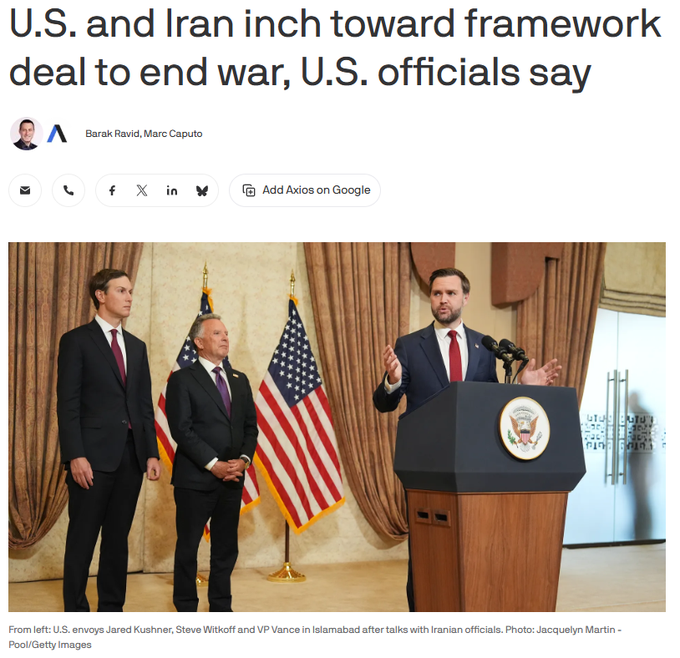
Current State of Negotiations
- Progress Acknowledged: Both sides continue bargaining despite the collapse of the first high-level face-to-face talks in Islamabad earlier this month. A U.S. official described the situation as “not in a complete deadlock,” noting that “the door is not closed yet” and likening the process to a “bazaar.”
- Mediator Role: Pakistani, Egyptian, and Turkish officials are continuing intensive contacts with Washington and Tehran. These efforts build on Pakistan’s successful hosting of the initial marathon sessions (which lasted over 21 hours) and aim to bridge differences on core issues.
- No Guarantee of Success: While all parties still believe a deal remains possible, significant hurdles persist. Iranian Foreign Minister Abbas Araghchi has claimed the sides were previously “inches away” before the U.S. allegedly “shifted the goalposts” — a characterization not fully confirmed by U.S. or regional sources.
The current ceasefire, which followed indirect mediation, has held tenuously but faces pressure from ongoing U.S. naval operations enforcing elements of a blockade on Iranian ports.
Key Issues on the Table
Negotiators are focused on:
- Parameters for Iran’s nuclear program, including enrichment limits and verification.
- Reopening and securing the Strait of Hormuz for unrestricted international shipping.
- Sanctions relief and economic aspects.
- Broader regional de-escalation to prevent spillover.
A potential framework under discussion in earlier phases included a possible 45-day ceasefire window to negotiate a more permanent arrangement.
Broader Context and Risks
The diplomatic push occurs as U.S. forces maintain a naval presence in the region, with reports of thousands of additional troops deployed. Iran has warned of retaliatory measures if its ports remain under pressure.
Pakistani Army Chief Asim Munir’s recent visit to Iran — where he was welcomed by Foreign Minister Araghchi — is seen as part of these backchannel efforts to deliver messages and prepare ground for renewed talks.
Analysts caution that while momentum appears to be building, the tight deadline and deep mistrust mean any breakthrough is far from assured. Failure to reach an understanding could lead to renewed escalation with major implications for global energy markets and regional stability.
This remains a highly fluid situation with intense behind-the-scenes activity.
FAQs
Q1: Are U.S. and Iran really getting closer to a deal?
Sources told Axios that negotiators are “getting closer” and narrowing gaps, though no final agreement has been reached and success is not guaranteed.
Q2: Who is mediating the current efforts?
Mediators from Pakistan, Egypt, and Türkiye are actively involved, continuing talks with both sides in the coming days to bridge differences.
Q3: What is the ceasefire deadline?
The current fragile two-week ceasefire is set to expire on April 21, 2026. Mediators hope to enable another round of negotiations before then.
Q4: What are the main sticking points?
Key issues include limits on Iran’s nuclear enrichment, reopening the Strait of Hormuz, sanctions relief, and regional security guarantees.
Q5: Has there been any face-to-face meeting recently?
The most recent high-level talks occurred in Islamabad earlier in April and ended without a comprehensive deal, but indirect and backchannel communications have continued.
Q6: What role has Pakistan played?
Pakistan has been the primary host and facilitator, with Army Chief Asim Munir playing a prominent part in delivering messages and keeping channels open.
Q7: How can I stay updated on developments?
Follow Reflecto News for balanced, real-time coverage based on verified sources including Axios, official statements, and reports from all involved parties.
This is a developing story. Reflecto News will provide updates as mediators’ efforts progress, the Israeli cabinet or other actors respond, or new details emerge before the April 21 deadline.
Reflecto News delivers accurate and timely reporting on U.S.-Iran diplomacy, Middle East security, and international mediation efforts. For more on the fragile ceasefire, the Strait of Hormuz situation, and regional developments, explore our dedicated international affairs section. Share your respectful comments below.
Questions people ask
What is China's current share of global manufacturing?
China now accounts for twenty eight percent of global manufacturing. This industrial output exceeds the combined manufacturing production of the United States, Japan, and Germany, making China the leading global industrial power according to recent reports.
Why were Andrew Tate and Tristan Tate arrested in Miami?
Andrew Tate and his brother Tristan Tate were taken into custody in Miami by the United States Marshals Service. They face thirty eight new charges in the United Kingdom, including rape and child pornography offences, and prosecutors are seeking their extradition.
What warning did Moscow issue about oil prices?
Kirill Dmitriev, the Chief Executive of the Russian Direct Investment Fund, warned that a tsunami of skyrocketing oil prices is approaching. Moscow describes this potential energy shock as a major threat to global markets.
What political shift is projected for Benjamin Netanyahu's coalition?
Political polls project that Prime Minister Benjamin Netanyahu's coalition is on track to lose its majority in the upcoming October election. This projection indicates a potential political shift in Jerusalem.
Why did a Russian military aircraft land in Tehran?
A Russian airborne command aircraft, widely known as a doomsday plane, landed in Tehran. The arrival of the aircraft represents a high stakes show of support from Russia for Iran during a period of heightened regional tensions.
What did President Masoud Pezeshkian claim about the United States and Israel?
Iranian President Masoud Pezeshkian claimed that the United States and Israel failed in a forty eight hour plan to topple the Iranian government. He made these statements during a televised address marking two years since his inauguration.