Reflecto News is an online news platform covering major international political events, global economic developments, and security conflicts. The site provides updates on topics such as Chinese manufacturing dominance, Middle Eastern political tensions, and high profile legal arrests. Readers can access current articles organized by categories like World News, Iran, and USA.
Published on Reflecto News | World News | Energy Security & Geopolitics
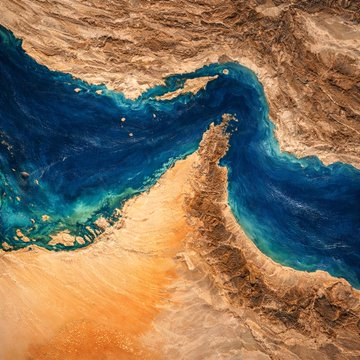
In a significant development signaling the potential normalization of shipping through the strategic waterway, two Chinese-flagged crude oil supertankers have begun crossing the Strait of Hormuz, according to ship-tracking data. The vessels, the Cospearl Lake and the He Rong Hai, are among the first fully laden oil tankers to attempt passage since the US-Iran ceasefire took effect on April 7 .
If the vessels complete their transit successfully, it would mark the busiest day for oil shipments through the strait since early March, when conflict-related disruptions nearly halted all traffic through the waterway that handles approximately one-fifth of the world’s oil supply .
Tanker Details: Chinese Vessels Lead the Way
The two Chinese supertankers have been waiting near the entrance to the strait for days, joining a growing armada of vessels amassing off the UAE coast as shipowners cautiously test the waters following the fragile truce between Washington and Tehran .
| Vessel Name | Owner/Operator | Cargo Origin | Status |
|---|---|---|---|
| Cospearl Lake | Cosco Shipping Corp. (state-owned) | Iraq (Basra) | Crossing began April 11 |
| He Rong Hai | Smaller Chinese entity | Saudi Arabia (Ju’aymah) | Crossing began April 11 |
Sources: MarineTraffic, Bloomberg, Reuters
The Cospearl Lake, a very large crude carrier (VLCC) linked to China’s state-owned Cosco Shipping Corp., loaded approximately 2 million barrels of crude oil from Iraq’s Basra terminal in early March . The vessel had been stranded in the Gulf for weeks following the outbreak of hostilities on February 28.
The He Rong Hai entered the Gulf just before the war erupted, loading over 2 million barrels of crude from Saudi Arabia’s Ju’aymah terminal in early March . Both vessels began moving east at near-top speeds early Thursday before slowing at the strait’s entrance, apparently awaiting clearance .
A third Chinese VLCC, the Yuan Hua Hu (also Cosco-linked), began its eastward journey a few hours after the first two vessels and may also attempt passage .
The Crossing Process: Iranian Approval Required
The transit of the Chinese tankers highlights the new reality at the Strait of Hormuz. While the ceasefire has eased tensions, Iran maintains firm control over the waterway, requiring all vessels to coordinate with the Islamic Revolutionary Guard Corps (IRGC) before passage .
Key conditions for transit under the current regime:
- Prior approval: All vessels must obtain permission from Iranian authorities before entering the strait
- Designated routes: Iran has published charts showing alternative routes near Larak Island to avoid sea mines in the main shipping zone
- Ownership disclosure: Tehran requires detailed information on ownership, insurance, and trading history to screen out vessels linked to the US or Israel
- Potential fees: Reports suggest some vessels may be paying transit fees, though the US has publicly rejected this practice
Both Chinese vessels are signaling Chinese ownership on their tracking systems—a step typically taken for safety during Iran-approved transits . This transparency likely facilitated their clearance, as China maintains friendly relations with Tehran and has not participated in sanctions against Iranian oil exports.
The Broader Context: A Gradual Reopening
The Chinese tankers’ crossing comes amid a gradual, cautious resumption of shipping through the strait. According to maritime data provider Kpler, just 16 commodity carriers have passed through the Strait of Hormuz since the ceasefire took effect on April 7—approximately 90 percent below peacetime levels .
| Traffic Metric | Pre-War | Current | Change |
|---|---|---|---|
| Daily vessel transits | ~100-135 | ~10-15 | -90% |
| Oil tanker transits | ~50-60 daily | Limited | Significant reduction |
| Stranded vessels in Gulf | 0 | ~600-800 | Major backlog |
Sources: Kpler, Lloyd’s List, S&P Global
Lloyd’s List estimates there are still approximately 800 vessels stuck in the Gulf since the end of February, including around 600 medium to large cargo-carrying vessels . A total of 172 million barrels of crude and refined products spread across 187 tankers remained at sea in the Arabian-Persian Gulf as of April 7 .
Maritime analyst Richard Meade, editor-in-chief of Lloyd’s List, told Xinhua that “the ceasefire hasn’t materially changed much” and that approximately 600 large ocean-going vessels remain stranded because most operators are unwilling to move without clearer assurances .
Other Vessels Testing the Waters
The Chinese supertankers are not alone in their attempt to navigate the strait. A Greek-flagged oil tanker has also entered or is preparing to pass through the waterway, bound for Malaysia . If all three vessels complete their transit on Saturday, it would mark the biggest day of oil exits through Hormuz since the war caused traffic to all but halt at the beginning of March .
A Saudi Arabian-flagged VLCC, the Jaham, has moved east toward a holding area off Dubai, and two Indian-flagged supertankers—the Desh Vibhor and the Desh Vaibhav—have been in the area since late March, suggesting other nations may also be preparing to move their stranded vessels .
Strategic Implications for China
The successful transit of Chinese tankers through the strait carries significant strategic implications for Beijing. As the world’s largest oil importer, China has been acutely affected by the disruption of Hormuz shipping. Approximately 80% of Gulf oil shipments are destined for Asian markets, and China relies heavily on crude from Saudi Arabia, Iraq, and other Gulf producers .
China’s strategic positioning in the current crisis:
| Factor | China’s Advantage |
|---|---|
| Diplomatic relations | Maintains friendly ties with Iran; not party to sanctions |
| Oil supply security | Access to discounted Russian and Iranian crude |
| Shipping access | Chinese vessels appear to receive priority clearance |
| Strategic reserves | Expanding emergency stockpiles (~60 million barrels planned) |
The ability of Chinese-flagged vessels to secure passage through the strait—while other nations’ ships remain stranded—underscores Beijing’s unique diplomatic position. Unlike Western nations that have imposed sanctions on Tehran, China has maintained normal diplomatic and economic relations with Iran throughout the conflict, positioning its commercial fleet for preferential treatment.
The Road Ahead: What This Means for Global Markets
The crossing of the Chinese supertankers, while a positive sign, does not yet signal a full return to normalcy. Several factors will determine the pace of recovery:
1. Ceasefire Durability
The two-week ceasefire remains fragile, with ongoing Israeli strikes in Lebanon and Iran’s insistence that any peace agreement must include a halt to attacks on Hezbollah . Continued military tensions could quickly reverse any progress in shipping.
2. Clearance of Stranded Vessels
Even under ideal conditions, clearing the backlog of 600-800 stranded vessels could take weeks, while full normalization of global trade flows may take months . Industry analysts warn that any attempt to move vessels too quickly could lead to collisions or navigational errors in the narrow waterway .
3. Insurance and Risk Assessment
Marine war-risk insurers are still assessing the situation. Until underwriters are confident that the strait is safe, insurance premiums will remain elevated, discouraging all but the most essential voyages .
4. The Islamabad Talks
The diplomatic negotiations underway in Islamabad will likely determine the long-term status of the strait. Iran has proposed maintaining regulatory control and potentially charging transit fees, while the US insists on unrestricted freedom of navigation .
Conclusion: A Cautious First Step
The decision by two Chinese supertankers to begin crossing the Strait of Hormuz represents a cautious first step toward restoring one of the world’s most vital energy arteries. While their passage is a positive development, the broader picture remains one of caution and uncertainty.
Approximately 800 vessels remain stranded, insurance costs remain prohibitive, and the underlying geopolitical tensions that sparked the war have not been resolved. The success or failure of the Islamabad peace talks will likely determine whether this trickle of traffic becomes a steady flow—or whether the strait closes once again.
For now, the world watches as the Cospearl Lake and He Rong Hai make their way through the narrow waterway, carrying not just millions of barrels of crude oil, but also the hopes of a global economy desperate for stable energy supplies.
Frequently Asked Questions (FAQs)
1. Which Chinese tankers are crossing the Strait of Hormuz?
The Cospearl Lake (owned by Cosco Shipping Corp.) and the He Rong Hai (owned by a smaller Chinese entity) began crossing the strait on April 11, 2026. Both are very large crude carriers (VLCCs) carrying approximately 2 million barrels of oil each .
2. Where did the tankers load their crude oil?
The Cospearl Lake loaded its cargo from Iraq’s Basra terminal, while the He Rong Hai loaded from Saudi Arabia’s Ju’aymah terminal .
3. Is the Strait of Hormuz fully open now?
No. While the ceasefire has allowed some vessels to pass, traffic remains approximately 90 percent below peacetime levels. Iran continues to require prior approval for all transits, and approximately 800 vessels remain stranded in the Gulf .
4. Are other countries’ vessels also crossing?
Yes. A Greek-flagged oil tanker bound for Malaysia is also attempting passage, and Saudi, Indian, and other vessels are positioned near the strait entrance awaiting clearance .
5. Why are Chinese vessels able to cross when others cannot?
China maintains friendly diplomatic relations with Iran and has not participated in sanctions against Iranian oil exports. Chinese vessels signaling their ownership on tracking systems—a practice recommended by Iran for safety during approved transits—likely facilitates their clearance .
6. What are the conditions for crossing the strait under the ceasefire?
Vessels must obtain prior permission from Iranian authorities, use designated routes near Larak Island to avoid sea mines, disclose ownership and cargo information, and potentially pay transit fees .
7. How long will it take to clear the backlog of stranded vessels?
Industry analysts estimate that even under ideal conditions, clearing the current backlog of 600-800 vessels could take weeks, while full normalization of global shipping flows may take months .
Stay informed with Reflecto News – Your trusted source for breaking energy security and geopolitical intelligence. Subscribe for real-time updates on the Strait of Hormuz crisis, the Islamabad peace talks, and global oil markets.
Questions people ask
What is China's current share of global manufacturing?
China now accounts for twenty eight percent of global manufacturing. This industrial output exceeds the combined manufacturing production of the United States, Japan, and Germany, making China the leading global industrial power according to recent reports.
Why were Andrew Tate and Tristan Tate arrested in Miami?
Andrew Tate and his brother Tristan Tate were taken into custody in Miami by the United States Marshals Service. They face thirty eight new charges in the United Kingdom, including rape and child pornography offences, and prosecutors are seeking their extradition.
What warning did Moscow issue about oil prices?
Kirill Dmitriev, the Chief Executive of the Russian Direct Investment Fund, warned that a tsunami of skyrocketing oil prices is approaching. Moscow describes this potential energy shock as a major threat to global markets.
What political shift is projected for Benjamin Netanyahu's coalition?
Political polls project that Prime Minister Benjamin Netanyahu's coalition is on track to lose its majority in the upcoming October election. This projection indicates a potential political shift in Jerusalem.
Why did a Russian military aircraft land in Tehran?
A Russian airborne command aircraft, widely known as a doomsday plane, landed in Tehran. The arrival of the aircraft represents a high stakes show of support from Russia for Iran during a period of heightened regional tensions.
What did President Masoud Pezeshkian claim about the United States and Israel?
Iranian President Masoud Pezeshkian claimed that the United States and Israel failed in a forty eight hour plan to topple the Iranian government. He made these statements during a televised address marking two years since his inauguration.