Reflecto News is an online news platform covering major international political events, global economic developments, and security conflicts. The site provides updates on topics such as Chinese manufacturing dominance, Middle Eastern political tensions, and high profile legal arrests. Readers can access current articles organized by categories like World News, Iran, and USA.
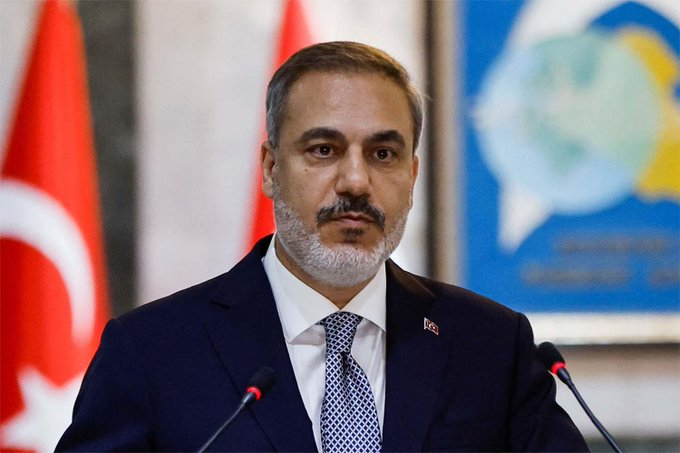
Reflecto News – Turkish Foreign Minister Hakan Fidan has sharply criticized Israel’s leadership, stating that “those in charge are crazy” in response to questions about potential Israeli actions amid escalating regional tensions.
The remark, made during an interview with Turkish state-run Anadolu Agency, comes as Ankara warns that Israel may be seeking to designate Turkey as its “new enemy” following the fragile ceasefire in the US-Iran conflict. Fidan’s comments reflect deepening strains between the once-allied nations and align with recent strong rhetoric from President Recep Tayyip Erdoğan.
Fidan’s Strong Remarks on Israeli Leadership
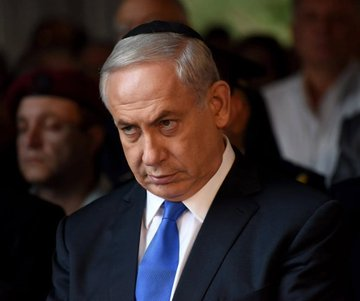
In the interview, when asked whether Israel could be “that crazy” to pursue certain aggressive policies, Fidan replied: “Those in charge are crazy.” He accused Israel of needing perpetual enemies to sustain its strategy and claimed that both Prime Minister Benjamin Netanyahu’s government and some opposition figures are working to portray Turkey as the next target after Iran.
Fidan stated: “After Iran, Israel cannot live without an enemy… We see that not only Netanyahu’s administration but also some figures in the opposition — though not all — are seeking to declare Türkiye the new enemy. This is turning into a state strategy.”
He further warned that Israel might shift focus toward Syria or other areas once the immediate Iran-related pressures ease, urging Turkey to prepare for “all kinds of scenarios.”
Context: Rising Turkey-Israel Tensions
Turkey has been a vocal critic of Israeli policies, particularly regarding Gaza, Lebanon, and broader regional actions. Relations, which were once close in the military and economic spheres, have deteriorated significantly in recent years.
Key points of friction include:
- Turkey’s strong support for Palestinian causes and criticism of Israeli operations.
- Competing interests in Syria, where Turkey maintains a significant military presence and views certain Israeli actions as threats to its security.
- Recent statements from Israeli officials and opposition figures perceived in Ankara as hostile toward President Erdoğan and Turkey.
Fidan’s comments follow Erdoğan’s own escalation, including threats of potential military engagement with Israel. The Turkish government has also accused Israel of disruptive behavior in ongoing diplomatic efforts related to the Iran ceasefire.
Broader Regional Implications
These remarks come against the backdrop of a volatile Middle East:
- A fragile US-Iran ceasefire mediated indirectly (including via Pakistan).
- Ongoing concerns over the Strait of Hormuz, energy security, and potential spillover from conflicts in Gaza, Lebanon, and Syria.
- Turkey positioning itself as a key diplomatic player while asserting its red lines, particularly in northern Syria.
Analysts note that such heated rhetoric risks further polarizing the region and complicating any de-escalation efforts. While Turkey emphasizes diplomacy in US-Iran talks and urges restraint, its increasingly confrontational stance toward Israel adds another layer of complexity to already strained alliances.
Israel has not issued an immediate official response to Fidan’s specific “crazy” comment, but past similar exchanges have led to sharp rebuttals from Israeli officials, who often describe Turkish rhetoric as inflammatory and disconnected from security realities.
What This Means Moving Forward
Fidan’s statement reinforces Turkey’s firm opposition to what it views as Israeli expansionism and highlights Ankara’s determination not to be drawn into a new adversarial dynamic. However, it also underscores the challenges in rebuilding trust between the two countries.
The episode may influence domestic politics in both nations and could affect broader NATO dynamics, given Turkey’s strategic importance and its sometimes divergent positions from Western allies on Middle East issues.
This remains a developing story with potential ripple effects on regional diplomacy and security.
FAQs
Q1: What exactly did Hakan Fidan say about Israel?
Fidan stated that “those in charge [of Israel] are crazy” when discussing potential aggressive policies. He added that Israel “cannot live without an enemy” and is trying to portray Turkey as its next adversary after Iran.
Q2: In what context were the remarks made?
The comments came during an interview with Anadolu Agency, amid warnings about Israeli actions possibly shifting toward Syria or Turkey following the Iran-related ceasefire and tensions.
Q3: How has Turkey’s relationship with Israel evolved?
Once strong military and economic partners, ties have soured significantly due to disagreements over Gaza, Palestinian rights, Syria, and regional influence. Rhetoric from both sides has grown increasingly hostile.
Q4: What is Turkey’s position on the US-Iran ceasefire?
Ankara supports diplomatic efforts to stabilize the ceasefire and has warned against any Israeli attempts to undermine the process.
Q5: Has Israel responded to Fidan’s comments?
No immediate official response to the specific “crazy” remark has been reported, though Israeli officials have previously pushed back against Turkish criticisms.
Q6: Could this lead to further escalation between Turkey and Israel?
While direct military confrontation remains unlikely in the near term, heightened rhetoric increases the risk of miscalculation, especially in contested areas like Syria.
Q7: Where can I follow balanced updates?
Stay with Reflecto News for verified coverage of Turkey-Israel relations, Middle East diplomacy, and regional security developments. We monitor statements from all parties involved.
This is a developing story. Reflecto News will provide updates as further reactions or developments emerge from official sources in Ankara, Jerusalem, or other capitals.
Reflecto News delivers accurate, timely reporting on global affairs and Middle East dynamics. For more on Turkey’s foreign policy, Israel-Turkey relations, and the broader regional context, explore our dedicated international section. Share your respectful comments below.
Questions people ask
What is China's current share of global manufacturing?
China now accounts for twenty eight percent of global manufacturing. This industrial output exceeds the combined manufacturing production of the United States, Japan, and Germany, making China the leading global industrial power according to recent reports.
Why were Andrew Tate and Tristan Tate arrested in Miami?
Andrew Tate and his brother Tristan Tate were taken into custody in Miami by the United States Marshals Service. They face thirty eight new charges in the United Kingdom, including rape and child pornography offences, and prosecutors are seeking their extradition.
What warning did Moscow issue about oil prices?
Kirill Dmitriev, the Chief Executive of the Russian Direct Investment Fund, warned that a tsunami of skyrocketing oil prices is approaching. Moscow describes this potential energy shock as a major threat to global markets.
What political shift is projected for Benjamin Netanyahu's coalition?
Political polls project that Prime Minister Benjamin Netanyahu's coalition is on track to lose its majority in the upcoming October election. This projection indicates a potential political shift in Jerusalem.
Why did a Russian military aircraft land in Tehran?
A Russian airborne command aircraft, widely known as a doomsday plane, landed in Tehran. The arrival of the aircraft represents a high stakes show of support from Russia for Iran during a period of heightened regional tensions.
What did President Masoud Pezeshkian claim about the United States and Israel?
Iranian President Masoud Pezeshkian claimed that the United States and Israel failed in a forty eight hour plan to topple the Iranian government. He made these statements during a televised address marking two years since his inauguration.