Reflecto News is an online news platform covering major international political events, global economic developments, and security conflicts. The site provides updates on topics such as Chinese manufacturing dominance, Middle Eastern political tensions, and high profile legal arrests. Readers can access current articles organized by categories like World News, Iran, and USA.
Published on Reflecto News | World News | Diplomacy & Defense
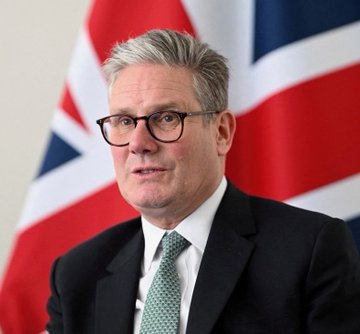
British Prime Minister Keir Starmer has definitively confirmed that the United Kingdom will not participate in or support the United States’ military blockade of Iranian ports in the Strait of Hormuz. Despite facing what he described as “some considerable pressure” from Washington, Starmer told the BBC that Britain would not be “dragged into the war” and is focused on de-escalation rather than offensive action .
“We’re not supporting the blockade. My decision has been very clearly that whatever the pressure — and there’s been some considerable pressure — we’re not getting dragged into the war. That’s not in our national interest, because I’m not going to act unless there’s a clear, lawful basis and a clear thought-through plan.” — Sir Keir Starmer, Prime Minister of the United Kingdom
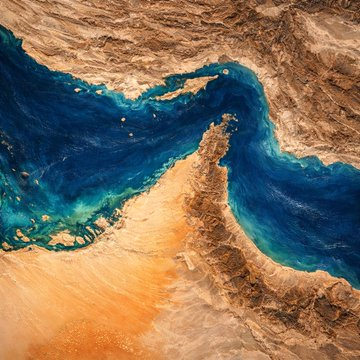
The announcement came shortly after US President Donald Trump declared that the US Navy would begin “BLOCKADING any and all Ships trying to enter, or leave, the Strait of Hormuz,” following the collapse of weekend peace talks between the US and Iran in Islamabad .
A Red Line: Britain Charts an Independent Course
Starmer’s stance establishes a clear red line between the two historic allies. While the UK has consistently supported the principle of freedom of navigation and has deployed minesweeping capabilities to the region, the Prime Minister insisted those assets are strictly for keeping the strait open for global trade, not for enforcing a blockade against a sovereign nation .
The Prime Minister emphasized that the UK will only act based on a “clear, lawful basis” and that its entire diplomatic focus remains on reopening the waterway to lower global energy prices .
“It is in my view vital that we get the strait open and fully open, and that’s where we’ve put all of our efforts in the last few weeks, and we’ll continue to do so.” — Sir Keir Starmer
European Allies Reject US Escalation
The UK is not isolated in its refusal. European allies, including France, have also signaled their reluctance to join the US campaign. French President Emmanuel Macron announced that Paris will co-host a summit with the UK this week aimed at forming a “coordinated, independent, multinational plan” to protect shipping only after the conflict ends .
This week, the UK and France will co-host a summit which Sir Keir said would “advance work on a coordinated, independent, multinational plan to safeguard international shipping when the conflict ends” .
China’s official Xinhua News Agency also reported that Britain “does not support a threatened blockade of the Strait of Hormuz by US President Donald Trump” . Experts suggest this unified European stance highlights a growing rift within NATO, as European powers view the US war effort as a choice rather than a necessity, with some experts suggesting this “will let the US and Europe’s rifts further widen” .
The UK’s Role: Minesweepers, Not Blockades
Despite rejecting the blockade, Starmer confirmed the UK retains a “mine-sweeping capability” in the region . However, he clarified these assets are designated for post-conflict reconstruction to clear Iranian mines, not to enforce the current US blockade.
The government is under domestic pressure to act, not only from allies but from economic reality. Chancellor Rachel Reeves has reportedly expressed “fury” over the US strategy, warning that the war is driving up UK borrowing costs and energy bills. She is set to attend the IMF meetings in Washington this week to advocate for the re-opening of the strait .
“The ongoing closure of the Strait of Hormuz is deeply damaging. Getting global shipping moving is vital to ease cost-of-living pressures.” — Sir Keir Starmer
The US Position: ‘Numerous Countries’ Support?
Contradicting the UK’s public position, President Trump told Fox News that “numerous countries” would support the blockade effort, adding that “the UK and a couple of other countries are sending minesweepers” .
While the UK does have minesweepers in the region, London’s interpretation of their mission differs sharply from Washington’s. The UK sees them as tools for post-war de-mining, while the US views them as instruments of a wartime blockade.
Trump also dismissed the collapse of talks with Iran, stating he didn’t care whether Iran returns to the negotiating table, insisting the blockade would proceed regardless . The Pentagon confirmed the blockade would begin at 10 AM Eastern Time on Monday, enforcing it “impartially against vessels of all nations entering or departing Iranian ports” .
Looking Ahead: A Summit of the Willing
As the blockade takes effect, the UK and France are moving to position themselves as architects of the post-war order. The planned summit this week aims to create a “defensive mission” for the strait that is entirely separate from the warring parties .
Starmer maintains that the UK will not be a party to the escalation, doubling down on his strategy of “keeping the strait open, not shut” . However, with oil prices spiking and the US forging ahead with unilateral action, the pressure on London to pick a side—and face the consequences—has rarely been higher.
Frequently Asked Questions (FAQs)
1. Did the UK completely refuse to help the US?
Yes, regarding the blockade. Starmer confirmed the UK will not support the US in actively blockading Iranian ports. However, he confirmed the UK retains minesweeping capability to be used after the conflict ends to clear mines and reopen the strait .
2. Why is Starmer refusing to support the US?
Starmer stated it is not in the UK’s national interest to get “dragged into the war.” He insists there must be a “clear, lawful basis” for action, which he believes does not exist for a blockade. He is prioritizing de-escalation and reopening the strait to lower energy prices for UK citizens .
3. Is the UK working with anyone else on this?
Yes. The UK is co-hosting a summit with France this week. They are seeking to form a “multinational coalition” focused on a “strictly defensive mission” to protect shipping after the war ends, separate from the US military campaign .
4. What is the US doing if the UK won’t help?
President Trump has ordered the US Navy to proceed with the blockade unilaterally. He claims “numerous countries” are helping, though specific nations have not been named. The Pentagon confirmed the blockade began on Monday, April 13, at 10 AM ET .
5. How does this affect the “special relationship”?
Analysts suggest this deepens the rift between the US and Europe. While the UK has historically backed US military action, Starmer’s refusal to support the blockade—coupled with French skepticism—signals a significant divergence in strategy regarding the Middle East conflict .
Stay informed with Reflecto News – Your trusted source for breaking diplomatic and defense intelligence. Subscribe for real-time updates on the Iran war, the Strait of Hormuz crisis, and transatlantic relations.
Questions people ask
What is China's current share of global manufacturing?
China now accounts for twenty eight percent of global manufacturing. This industrial output exceeds the combined manufacturing production of the United States, Japan, and Germany, making China the leading global industrial power according to recent reports.
Why were Andrew Tate and Tristan Tate arrested in Miami?
Andrew Tate and his brother Tristan Tate were taken into custody in Miami by the United States Marshals Service. They face thirty eight new charges in the United Kingdom, including rape and child pornography offences, and prosecutors are seeking their extradition.
What warning did Moscow issue about oil prices?
Kirill Dmitriev, the Chief Executive of the Russian Direct Investment Fund, warned that a tsunami of skyrocketing oil prices is approaching. Moscow describes this potential energy shock as a major threat to global markets.
What political shift is projected for Benjamin Netanyahu's coalition?
Political polls project that Prime Minister Benjamin Netanyahu's coalition is on track to lose its majority in the upcoming October election. This projection indicates a potential political shift in Jerusalem.
Why did a Russian military aircraft land in Tehran?
A Russian airborne command aircraft, widely known as a doomsday plane, landed in Tehran. The arrival of the aircraft represents a high stakes show of support from Russia for Iran during a period of heightened regional tensions.
What did President Masoud Pezeshkian claim about the United States and Israel?
Iranian President Masoud Pezeshkian claimed that the United States and Israel failed in a forty eight hour plan to topple the Iranian government. He made these statements during a televised address marking two years since his inauguration.